Secret Key Establishment over a Pair of Independent Broadcast Channels
This paper considers the problem of information-theoretic Secret Key Establishment (SKE) in the presence of a passive adversary, Eve, when Alice and Bob are connected by a pair of independent discrete
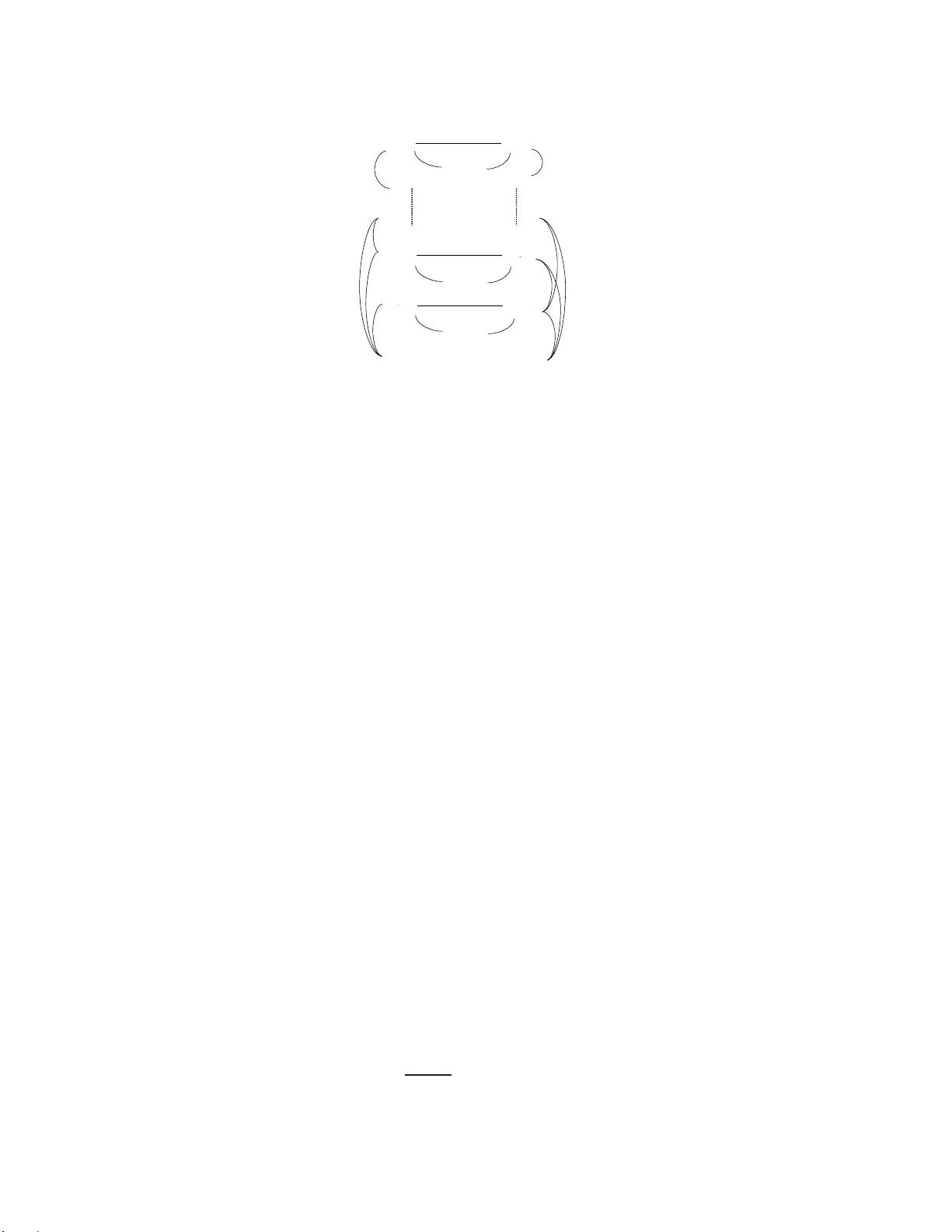
This paper considers the problem of information-theoretic Secret Key Establishment (SKE) in the presence of a passive adversary, Eve, when Alice and Bob are connected by a pair of independent discrete memoryless broadcast channels in opposite directions. We refer to this setup as 2DMBC. We define the secret-key capacity in the 2DMBC setup and prove lower and upper bounds on this capacity. The lower bound is achieved by a two-round SKE protocol that uses a two-level coding construction. We show that the lower and the upper bounds coincide in the case of degraded DMBCs.
💡 Research Summary
The paper addresses the problem of information‑theoretic secret‑key establishment (SKE) in a setting where two legitimate parties, Alice and Bob, are connected by a pair of independent discrete‑memoryless broadcast channels (DMBCs) that operate in opposite directions. This configuration, termed the “2DMBC” model, captures realistic scenarios in which the forward and reverse links have distinct physical characteristics and each broadcast to a passive eavesdropper, Eve. The authors first formalize the secret‑key capacity Cₛ for this model: the maximum achievable rate at which Alice and Bob can generate a shared secret key that is asymptotically independent of Eve’s observations, while using only public communication over the two channels.
To bound Cₛ, the paper derives an upper bound based on a single‑letter expression involving auxiliary random variables U and V that are functions of the forward‑channel input X and the reverse‑channel input Ŷ, respectively. The bound reads
Cₛ ≤ max_{P_{U|X}, P_{V|Ŷ}}
📜 Original Paper Content
🚀 Synchronizing high-quality layout from 1TB storage...