Neutrino Astronomy in the Ice
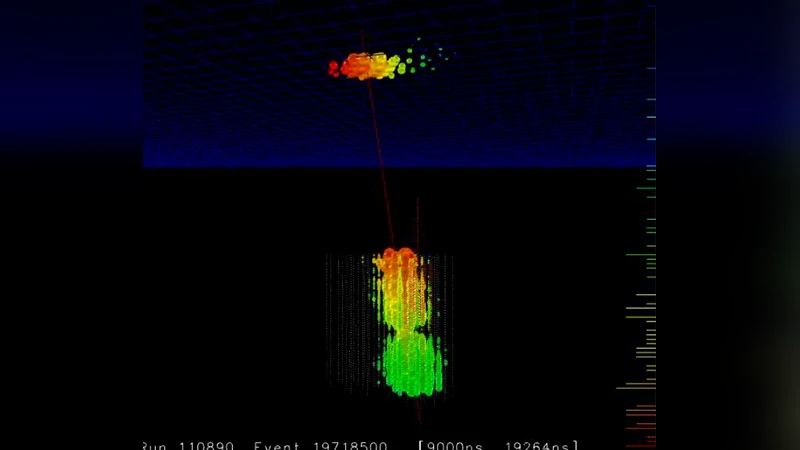
The South Pole is an optimal location for hosting astrophysical observatories. The status of the construction of the IceCube Observatory and some selected physics results will be discussed. Moreover prospects for detection of Ultra-High Energy cosmogenic neutrinos and techniques that can address this energy region will be considered.
💡 Research Summary
The paper provides a comprehensive overview of the IceCube Neutrino Observatory, its construction status, early scientific results, and future prospects for detecting ultra‑high‑energy (UHE) cosmogenic neutrinos. Situated at the South Pole, IceCube consists of 86 strings, each holding 60 digital optical modules (DOMs), deployed in the clear Antarctic ice down to depths of about 2.5 km. The authors describe the logistical and engineering challenges of drilling, power delivery, and data transmission in the extreme polar environment, and they confirm that the full detector has been operational since 2010, delivering an ever‑increasing exposure time and sensitivity.
Initial physics results include precise measurements of the atmospheric neutrino spectrum from 10 TeV to 10 PeV, which validate the detector’s calibration and simulation chain. The paper highlights the first multimessenger breakthrough: a high‑energy neutrino event correlated with the blazar TXS 0506+056, establishing a tangible link between neutrino astronomy and electromagnetic observations.
A central focus is the search for cosmogenic (GZK) neutrinos expected at energies above 10 PeV. IceCube’s current limits are presented, showing that no definitive detection has yet been achieved in this regime. To overcome this limitation, the authors discuss emerging detection techniques that exploit the Askaryan effect in ice: radio‑based arrays such as ARA (Askaryan Radio Array) and ARIANNA, and fiber‑optic microwave sensors. These complementary approaches can monitor vastly larger volumes than the optical array alone, extending sensitivity into the EeV range.
The paper also examines systematic uncertainties arising from ice properties—bubble content, dust layers, and anisotropic scattering—and demonstrates that sophisticated reconstruction algorithms can mitigate their impact on event direction and energy estimates.
Finally, the authors outline the roadmap for IceCube‑Gen2, a next‑generation expansion that would increase the instrumented volume by up to an order of magnitude, integrate new optical modules and radio antennas, and adopt a cost‑effective modular deployment strategy. This upgrade aims to provide continuous coverage from TeV to EeV energies, enabling the first definitive observation of UHE cosmogenic neutrinos and opening a new window on the most energetic processes in the universe. In summary, the paper not only documents IceCube’s current achievements but also charts a clear technical path toward the next era of neutrino astronomy.
Comments & Academic Discussion
Loading comments...
Leave a Comment