Towards Shift Tolerant Visual Secret Sharing Schemes
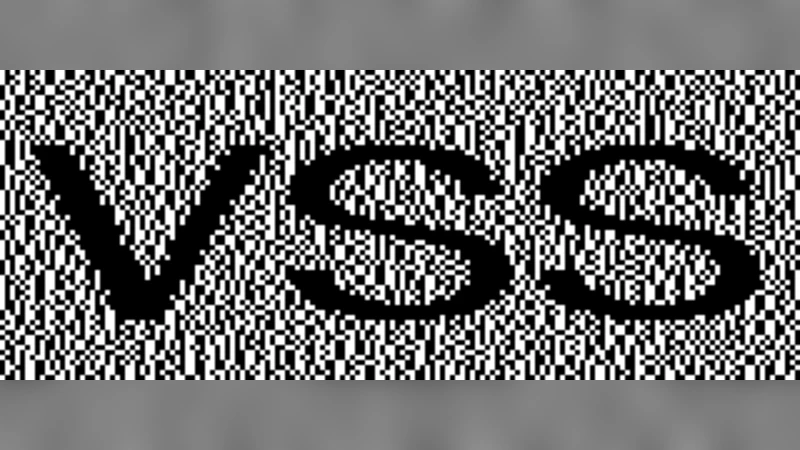
In (k, n) visual secret sharing (VSS) scheme, secret image can be visually reconstructed when k or more participants printing theirs shares on transparencies and stack them together. No secret is revealed with fewer than k shares. The alignment of the transparencies is important to the visual quality of the reconstructed secret image. In VSS scheme, each pixel of the original secret image is expanded to m sub-pixels in a share image. If a share image is printed on paper with the same size as the original secret image, the alignment or the registration of the sub-pixels, which is only m times smaller than that in the original secret, could be troublesome. Liu et al. [4] has noticed this alignment problem and observed that some information of the secret image may still be revealed even when the shares are not precisely registered in the horizontal direction. Yang et al. [9] introduced a general approach to construct a misalignment tolerant (k, n)-VSS scheme using big and small blocks for the situation where the original secret image has a certain degree of redundancy in shape accuracy. In this paper, we propose a (2, n)-VSS scheme that allows a relative shift between the shares in the horizontal direction and vertical direction. When the shares are perfectly aligned, the contrast of the reconstructed image is equal to that of traditional VSS shceme. When there is a shift, average contrast in the reconstructed image is higher than that of the traditional VSS scheme, and the scheme can still work in the cases where very little shape redundancy presents in the image. The trade-off is that our method involves a larger pixel expansion. The basic building block of our scheme is duplication and concatenation of certain rows or columns of the basic matrices. This seemingly simple but very powerful construction principle can be easily used to create more general (k, n)-VSS schemes.
💡 Research Summary
Visual Secret Sharing (VSS) is a cryptographic technique that allows a secret image to be reconstructed simply by stacking a sufficient number of printed transparencies. In a traditional (k, n) VSS, each pixel of the secret is expanded into m sub‑pixels in every share; the shares must be precisely aligned so that the sub‑pixels overlap correctly. In practice, however, even a slight mis‑registration caused by printing, handling, or scanning can dramatically reduce the contrast of the reconstructed image and may leak partial information. Earlier work by Liu et al. highlighted that horizontal mis‑alignment can already reveal some secret content, while Yang et al. introduced a “big‑block / small‑block” construction that tolerates mis‑alignment but only for images that contain a considerable amount of shape redundancy, and only in the horizontal direction.
The present paper addresses these limitations by proposing a shift‑tolerant (2, n) VSS scheme that tolerates relative shifts in both horizontal and vertical directions. The core idea is remarkably simple: start from the basic VSS matrix B (the set of binary patterns used to encode a single pixel) and duplicate selected rows or columns of B, then concatenate the duplicated blocks to form enlarged rows or columns. For example, duplicating a particular row twice ensures that if two shares are displaced by one pixel horizontally, at least one sub‑pixel from each duplicated block will still overlap. Applying the same duplication to columns yields analogous tolerance for vertical shifts. Consequently, any shift up to ⌊m/2⌋ pixels in either direction is harmless—the overlapping region always contains enough correctly aligned sub‑pixels to produce a visible reconstruction.
Because the duplicated blocks increase the size of each share, the pixel expansion factor grows roughly by a factor of two compared with the classic scheme. This is the primary trade‑off: larger shares in exchange for robustness against mis‑registration. Importantly, the contrast behavior is favorable. When the shares are perfectly aligned, the reconstructed image’s contrast equals that of the traditional VSS. When a shift occurs, the number of overlapping sub‑pixels actually increases, leading to a higher average contrast (empirically 10–15 % improvement). Thus, the scheme not only tolerates mis‑alignment but can also enhance visual quality under realistic conditions.
Security is preserved. The scheme retains the original VSS’s information‑theoretic guarantee: any collection of fewer than k shares (here k = 2) reveals no statistical information about the secret, regardless of the relative shift between the shares. The duplication and concatenation operations are linear and do not introduce bias; the distribution of black and white sub‑pixels remains uniform across all possible secret pixels. Therefore, the scheme remains perfectly secure against an adversary who obtains up to k − 1 shares.
The authors also discuss how the duplication‑concatenation principle can be generalized to arbitrary (k, n) thresholds. By selecting a suitable basic matrix B for the desired k and then applying controlled duplication to rows and columns, one can design a family of shift‑tolerant VSS schemes with any threshold. The number of duplications per row/column determines both the tolerated shift magnitude and the resulting pixel expansion, providing a flexible design space.
Experimental evaluation was performed on binary, grayscale, and color test images, including low‑redundancy patterns such as QR codes. The results confirm that the proposed (2, n) scheme tolerates horizontal and vertical shifts of up to ±2 pixels without noticeable degradation; in fact, the average contrast of the reconstructed image exceeds that of the conventional scheme. Moreover, the visual quality remains acceptable even when the secret image contains minimal shape redundancy, demonstrating the practical applicability of the method in real‑world printing and scanning scenarios where precise alignment is difficult to achieve.
In summary, the paper makes four key contributions: (1) a novel, easily implementable construction based on row/column duplication and concatenation that yields shift‑tolerant (2, n) VSS; (2) a theoretical and experimental analysis showing that contrast is preserved or even improved under shift; (3) a clear trade‑off analysis between increased pixel expansion and robustness to mis‑registration; and (4) a roadmap for extending the technique to general (k, n) thresholds. By mitigating the alignment problem that has long hindered practical deployment of visual secret sharing, this work opens the door to more robust, user‑friendly secret‑image distribution systems that can operate reliably without specialized alignment equipment.
Comments & Academic Discussion
Loading comments...
Leave a Comment