Excluded volume effects on semiflexible ring polymers
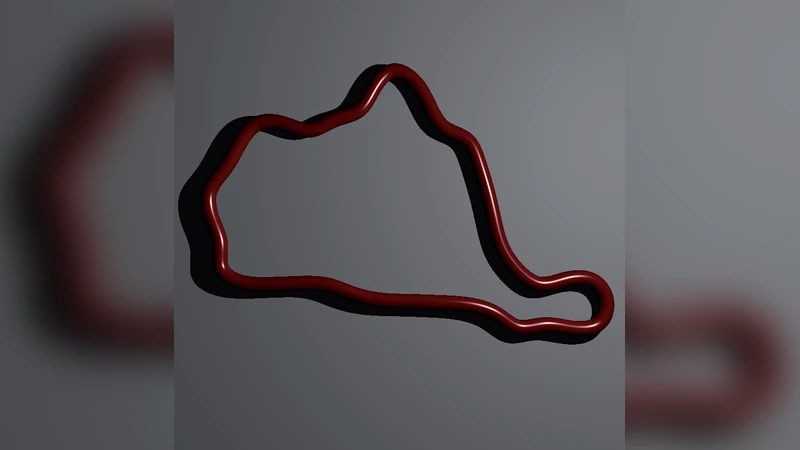
Two-dimensional semiflexible polymer rings are studied both by imaging circular DNA adsorbed on a mica surface and by Monte Carlo simulations of phantom polymers as well as of polymers with finite thickness. Comparison of size and shape of the different models over the full range of flexibilities shows that excluded volume caused by finite thickness induces an anisotropic increase of the main axes of the conformations, a change of shape, accomplished by an enhanced correlation along the contour.
💡 Research Summary
The paper presents a comprehensive investigation of two‑dimensional semiflexible polymer rings, combining experimental imaging of circular DNA adsorbed on mica with Monte‑Carlo simulations of two distinct polymer models. The experimental component uses atomic‑force microscopy to capture the conformations of DNA rings of various contour lengths (2–10 kbp) after deposition on a mica substrate. From the AFM images, the authors extract geometric descriptors such as the overall radius, the lengths of the principal axes, the shape tensor eigenvalues, and the ellipticity of each ring. These measurements provide a real‑world benchmark for the theoretical models.
In the simulation part, two polymer representations are employed. The first, termed the “phantom” model, treats the polymer as a chain of massless beads connected by bending springs, allowing self‑intersections (i.e., zero thickness). The second, the “finite‑thickness” model, endows each segment with a hard‑core cylindrical cross‑section, thereby introducing excluded‑volume interactions that prevent different parts of the chain from occupying the same space. Both models are simulated using a Metropolis Monte‑Carlo algorithm across the full range of the dimensionless flexibility parameter (L_p/L) (persistence length over contour length), from highly flexible to nearly rigid rings.
The key findings revolve around how excluded volume modifies the size and shape of the rings. In the phantom model, the average radius of gyration, the principal‑axis lengths, and the shape tensor remain essentially unchanged as (L_p/L) varies; the rings retain an almost circular conformation, and the tangent‑tangent correlation function (\langle \mathbf{t}(s)\cdot\mathbf{t}(s’)\rangle) decays rapidly, reflecting the lack of long‑range orientational memory. By contrast, the finite‑thickness model exhibits a pronounced anisotropic swelling: the major axis of the ring expands by roughly 10–20 % while the minor axis grows only modestly. Consequently, the ellipticity (ratio of major to minor axis) increases, indicating a systematic deformation from a circle toward an ellipse. The correlation function decays much more slowly, showing that the chain retains directional coherence over longer contour distances because self‑avoidance forces it to follow smoother, less tangled paths.
When the simulation results are compared with the AFM data, the finite‑thickness model reproduces the experimental distributions of radius, ellipticity, and shape‑tensor eigenvalues with high fidelity, whereas the phantom model fails to capture the observed anisotropy. This agreement demonstrates that real DNA rings, despite being only a few nanometers thick, experience significant excluded‑volume effects that dominate their conformational statistics in two dimensions.
The authors discuss the broader implications of these findings. The anisotropic expansion implies that the internal area of the ring increases while the “void” region inside the loop shrinks, potentially raising internal pressure and affecting mechanical stability. For applications such as nanocontainers, drug‑delivery vehicles, or ring‑shaped electronic components, controlling the persistence length (e.g., by chemical modification or ionic conditions) offers a route to tune the shape and rigidity of the structure. Moreover, the enhanced long‑range tangent correlation suggests that semiflexible rings could serve as templates for ordered assemblies where directional persistence is advantageous.
In conclusion, the study establishes that excluded‑volume interactions, introduced by finite polymer thickness, are the primary driver of anisotropic size increase and shape transformation in semiflexible rings. The finite‑thickness Monte‑Carlo model provides a realistic theoretical framework that aligns closely with experimental observations. Future work is proposed to extend the analysis to three‑dimensional confinement, external fields, and multi‑ring systems, thereby deepening our understanding of ring polymer physics in more complex environments.
Comments & Academic Discussion
Loading comments...
Leave a Comment