Relativistic g-modes in rapidly rotating neutron stars
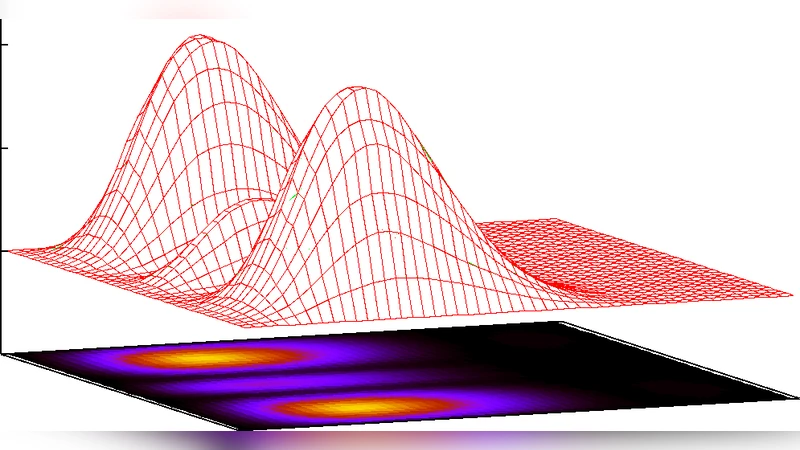
We study the g-modes of fast rotating stratified neutron stars in the general relativistic Cowling approximation, where we neglect metric perturbations and where the background models take into account the buoyant force due to composition gradients. This is the first paper studying this problem in a general relativistic framework. In a recent paper by Passamonti et al.(2009), a similar study was performed within the Newtonian framework, where the authors presented results about the onset of CFS-unstable g-modes and the close connection between inertial- and gravity-modes for sufficiently high rotation rates and small composition gradients. This correlation arises from the interplay between the buoyant force which is the restoring force for g-modes and the Coriolis force which is responsible for the existence of inertial modes. In our relativistic treatment of the problem, we find an excellent qualitatively agreement with respect to the Newtonian results.
💡 Research Summary
The paper presents the first general‑relativistic investigation of gravity (g) modes in rapidly rotating, stratified neutron stars, employing the relativistic Cowling approximation in which metric perturbations are neglected. The authors construct equilibrium stellar models that incorporate composition gradients, which generate a buoyancy force characterized by the Brunt‑Väisälä frequency (N²). On top of these backgrounds they solve the linearised fluid perturbation equations in two dimensions (axisymmetric spherical coordinates), retaining the Coriolis terms that arise from rotation with angular velocity Ω. By varying Ω up to about 80 % of the Keplerian break‑up limit and scanning a wide range of N² values, they compute eigenfrequencies and eigenfunctions for the low‑order g‑modes.
The results confirm three major points. First, when the buoyancy is strong (large N²) the g‑modes behave much like their Newtonian counterparts: their frequencies depend only weakly on rotation and the restoring force is dominated by buoyancy. Second, as the rotation rate increases and the composition gradient weakens, the g‑mode frequencies approach those of inertial modes (including r‑ and i‑modes). In this regime the mode eigenfunctions gradually acquire the characteristic polar‑toroidal structure of inertial modes, illustrating a smooth transition or “hybridisation” between gravity‑driven and Coriolis‑driven oscillations. This behaviour reproduces the qualitative picture found by Passamonti et al. (2009) in a Newtonian framework, demonstrating that the Cowling approximation captures the essential physics even in the strong‑field relativistic regime.
Third, the authors identify the onset of the Chandrasekhar‑Friedman‑Schutz (CFS) instability for a subset of g‑modes at rotation rates roughly Ω/Ω_K ≈ 0.6–0.7. In the rotating frame these modes acquire negative canonical energy, allowing them to grow by emitting gravitational radiation. The growth rates are comparable to those of inertial‑mode CFS instabilities, suggesting that rapidly rotating, stratified neutron stars could emit detectable gravitational‑wave signals from g‑mode driven CFS instability, provided the composition gradient is sufficiently small.
Relativistic corrections shift the mode frequencies by a few hundred hertz relative to Newtonian values, but do not alter the qualitative trends. The study also discusses the limitations of the Cowling approximation—most notably the neglect of metric perturbations, which precludes a direct calculation of gravitational‑wave luminosities—and outlines future extensions such as fully relativistic perturbations, inclusion of magnetic fields, nonlinear mode coupling, and more realistic equations of state.
Overall, the paper provides a comprehensive theoretical framework for understanding how buoyancy and Coriolis forces interact in the relativistic, fast‑rotating regime, clarifies the conditions under which g‑modes become CFS‑unstable, and offers predictions that can inform the interpretation of future gravitational‑wave observations from newly born or accretion‑spun‑up neutron stars.
Comments & Academic Discussion
Loading comments...
Leave a Comment