Morphological Tests of the Pulsar and Dark Matter Interpretations of the WMAP Haze
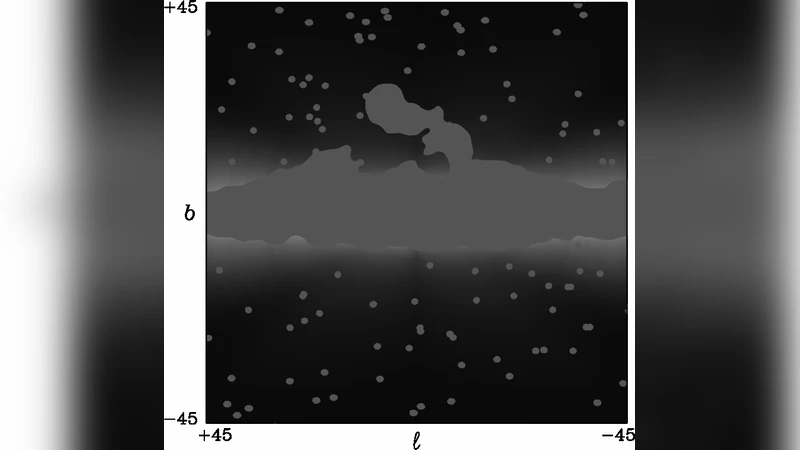
The WMAP haze is an excess in microwave emission coming from the center of the Milky Way galaxy. In the case of synchrotron emission models of the haze, we present tests for the source of radiating high-energy electrons/positrons. We explore several models in the case of a pulsar population or dark matter annihilation as the source. These morphological signatures of these models are small behind the WMAP Galactic mask, but are testable and constrain the source models. We show that detailed measurements of the morphology may distinguish between the pulsar and dark matter interpretations as well as differentiate among different pulsar models and dark matter profile models individually. Specifically, we find that a zero central density Galactic pulsar population model is in tension with the observed WMAP haze. The Planck Observatory’s greater sensitivity and expected smaller Galactic mask should potentially provide a robust signature of the WMAP haze as either a pulsar population or the dark matter.
💡 Research Summary
The paper addresses the origin of the so‑called WMAP “haze”, an excess of microwave emission observed toward the Galactic centre in the 20–60 GHz band. The authors focus on synchrotron interpretations, in which the haze is produced by high‑energy electrons and positrons (e±) spiralling in the Galactic magnetic field. Two broad classes of e± sources are examined: a population of Galactic pulsars and annihilating dark‑matter (DM) particles. The central goal is to determine whether the spatial morphology of the haze can discriminate between these scenarios, even after the region most affected by foregrounds is masked by the standard WMAP Galactic mask.
Methodology
The propagation of e± is modeled with the diffusion‑loss equation
∂n/∂t = ∇·
Comments & Academic Discussion
Loading comments...
Leave a Comment