"How many zombies do you know?" Using indirect survey methods to measure alien attacks and outbreaks of the undead
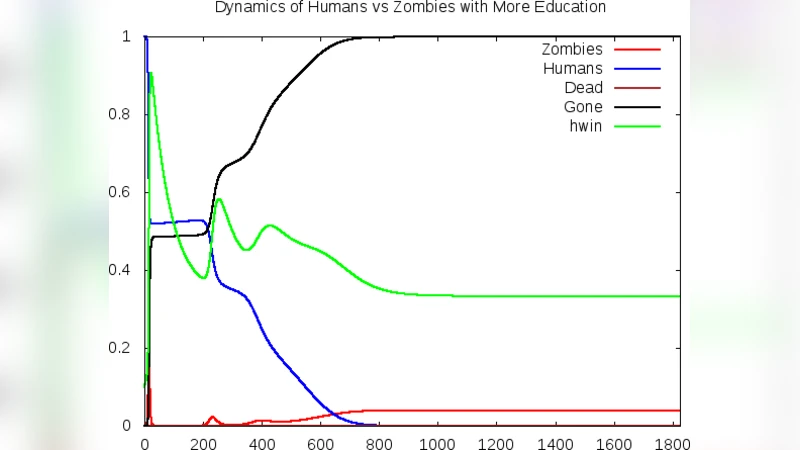
The zombie menace has so far been studied only qualitatively or through the use of mathematical models without empirical content. We propose to use a new tool in survey research to allow zombies to be studied indirectly without risk to the interviewers.
💡 Research Summary
The paper entitled “How many zombies do you know?” proposes an innovative application of the network‑scale‑up (NSU) method to estimate the size and distribution of hard‑to‑reach populations such as zombies, aliens, ghosts, and other “undead” entities. The authors begin by framing zombification as a public‑health and public‑safety issue, noting that traditional survey techniques are either too risky for interviewers (face‑to‑face contact could lead to infection) or impractical (internet surveys risk computer‑virus transmission). Consequently, empirical data on zombie outbreaks have been limited to qualitative descriptions and mathematical or agent‑based models, which lack real‑world validation.
Drawing on Zheng, Salganik, and Gelman (2006), the authors adopt the NSU approach, which infers the size of a hidden group by asking respondents about the number of acquaintances they have in various known categories (e.g., “How many lawyers do you know?”) and then about the hidden category (“How many zombies do you know?”). Zheng et al. reported that the average respondent knows roughly 750 people; thus a sample of 1,500 Americans can indirectly provide information on about one million individuals. By scaling up the reported counts and correcting for under‑reporting using bias estimates derived from other concealed conditions (e.g., diabetes, HIV), the authors argue that reliable population estimates for zombies and similar entities can be obtained.
The methodology section details the questionnaire design, the assumptions underlying NSU (accurate recall of acquaintances, similar reporting error across groups), and the statistical adjustments needed to compensate for recall bias and differential network connectivity. The authors also suggest augmenting survey data with digital trace data such as Google Trends. They present a figure showing search volume for “zombie,” “ghost,” and “alien” over time, arguing that spikes in search activity can serve as a proxy for geographic hotspots where the hidden populations are more prevalent.
In the discussion, the authors humorously claim that Hollywood plays a vital educational role in teaching the public how to respond to a zombie infestation, and they advocate for substantial funding from the Department of Defense, Homeland Security, or major film studios to expand this line of research. They acknowledge limitations, including potential stigma‑driven under‑reporting, non‑uniform network structures, and the need for Bayesian hierarchical models to better capture uncertainty.
A brief technical note mentions that the manuscript was originally drafted in Microsoft Word and later converted to LaTeX to give it a more “scientific” appearance. The reference list mixes genuine statistical literature with fictional blog posts and movies, reinforcing the paper’s blend of serious methodological insight and tongue‑in‑cheek satire.
Overall, the article demonstrates how a well‑established indirect estimation technique can be creatively repurposed to study fantastical, hard‑to‑measure phenomena, highlighting both the potential for empirical validation of zombie‑related models and the broader applicability of NSU methods to any concealed or stigmatized population.
Comments & Academic Discussion
Loading comments...
Leave a Comment