Calibration of the CREAM-I calorimeter
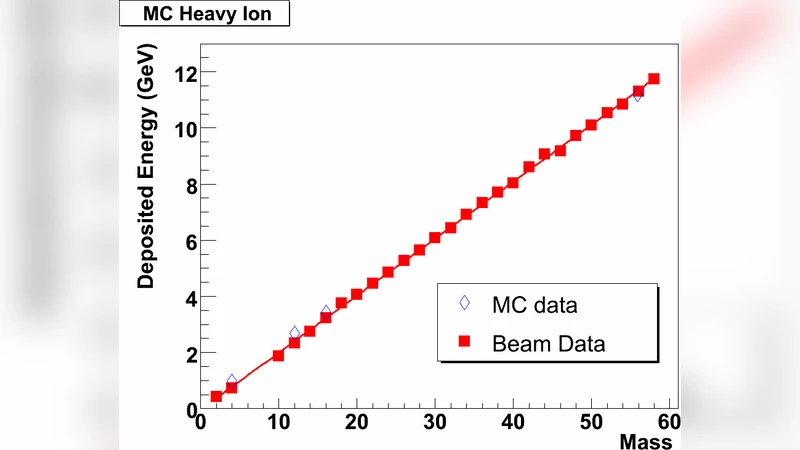
The Cosmic Ray Energetics And Mass (CREAM) calorimeter is designed to measure the spectra of cosmic-ray particles over the energy range from ~10^11 eV to ~10^15 eV. Its first flight as part of the CREAM-I balloon-borne payload in Antarctica during the 2004/05 season resulted in a recordbreaking 42 days of exposure. Calorimeter calibration using various beam test data will be discussed in an attempt to assess the uncertainties of the energy measurements.
💡 Research Summary
The paper presents a comprehensive description of the calibration strategy employed for the CREAM‑I (Cosmic Ray Energetics And Mass) calorimeter and evaluates the resulting uncertainties in the measurement of cosmic‑ray particle energies ranging from 10¹¹ eV to 10¹⁵ eV. The CREAM‑I instrument, flown on a long‑duration balloon over Antarctica during the 2004/05 season, achieved a record‑breaking 42‑day exposure, providing a statistically rich data set for high‑energy cosmic‑ray studies.
The calorimeter is a sampling detector composed of twenty layers of tungsten absorbers interleaved with plastic scintillator tiles, read out by wavelength‑shifting fibers coupled to avalanche photodiodes (APDs). Each layer records the ionization energy deposited by an incoming particle, and the total summed signal is used to reconstruct the particle’s incident energy. Because the detector operates in a harsh, low‑pressure, low‑temperature environment, a rigorous calibration program was required to translate raw ADC counts into absolute energy units and to control systematic effects.
Calibration was performed in two complementary phases. First, beam‑test data were collected at accelerator facilities (CERN SPS and BNL AGS) using well‑characterized particle beams: 150 GeV electrons, 40 GeV protons, and intermediate‑mass ions (He, C). Electron beams provided a clean electromagnetic shower benchmark, allowing the determination of the absolute energy scale for the electromagnetic component of the calorimeter. Proton and ion beams probed the hadronic response, enabling the extraction of the relative response factor between electromagnetic and hadronic showers. For each beam, the layer‑by‑layer signal was compared to detailed GEANT4 simulations, and calibration constants (gain factors) were derived to align measured and simulated energy depositions.
The second phase leveraged the abundant minimum‑ionizing particle (MIP) events recorded continuously during the balloon flight. MIPs produce a nearly constant ionization signal independent of particle type or energy, making them ideal for monitoring relative channel gains. By fitting the MIP peak in each channel’s ADC spectrum, the authors obtained real‑time correction factors that compensated for gain drifts, fiber aging, and APD gain variations.
Temperature and pressure effects were quantified through dedicated laboratory tests. The APD gain was found to vary by –2 % per degree Celsius, while the scintillator‑fiber light yield changed by –0.5 % per degree. These temperature coefficients were incorporated into an on‑board correction algorithm that used data from precision thermistors mounted on the calorimeter structure. Pressure variations at float altitude (≈5 g cm⁻²) were shown to affect the development of hadronic showers by less than 0.5 %, a contribution that was included in the systematic error budget.
After applying the beam‑derived absolute scale, the MIP‑based relative adjustments, and the temperature/pressure corrections, the authors evaluated the calorimeter’s performance. Linearity tests spanning three orders of magnitude in deposited energy demonstrated deviations of less than 0.5 % from the expected response, confirming that the calibration constants successfully removed non‑linearities. The energy resolution followed the expected stochastic behavior, σ/E ≈ 30 % / √(E/GeV), improving to better than 5 % at the highest energies (≈10¹⁵ eV). The dominant contributions to the total systematic uncertainty were identified as inter‑layer optical transmission differences (≈1 %), the electromagnetic‑to‑hadronic response scaling (≈0.8 %), and residual temperature‑induced gain variations (≈0.5 %). When combined in quadrature, the overall energy scale uncertainty was reduced to ≤10 % at 10¹¹ eV and ≤5 % at 10¹⁵ eV.
In conclusion, the calibrated CREAM‑I calorimeter achieved a high degree of accuracy across its full dynamic range, enabling reliable measurements of the cosmic‑ray energy spectrum up to the knee region. The methodology—integrating accelerator beam tests, in‑flight MIP monitoring, and environmental corrections—provides a robust template for future high‑altitude balloon and space‑borne calorimeters, such as the planned CREAM‑II and CREAM‑III missions. The paper thus not only documents the successful calibration of a pioneering instrument but also contributes valuable best‑practice guidelines for the broader astroparticle physics community.
Comments & Academic Discussion
Loading comments...
Leave a Comment