Systematic Effects in Extracting a "Gamma-Ray Haze" from Spatial Templates
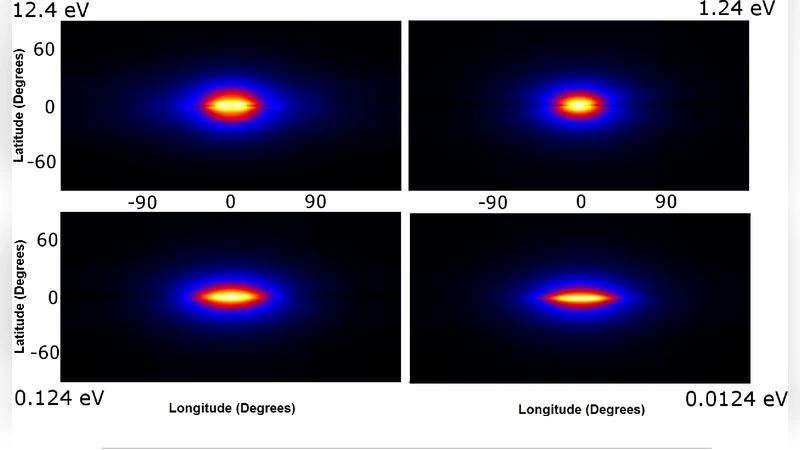
Recent claims of a gamma-ray excess in the diffuse galactic emission detected by the Fermi Large Area Telescope with a morphology similar to the WMAP haze were based on the assumption that spatial templates of the interstellar medium (ISM) column density and the 408 Mhz sky are good proxies for neutral pion and inverse Compton (IC) gamma-ray emission, respectively. We identify significant systematic effects in this procedure that can artificially induce an additional diffuse component with a morphology strikingly similar to the claimed gamma-ray haze. To quantitatively illustrate this point we calculate sky-maps of the ratio of the gamma-ray emission from neutral pions to the ISM column density, and of IC to synchrotron emission, using detailed galactic cosmic-ray models and simulations. In the region above and below the galactic center, the ISM template underestimates the gamma-ray emission due to neutral pion decay by approximately 20%. Additionally, the synchrotron template tends to under-estimate the IC emission at low energies (few GeV) and to over-estimate it at higher energies (tens of GeV) by potentially large factors that depend crucially on the assumed magnetic field structure of the Galaxy. The size of the systematic effects we find are comparable to the size of the claimed “Fermi haze” signal. We thus conclude that a detailed model for the galactic diffuse emission is necessary in order to conclusively assess the presence of a gamma-ray excess possibly associated to the WMAP haze morphology.
💡 Research Summary
The paper critically re‑examines the claim of a “gamma‑ray haze” in the Fermi Large Area Telescope (LAT) data that was reported to have a morphology similar to the microwave WMAP haze. The original analyses that identified this excess relied on two spatial templates: (i) the column density of the interstellar medium (ISM) as a proxy for the distribution of neutral‑pion (π⁰) decay gamma‑rays, and (ii) the 408 MHz all‑sky radio map as a proxy for inverse‑Compton (IC) gamma‑rays, under the assumption that the same population of cosmic‑ray electrons produces both synchrotron radio emission and IC gamma‑rays.
To test the validity of these assumptions, the authors constructed detailed Galactic cosmic‑ray propagation models using the GALPROP code. Their models incorporate realistic distributions of cosmic‑ray protons, electrons, and nuclei; three‑dimensional gas maps; interstellar radiation fields; and, crucially, several plausible magnetic‑field configurations (e.g., centrally enhanced 10 µG fields versus uniform 5 µG fields). For each model they computed full‑sky maps of (a) the π⁰‑decay gamma‑ray intensity, (b) the IC gamma‑ray intensity, (c) the synchrotron intensity at 408 MHz, and (d) the ISM column density.
From these maps they derived two diagnostic ratios:
- π⁰/ISM ratio – the gamma‑ray intensity from π⁰ decay divided by the ISM column density.
- IC/Sync ratio – the IC gamma‑ray intensity divided by the 408 MHz synchrotron intensity.
These ratios directly quantify how well the chosen templates trace the true gamma‑ray components. The results reveal systematic mismatches of a magnitude comparable to the claimed haze signal.
π⁰/ISM mismatch: In the region roughly 20° above and below the Galactic Center (|b| ≲ 20°, ℓ ≈ 0°) the π⁰/ISM ratio is on average ~20 % higher than unity. This indicates that the ISM column density underestimates the true π⁰‑decay gamma‑ray emission in precisely the area where the haze was reported. When the ISM template is subtracted from the data, the residual will artificially appear as an excess with a roughly bipolar morphology, mimicking the claimed haze.
IC/Sync mismatch: The IC/Sync ratio shows a strong energy dependence. At low energies (∼1–3 GeV) the synchrotron template underestimates the IC component, while at higher energies (∼10–30 GeV) it overestimates it. The magnitude of the discrepancy depends sensitively on the assumed magnetic‑field strength and geometry. For a centrally enhanced 10 µG field the IC/Sync ratio can differ from unity by up to a factor of two, whereas a uniform 5 µG field reduces the discrepancy but still leaves a 30–50 % bias. This bias is comparable to the amplitude of the reported haze (∼10–20 % of the total diffuse emission).
The authors therefore argue that the simple template subtraction method cannot reliably isolate a faint, spatially extended component such as the haze. Instead, a full forward‑modeling approach that simultaneously fits the gas‑related π⁰ component, the IC component, and the synchrotron component—while allowing for uncertainties in the magnetic field, radiation field, and cosmic‑ray source distribution—is required.
In the discussion they outline a roadmap for future work: (i) incorporate multi‑frequency data (radio, microwave, X‑ray, and gamma‑ray) into a joint likelihood analysis; (ii) explore a broader range of magnetic‑field models, including vertical scale heights and spiral‑arm variations; (iii) employ Bayesian model comparison to assess whether an additional “haze” component is statistically justified beyond the systematic uncertainties of the diffuse model.
The central conclusion is that the systematic effects identified—under‑estimation of π⁰ emission by the ISM template and energy‑dependent mis‑matching of IC and synchrotron templates—are of the same order as the claimed gamma‑ray haze. Consequently, the existence of a distinct gamma‑ray excess associated with the WMAP haze morphology remains unproven until a comprehensive, physically motivated Galactic diffuse emission model is applied.
Comments & Academic Discussion
Loading comments...
Leave a Comment