Outflows from AGN: their Impact on Spectra and the Environment
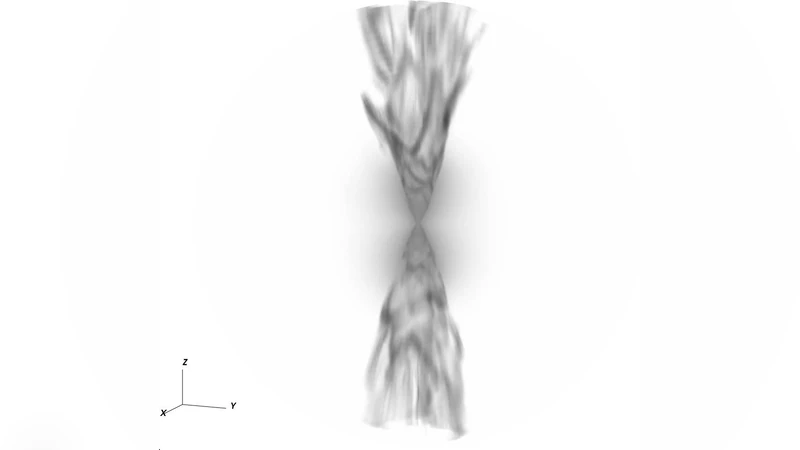
We present a brief summary of the main results from our multi-dimensional, time-dependent simulations of gas dynamics in AGN. We focus on two types of outflows powered by radiation emitted from the AGN: disk winds and winds driven from large-scale inflows. We show spectra predicted by the simulations and discuss their relevance to observations of broad- and narrow-line regions of the AGN. We finish with a few remarks on whether these outflows can have a significant impact on their environment and host galaxy.
💡 Research Summary
**
The paper presents a comprehensive study of two distinct outflow mechanisms powered by radiation from active galactic nuclei (AGN): disk winds launched from the immediate vicinity of the supermassive black hole’s accretion disk, and large‑scale winds driven from inflowing gas at kiloparsec distances. Using state‑of‑the‑art three‑dimensional, time‑dependent radiation‑hydrodynamic (RHD) simulations, the authors model the dynamics, thermodynamics, and ionization structure of both outflow types, incorporating line‑driven acceleration, electron scattering, and realistic disk temperature and density gradients.
For the disk‑origin winds, the simulations reveal that radiation pressure rapidly accelerates gas to velocities of 1,000–10,000 km s⁻¹, producing a multi‑phase flow where hot (10⁶–10⁷ K) and cooler (∼10⁴ K) components coexist. The outflow geometry is roughly conical with a wide opening angle, and the mass‑loss rates reach up to a few tenths of a solar mass per year. Synthetic spectra generated from these models display broad, blueshifted absorption features in high‑ionization lines such as C IV, Si IV, and N V, closely matching the observed profiles of the broad‑line region (BLR).
In contrast, the large‑scale winds arise when inflowing galactic gas is intercepted by the AGN radiation field at distances of several hundred parsecs. The radiation compresses and heats the inflow, launching a slower (few hundred km s⁻¹) but more massive wind with mass‑loss rates of order 1 M⊙ yr⁻¹. The resulting flow is more collimated, forming a narrow cone that propagates into the host galaxy’s interstellar medium (ISM). The synthetic spectra for this component are dominated by narrow emission lines of low‑ionization species (e.g., O III, N II), reproducing the characteristics of the narrow‑line region (NLR).
Quantitative analysis of the kinetic and thermal energy budgets shows that disk winds convert roughly 0.5 % of the AGN bolometric luminosity into kinetic power, while the large‑scale winds achieve efficiencies of 1–5 %. Both efficiencies exceed the canonical threshold (~0.5 %) required for effective AGN feedback, implying that these outflows can substantially disturb the surrounding ISM, suppress star formation, and potentially drive gas out of the galaxy. The authors discuss how the high‑velocity, low‑mass disk wind primarily regulates the immediate nuclear environment (BLR dynamics, accretion‑disk structure), whereas the slower, massive large‑scale wind is the dominant agent for galaxy‑wide feedback.
The study also acknowledges several limitations: the radiation transfer is treated with simplified opacity prescriptions, magnetic fields are omitted, and the simulations do not yet capture the full complexity of galactic structures such as bars or bulges. Future work is proposed to incorporate magnetohydrodynamic (MHD) effects, more detailed chemical networks, and higher spatial resolution to bridge the gap between nuclear and galactic scales.
Overall, the paper provides compelling evidence that radiation‑driven AGN outflows can simultaneously account for the observed spectral signatures of both BLR and NLR, and deliver sufficient energy and momentum to influence the host galaxy’s evolution. The multi‑dimensional, time‑dependent approach marks a significant step forward in linking small‑scale accretion physics with large‑scale galactic feedback processes.
Comments & Academic Discussion
Loading comments...
Leave a Comment