Statics and Dynamics of the Wormlike Bundle Model
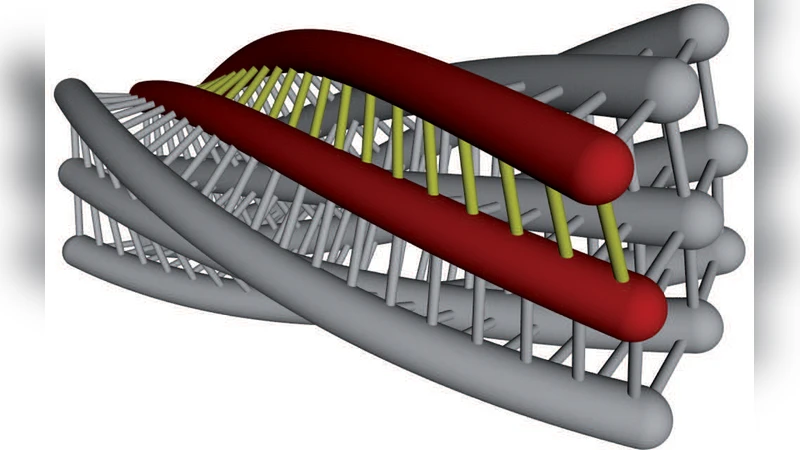
Bundles of filamentous polymers are primary structural components of a broad range of cytoskeletal structures, and their mechanical properties play key roles in cellular functions ranging from locomotion to mechanotransduction and fertilization. We give a detailed derivation of a wormlike bundle model as a generic description for the statics and dynamics of polymer bundles consisting of semiflexible polymers interconnected by crosslinking agents. The elastic degrees of freedom include bending as well as twist deformations of the filaments and shear deformation of the crosslinks. We show that a competition between the elastic properties of the filaments and those of the crosslinks leads to renormalized effective bend and twist rigidities that become mode-number dependent. The strength and character of this dependence is found to vary with bundle architecture, such as the arrangement of filaments in the cross section and pretwist. We discuss two paradigmatic cases of bundle architecture, a uniform arrangement of filaments as found in F-actin bundles and a shell-like architecture as characteristic for microtubules. Each architecture is found to have its own universal ratio of maximal to minimal bending rigidity, independent of the specific type of crosslink induced filament coupling; our predictions are in reasonable agreement with available experimental data for microtubules. Moreover, we analyze the predictions of the wormlike bundle model for experimental observables such as the tangent-tangent correlation function and dynamic response and correlation functions. Finally, we analyze the effect of pretwist (helicity) on the mechanical properties of bundles. We predict that microtubules with different number of protofilaments should have distinct variations in their effective bending rigidity.
💡 Research Summary
The paper presents a comprehensive theoretical framework – the wormlike bundle (WLB) model – for describing the static and dynamic mechanics of polymer bundles composed of semiflexible filaments cross‑linked by elastic agents. Building on the classic wormlike chain description of a single filament, the authors introduce additional degrees of freedom that are essential for a bundle: (i) bending and twisting of each filament, characterized by bending rigidity κ and twist rigidity C, and (ii) shear deformation of the cross‑links, characterized by a shear spring constant k⊥ and a characteristic spacing a between adjacent cross‑links. By expanding the total elastic energy in Fourier modes and minimizing with respect to the shear variables, they derive mode‑dependent effective bending and twist rigidities, κeff(q) and Ceff(q). These effective rigidities interpolate between two limits: at long wavelengths (small q) the shear constraints lock the filaments together, producing a bundle that behaves like a single, much stiffer rod; at short wavelengths (large q) the shear constraints become ineffective and the bundle’s response reverts to that of independent filaments. The functional form κeff(q)=κ/
Comments & Academic Discussion
Loading comments...
Leave a Comment