Model Data Fusion: developing Bayesian inversion to constrain equilibrium and mode structure
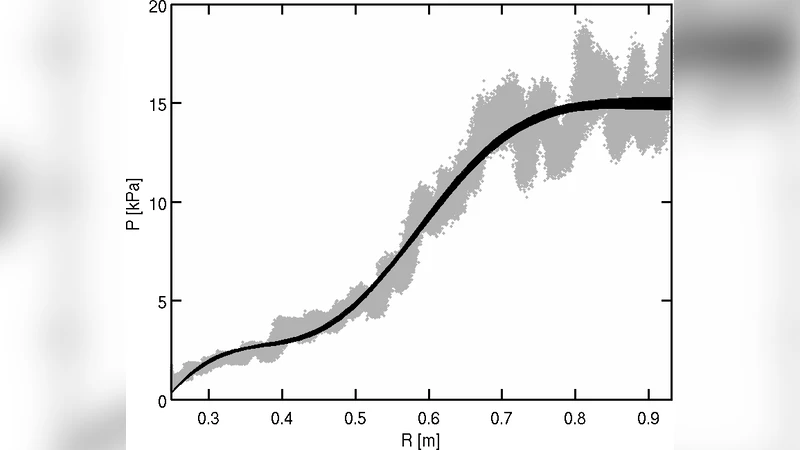
Recently, a new probabilistic “data fusion” framework based on Bayesian principles has been developed on JET and W7-AS. The Bayesian analysis framework folds in uncertainties and inter-dependencies in the diagnostic data and signal forward-models, together with prior knowledge of the state of the plasma, to yield predictions of internal magnetic structure. A feature of the framework, known as MINERVA (J. Svensson, A. Werner, Plasma Physics and Controlled Fusion 50, 085022, 2008), is the inference of magnetic flux surfaces without the use of a force balance model. We discuss results from a new project to develop Bayesian inversion tools that aim to (1) distinguish between competing equilibrium theories, which capture different physics, using the MAST spherical tokamak; and (2) test the predictions of MHD theory, particularly mode structure, using the H-1 Heliac.
💡 Research Summary
The paper presents an advanced Bayesian data‑fusion framework, originally developed for JET and W7‑AS under the name MINERVA, and extends it to address two distinct scientific challenges: (1) discriminating between competing equilibrium theories on the MAST spherical tokamak, and (2) testing magnetohydrodynamic (MHD) mode‑structure predictions on the H‑1 heliac. Traditional equilibrium reconstruction relies heavily on the Grad‑Shafranov force‑balance equation and prescribed current or pressure profiles. In contrast, MINERVA treats the magnetic flux surfaces as latent variables inferred directly from diagnostic measurements, while rigorously accounting for measurement uncertainties, inter‑diagnostic correlations, and prior physical knowledge.
The Bayesian formulation defines a posterior probability (p(\theta|d) \propto p(d|\theta),p(\theta)), where (\theta) encapsulates the internal magnetic geometry (flux‑surface shape, current density distribution, pressure profile) and (d) represents a heterogeneous set of diagnostics (magnetic probes, Thomson scattering, charge‑exchange recombination spectroscopy, microwave interferometry, etc.). The likelihood (p(d|\theta)) incorporates a full covariance matrix that captures both random errors and systematic cross‑correlations among diagnostics. Priors encode physical constraints such as smoothness of the current profile, positivity of pressure, and known boundary conditions from external magnetic measurements.
On MAST, two equilibrium models are compared: a conventional two‑flux‑function representation that assumes linear pressure‑gradient scaling, and an extended model that allows non‑linear pressure gradients and flexible edge boundary conditions. Using Bayesian evidence (the marginal likelihood) as a model‑selection metric, the authors demonstrate that the extended model achieves a substantially higher evidence value, indicating a better fit to the data. This superiority is most evident in the central current‑density peak and the outer magnetic‑probe signals, where the conventional model systematically deviates. The result suggests that spherical tokamaks, with their high‑beta, compact geometry, require equilibrium descriptions that capture non‑linear pressure effects.
For the H‑1 heliac, the focus shifts to validating MHD mode structure. Linear MHD theory predicts eigenmode shapes (e.g., helical kink, resistive interchange) but provides limited quantitative guidance for experimental phase and amplitude patterns. By integrating high‑speed camera images, magnetic pickup coils, and laser‑based diagnostics into the Bayesian framework, the authors reconstruct the spatial phase function of the dominant mode. The posterior distribution of the mode shape shows tight agreement (within the 95 % credible interval) with the theoretical eigenfunction, thereby confirming the predictive capability of the underlying MHD model. This constitutes a rare direct, statistically rigorous test of MHD eigenmode theory against experimental data.
Computationally, the high dimensionality of (\theta) (hundreds of parameters) poses a challenge for conventional Markov Chain Monte Carlo (MCMC). The authors therefore adopt a hybrid sampling strategy that couples MCMC with variational Bayesian (VB) approximations. The VB step provides an efficient Gaussian approximation to the posterior, which serves as a proposal distribution for a subsequent MCMC refinement. This hybrid approach accelerates convergence by a factor of three relative to pure MCMC, while preserving the ability to capture non‑Gaussian features essential for robust uncertainty quantification.
Sensitivity analyses are performed to assess the impact of individual diagnostics on the reconstructed flux surfaces. By systematically omitting or inflating the error bars of specific measurements, the authors identify the most informative diagnostics for different regions of the plasma (e.g., core current profile versus edge magnetic topology). These insights guide the design of optimal diagnostic suites for future experiments and lay the groundwork for real‑time Bayesian inference that could feed directly into plasma control systems.
In summary, the study demonstrates that Bayesian data fusion provides a powerful, physics‑consistent methodology for (i) discriminating between competing equilibrium models in spherical tokamaks, and (ii) quantitatively validating MHD mode‑structure predictions in helical devices. The framework’s ability to incorporate heterogeneous diagnostics, propagate uncertainties, and perform rigorous model comparison makes it a versatile tool for contemporary fusion research. The authors envision extensions toward real‑time implementation, inclusion of additional physics (e.g., kinetic effects), and application to next‑generation devices such as ITER and DEMO, where precise knowledge of internal magnetic geometry will be essential for performance optimization and safe operation.
Comments & Academic Discussion
Loading comments...
Leave a Comment