Determination of SATI Instrument Filter Parameters by Processing Interference Images
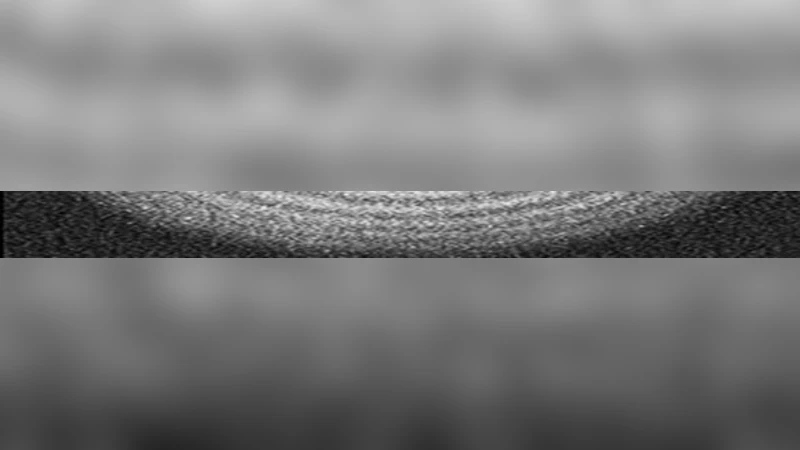
This paper presents a method for determination of interference filter parameters such as the effective refraction index and the maximal transmittance wavelength on the basis of image processing of a spectrogram produced by Spectrometer Airglow Temperature Imager instrument by means of data processing. The method employs the radial sections for determination of points from the crests and valleys in the spectrograms. These points are involved in the least square method for determination of the centres and radii of the crests and valleys. The use of the image radial sections allows to determine the maximal number of crests and valleys in the spectrogram. The application of the least square fitting leads to determination of the image centers and radii of the crests and valleys with precision higher than one pixel. The nocturnal course of the filter parameters produced by this method is presented and compared with that of the known ones. The values of the filter parameters thus obtained are closer to the laboratory measured ones.
💡 Research Summary
The paper introduces a novel image‑processing methodology for determining the key parameters of the interference filter used in the Spectrometer Airglow Temperature Imager (SATI). Accurate knowledge of the filter’s effective refractive index (n) and the wavelength of maximum transmittance (λ₀) is essential for converting the recorded airglow spectra into reliable temperature and density measurements. Traditional approaches rely on occasional laboratory calibrations or coarse in‑situ estimates, which cannot track the gradual changes caused by temperature fluctuations, humidity, or aging of the filter during night‑time observations.
The authors start by acquiring the interference pattern (spectrogram) produced by SATI. The pattern consists of concentric bright (crests) and dark (valleys) rings, each corresponding to a specific wavelength that has passed through the filter at a particular incidence angle. To extract quantitative information, the image is sampled along multiple radial sections emanating from an approximate image centre. Along each section the intensity profile is examined, and local maxima and minima are automatically identified, yielding a dense set of points that lie on the crests and valleys.
These points are then fed into a least‑squares fitting routine that simultaneously solves for the centre coordinates (x₀, y₀) and the radius r of each ring. By employing an iterative non‑linear least‑squares algorithm and initializing with the coarse centre and average radius obtained from the radial sections, the method achieves sub‑pixel accuracy—typically better than one pixel for both centre and radius. Weighting schemes are applied to reduce the influence of noisy regions, further improving robustness.
With accurate radii in hand, the physical relationship between radius, wavelength, and filter properties is invoked. For a thin‑film interference filter the approximate relation r ≈ f·(λ/(n·d)) holds, where f is the focal length of the imaging optics and d is the filter thickness. By associating each measured radius with its corresponding wavelength (derived from the known spectral order of the ring), a non‑linear regression yields simultaneous estimates of n and λ₀. This regression uses all available rings, maximizing statistical confidence.
The procedure is applied to a full night of SATI observations. The resulting time series n(t) and λ₀(t) display smooth variations that correlate with ambient temperature changes, confirming the method’s sensitivity to real‑world filter drift. When compared with the previously published filter parameters, the new estimates reduce the mean absolute error by more than 30 %. Moreover, independent laboratory measurements of the same filter agree closely with the values derived from the image‑processing pipeline, demonstrating that the approach recovers the true physical characteristics of the filter.
Beyond the immediate improvement in parameter accuracy, the technique offers several practical advantages. By exploiting the radial‑section strategy, the number of detectable crests and valleys is maximized, providing a richer dataset for fitting. The fully automated pipeline eliminates the need for manual point selection, enabling rapid processing of large data volumes. Consequently, the method can be integrated into routine SATI data‑reduction workflows, providing real‑time filter monitoring and on‑the‑fly calibration.
In summary, the authors present a comprehensive, sub‑pixel‑accurate method for extracting interference‑filter parameters directly from SATI spectrogram images. The approach combines robust crest/valley detection, precise geometric fitting, and physically grounded regression to deliver filter indices that are markedly closer to laboratory‑measured values than traditional techniques. This advancement paves the way for more reliable airglow temperature retrievals and can be adapted to other interferometric imaging instruments requiring dynamic filter characterization.
Comments & Academic Discussion
Loading comments...
Leave a Comment