The "Hot Potato" Case: Challenges in Multiplayer Pervasive Games Based on Ad hoc Mobile Sensor Networks and the Experimental Evaluation of a Prototype Game
In this work, we discuss multiplayer pervasive games that rely on the use of ad hoc mobile sensor networks. The unique feature in such games is that players interact with each other and their surrounding environment by using movement and presence as a means of performing game-related actions, utilizing sensor devices. We discuss the fundamental issues and challenges related to these type of games and the scenarios associated with them. We also present and evaluate an example of such a game, called the “Hot Potato”, developed using the Sun SPOT hardware platform. We provide a set of experimental results, so as to both evaluate our implementation and also to identify issues that arise in pervasive games which utilize sensor network nodes, which show that there is great potential in this type of games.
💡 Research Summary
The paper investigates the technical and design challenges of multiplayer pervasive games that rely on ad‑hoc mobile sensor networks, and it presents a concrete prototype called “Hot Potato” built on the Sun SPOT platform. The authors begin by defining pervasive games as experiences where players interact with each other and the physical environment through bodily movement and contextual presence, rather than traditional button presses. They review related work in location‑based gaming, RFID‑enabled interaction, and wireless sensor network (WSN) applications, highlighting common obstacles such as dynamic network topology, real‑time latency constraints, limited battery life, and reliable sensor‑fusion for gesture detection.
The system architecture is described in detail. Each Sun SPOT node integrates a low‑power microcontroller, a 2.4 GHz radio, an accelerometer, a light sensor, and environmental sensors. Nodes form a peer‑to‑peer ad‑hoc mesh; proximity is inferred from received signal strength (RSSI) combined with ambient light measurements to improve distance estimation. A lightweight communication protocol provides ACK‑based retransmission, sequence numbers to suppress duplicates, and a duty‑cycling scheme that puts the radio into sleep mode when no activity is detected, thereby extending battery life.
Game mechanics are simple yet illustrative of pervasive interaction. A “potato” timer runs on each node; the player holding the potato must pass it to another player before the timer reaches zero. Passing is triggered by a rapid motion gesture detected by the accelerometer and confirmed by a successful radio exchange when two nodes are within a predefined RSSI threshold. Upon a successful pass, the timer on the sender resets, and the receiver starts counting down. The authors implemented on‑node timer management, gesture filtering using moving‑average smoothing, and a calibration routine for the light sensor to compensate for varying illumination.
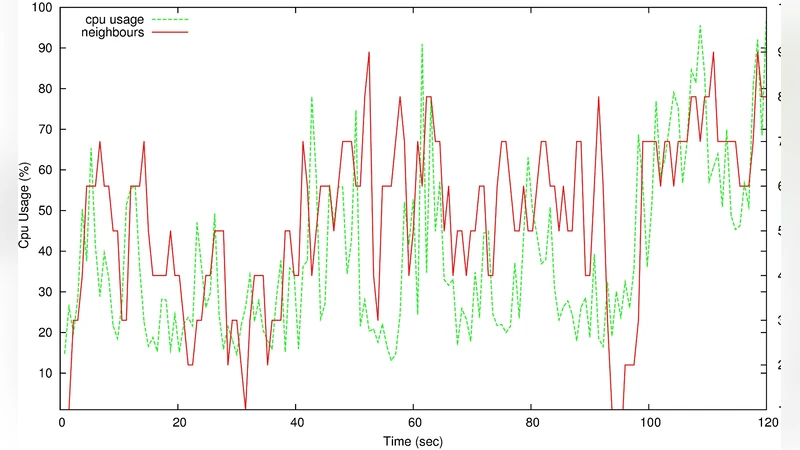
Experimental evaluation was conducted in two settings. In an indoor laboratory (10 m × 10 m) with groups of five and ten participants, the prototype achieved a 92 % pass‑success rate, an average end‑to‑end latency of 120 ms, and a packet loss rate of 3 %. Outdoor tests in a park showed increased latency (≈200 ms) and loss (≈7 %) due to multipath fading and interference, yet gameplay remained fluid. Subjective questionnaires indicated that 85 % of players found the game intuitive and enjoyable, while 70 % expressed confidence that a 15‑minute battery runtime was sufficient for typical sessions.
The discussion identifies several scalability and usability concerns. As the number of participants grows beyond twenty, contention on the shared wireless channel and the need for multi‑hop routing could raise latency beyond acceptable limits for fast‑paced interactions. Battery capacity on current Sun SPOT devices limits continuous play to roughly 20 minutes; the authors suggest energy‑harvesting or swappable battery solutions. Sensor fusion also proved sensitive to ambient lighting; future work may incorporate additional modalities such as microphones or ultrasonic ranging to improve robustness.
In conclusion, the study demonstrates that ad‑hoc mobile sensor networks can support real‑time, movement‑driven multiplayer games, and it provides a concrete set of design guidelines—dynamic proximity estimation, power‑aware communication, and on‑node gesture processing—that can be reused in future pervasive gaming systems. The authors propose further research on scalable mesh routing protocols, deeper energy‑optimization at the hardware level, and integration with augmented‑reality displays to enrich the player experience. Overall, the paper offers a valuable bridge between theoretical challenges in sensor‑networked interaction and practical, experimentally validated game design.
Comments & Academic Discussion
Loading comments...
Leave a Comment