Bispectrum covariance in the flat-sky limit
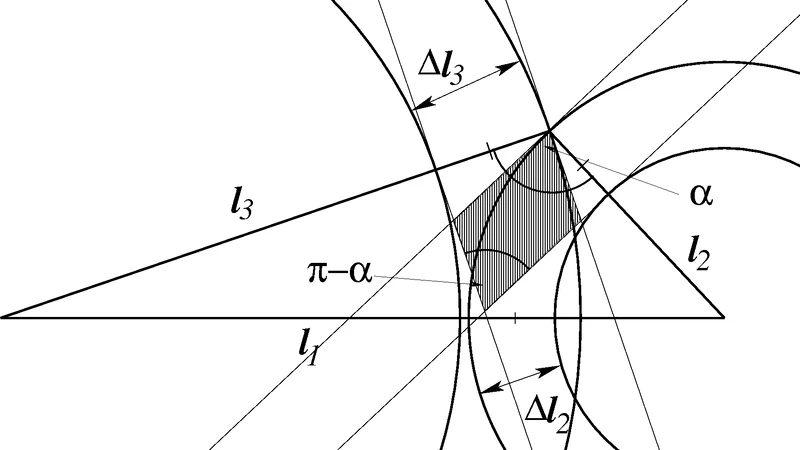
To probe cosmological fields beyond the Gaussian level, three-point statistics can be used, all of which are related to the bispectrum. Hence, measurements of CMB anisotropies, galaxy clustering, and weak gravitational lensing alike have to rely upon an accurate theoretical background concerning the bispectrum and its noise properties. If only small portions of the sky are considered, it is often desirable to perform the analysis in the flat-sky limit. We aim at a formal, detailed derivation of the bispectrum covariance in the flat-sky approximation, focusing on a pure two-dimensional Fourier-plane approach. We define an unbiased estimator of the bispectrum, which takes the average over the overlap of annuli in Fourier space, and compute its full covariance. The outcome of our formalism is compared to the flat-sky spherical harmonic approximation in terms of the covariance, the behavior under parity transformations, and the information content. We introduce a geometrical interpretation of the averaging process in the estimator, thus providing an intuitive understanding. Contrary to foregoing work, we find a difference by a factor of two between the covariances of the Fourier-plane and the spherical harmonic approach. We argue that this discrepancy can be explained by the differing behavior with respect to parity. However, in an exemplary analysis it is demonstrated that the Fisher information of both formalisms agrees to high accuracy. Via the geometrical interpretation we are able to link the normalization in the bispectrum estimator to the area enclosed by the triangle configuration at consideration as well as to the Wigner symbol, which leads to convenient approximation formulae for the covariances of both approaches.
💡 Research Summary
The paper addresses the need for accurate theoretical predictions of the bispectrum and its covariance when analysing cosmological fields beyond the Gaussian approximation, especially in the flat‑sky limit where only a small patch of the sky is observed. The authors develop a fully analytical treatment of the bispectrum covariance using a two‑dimensional Fourier‑plane approach. They begin by defining an unbiased estimator for the bispectrum that averages over the overlap of three annuli in Fourier space, each annulus corresponding to a side of the triangle formed by the three wavevectors (\boldsymbol{\ell}_1,\boldsymbol{\ell}_2,\boldsymbol{\ell}_3). The overlap region enforces the triangle condition (\boldsymbol{\ell}_1+\boldsymbol{\ell}2+\boldsymbol{\ell}3=0) and its area is directly proportional to the geometric area of the triangle, (A{\triangle}). This geometric insight leads to a natural normalization factor of (1/(V,A{\triangle})), where (V) is the survey area, linking the estimator to the Wigner‑3j symbol that appears in the spherical‑harmonic formalism.
Next, the covariance of the estimator is derived under the Gaussian assumption for the underlying field. By applying Wick’s theorem, the six‑point function decomposes into products of two‑point functions, yielding two distinct contributions: a “diagonal” term that appears when the two bispectra share exactly the same triangle configuration, and an “off‑diagonal” term that arises when they share one or two sides. Each term carries a weight given by the overlap area of the corresponding annuli, and the final expression contains explicit Kronecker deltas that enforce equality of the side lengths.
A crucial result is the identification of a factor‑of‑two discrepancy between the covariance obtained in the Fourier‑plane formalism and that obtained using the flat‑sky spherical‑harmonic approximation. The authors trace this difference to the treatment of parity. In the Fourier plane, the bispectrum includes both parity‑even and parity‑odd contributions because the Fourier modes change sign under a reflection of the wavevectors. In contrast, the spherical‑harmonic bispectrum retains only the parity‑even part (the Wigner‑3j symbol forces (\ell_1+\ell_2+\ell_3) to be even). Consequently, the Fourier‑plane covariance is larger by a factor of two.
Despite this apparent disagreement, the paper demonstrates that the Fisher information content of the two approaches is essentially identical. By constructing the Fisher matrix for a set of cosmological parameters and evaluating it with both covariance matrices, the authors find differences at the sub‑percent level. This shows that the extra parity‑odd modes in the Fourier‑plane covariance do not carry independent information; they are simply weighted differently in the optimal estimator.
Finally, the authors provide practical approximation formulas for the covariance. Using the asymptotic relation between the triangle area and the Wigner‑3j symbol, they derive a simple expression \
Comments & Academic Discussion
Loading comments...
Leave a Comment