Moment-Based Analysis of Synchronization in Small-World Networks of Oscillators
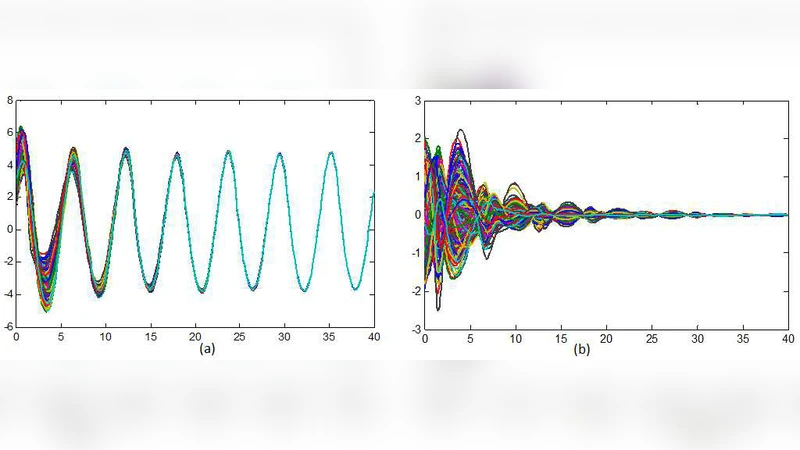
In this paper, we investigate synchronization in a small-world network of coupled nonlinear oscillators. This network is constructed by introducing random shortcuts in a nearest-neighbors ring. The local stability of the synchronous state is closely related with the support of the eigenvalue distribution of the Laplacian matrix of the network. We introduce, for the first time, analytical expressions for the first three moments of the eigenvalue distribution of the Laplacian matrix as a function of the probability of shortcuts and the connectivity of the underlying nearest-neighbor coupled ring. We apply these expressions to estimate the spectral support of the Laplacian matrix in order to predict synchronization in small-world networks. We verify the efficiency of our predictions with numerical simulations.
💡 Research Summary
The paper investigates the synchronization of coupled nonlinear oscillators placed on a small‑world network generated by adding random shortcuts to a regular nearest‑neighbor ring. The authors focus on the linear stability of the synchronous state, which is governed by the eigenvalue spectrum of the network Laplacian. By deriving closed‑form expressions for the first three moments (mean, variance, and third‑order moment) of the Laplacian eigenvalue distribution as explicit functions of the shortcut probability (p) and the ring degree (k), they provide a tractable way to estimate the spectral support without computing the full spectrum.
The derivation proceeds as follows. For a ring of (N) nodes each connected to (2k) nearest neighbors, a shortcut is added independently on each of the (\frac{N(N-1)}{2} - Nk) possible non‑existing edges with probability (p). The expected degree of a node becomes (\langle d\rangle = 2k + p(N-1)). Using trace identities, the first moment (\mu_1) (the average eigenvalue) equals (\langle d\rangle). The second moment (\mu_2) incorporates degree variance and the contribution of shortcuts, yielding (\mu_2 = (2k)^2 + 2k,p(N-1) + p(1-p)(N-1)). The third moment (\mu_3) captures higher‑order correlations among shortcuts and is expressed as a polynomial in (p), (k), and (N). These formulas are exact under the assumed random‑shortcut model.
To translate moments into a usable estimate of the eigenvalue interval, the authors adopt a semicircle‑type approximation. Defining the variance (\sigma^2 = \mu_2 - \mu_1^2), they set the lower and upper bounds of the support as (\lambda_{\min} \approx \mu_1 - \sqrt{2\sigma^2}) and (\lambda_{\max} \approx \mu_1 + \sqrt{2\sigma^2}). The third moment is used to correct for asymmetry, improving the fit of the tail region. With these bounds, the Master Stability Function (MSF) framework can be applied: if the entire Laplacian spectrum lies inside the MSF’s stability interval (
Comments & Academic Discussion
Loading comments...
Leave a Comment