Age and Winning Professional Golf Tournaments
Most professional golfers and analysts think that winning on the PGA Tour peaks when golfers are in their thirties. Rather than relying on educated guesses, we can actually use available statistical data to determine the actual ages at which golfers …
Authors: ** 작성자 정보가 논문에 명시되지 않음 → **“저자 미상”** **
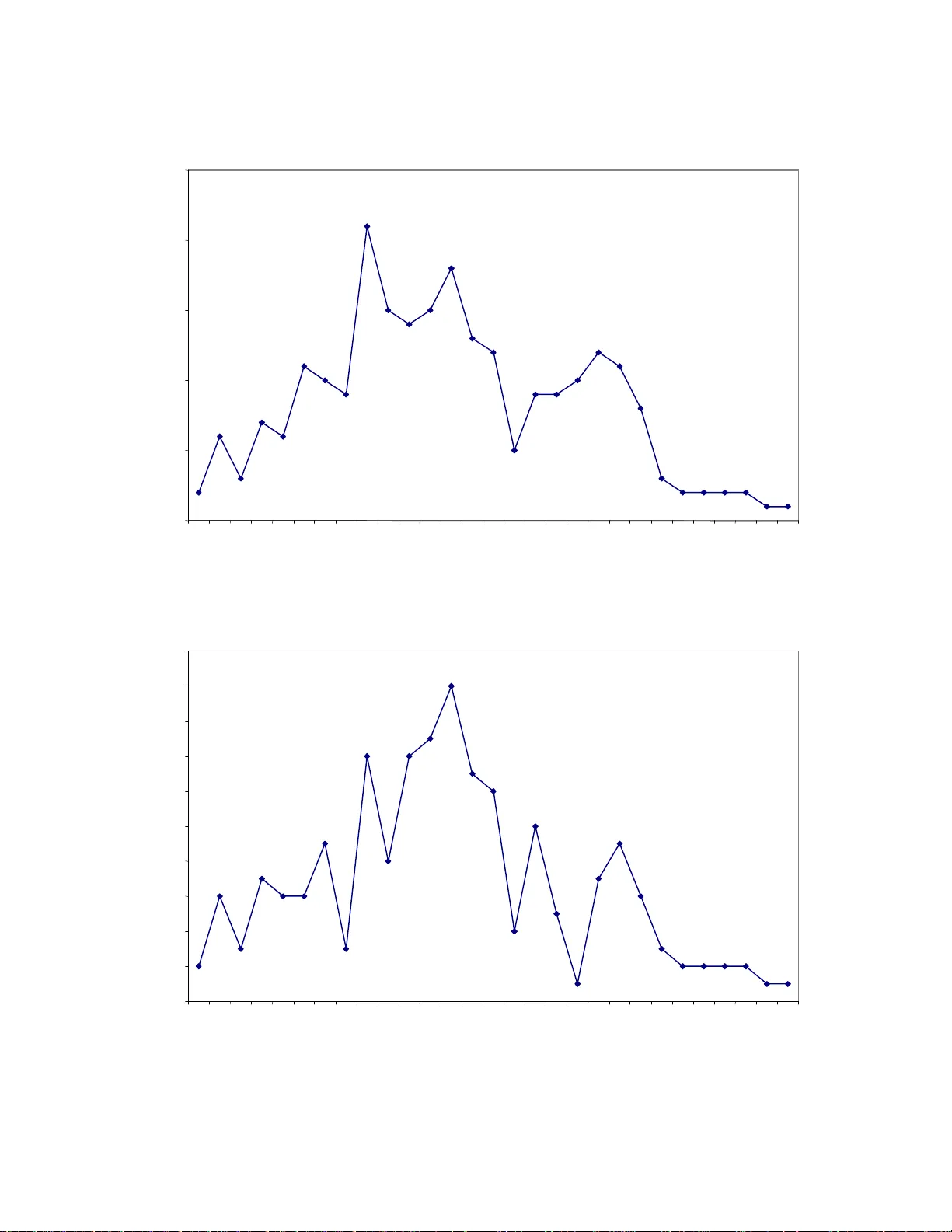
1 Gizachew Tiruneh, Ph. D., Department of Political Science, University of Central Arkansas, Conway, Arkansas [ A revised version of the p aper is published by the Journal of Quantitative Analysis in Sports, 2010, Volume 6, Issue 1, Article 5. ] Most prof essio nal golfers and analysts think that winning o n the PGA Tour peaks when go lfer s are in t heir thi rti es. Rather than relying on educated guesses, we can actually use available statist ic al data to determine the actual ages at which golfers peak th ei r golf game. We can also test the hypothesis that age affects winning professio nal golf tournam ents. Using data available fro m t he Go lf Channel, the PGA Tour, and LPGA Tour, I cal culated and provi ded the mean, the median, and the mode ages at which prof essi on al golfers on the PGA, European PGA , Cham pi ons, and LPGA Tour s had won over a five - year period. More specifically, the ages at which golfers on th e PGA, European PGA , Cham pi ons Tour , and LPGA Tours peak their wins are 35, 30, 52, and 25, respectively. T he regressio n analyses I conducted seem to support my hypothesis that age affects winning professio nal go lf t ournaments. Introduction Ag ing tends to decrease th e flexibilit y, bone mass, and strength of the human body , leading to a decline in the level o f phys ical act ivit y of the average person ( Birrer, 1989 ). 1 Even professio nal athletes are not immune fro m t he decline of talent due to aging. In swimming, cycling, and weight lift ing, fo r instance, mo st athl etes reach their prime in th ei r 20s and e arly 30s (Wilmore, David, Cost ill, & Kenney , 2008) . How about the age at which prof essi on al golfers peak ? The convent io nal wisdom about professio nal golfers is th at they go through three consecut ive phases; first, they go through the learning process , acq ui ri ng both physical and mental skills o f t he game . Second, aft er a few years o f experience , th ey reach their prime. Lastly, due largely to physio lo gical factors, thei r 1 Morgan et al. (1999) also found that younger amateur golfers’ bodies tend to be more flexible when play ing golf than those of adult and senior ama teur golfers’. 2 skills start to decline (Berry & Larkey , 1999) . There is only one ident ifiable study conducted to invest igate such a relationship , however . B ased on 489 golfers and us ing scoring average as the measure o f performance over the course of several years , Berry et al . (1999) f ou nd that mo st golfers , who pl ayed in the four Major champio nships (t he Masters, U.S. Open, Brit ish Open, and the PGA) , peak on average between 30 and 35 years. 2 They , h owever, d id not include non - Maj or golf tournam ents in the ir analysis. They also di d not deal with other major tours, such as the European Professio nal Golf Associ at io n (European PGA), the Champio ns, and the Ladies Professio nal Go lf Associ at io n (LPGA) Tours. Nor did they measure golfers’ performance by number of wins. This paper uses winning , as opposed to scoring averages, as a measure of perform ance and invest igates the ages at which professio nal golfers peak thei r wins in both Major and non- Maj or golf tournaments fo r the y ears between 2003 and 2007. The analysis also covers f our m a jo r golf tours . Specifically , u sing data available fro m the Go l f Channel, th e Prof essio nal Go lf Associat io n (PGA) Tour, th e European PGA Tour, and th e LPGA Tour , I cal culate d and provi ded th e mean, the median, and the mode ages at which prof essio nal go lfers on the se tours had won over a five - year period. I have f ou nd th at the ages at which golf ers peak their wins on th e PGA, European PGA , Champi on s, and LP GA Tour s are 35, 30, 52, and 25 , respectively. Moreover, the regressio n analyses I conducted seem to support my hypothesis that age affects winning professio nal go lf tournam ents. 2 Lockwood (1999) studied the effect of aging on amateur golfers and found that amateur golfers peak their golfing skills between the ages of 20 and 39. 3 The PGA Tour I relied on 239 major tou rnaments i n which PGA Tour golfers played between 2003 and 2007 to cal culate the mean, th e med ian, and th e mo de ages of winners . Table 1 and Figure 1a th rough 1 d show the se resul ts . Model 1 , in T able 1, shows that the mean or average and th e median ages of winning PGA tournaments were 35.05 and 35 years, respectively . The age at which PGA Tour pl ayers ’ wins peak ed ( th e mo de ) was 31 . Fred Funk, at 51, was the oldest winner o n t he PGA Tour between 2003 and 2007; he won the Mayakoba Classic tournament in 2007. It has been known for a while , however, th at Tiger Woods is one o f t he best ( if no t th e best ) golfers to have played the game o f golf. He ha d won 65 tournam ents so far , and 27 of his win s came between 2003 and 2007. Because of this even Ti ger Woods’ peers like Erni e Els think th at he is well above everybody else wi th respect to his golf skill s . In other words, if o ne was to analyze the skills of pro fessio nal go lfers, Tiger Woods’ extrao rdi nary tal ent woul d make him a deviant or an outlier case . In Model 2 , I excluded Ti ger Woods from th e analysis . The mean, th e median, and th e mo de ages of winning PGA tours were 35.6 5 , 35, and 35 , respectively. Th e main difference between the analysis in Model 1 and th at in Model 2 is th at in the absence o f T iger Woods, th e mo de or the age at which tou r pl ayers peak th ei r wins increase d from 31 to 35 . Another golfer who may be considered an outlier due to several wins in his forties is Vijay Si ngh. Si ngh won 23 tournam ents between 2003 and 2007 , af ter he became 40 years old. When Vija y Si ngh is excluded fro m the data, in Model 3, the mean, th e median, and th e mo de ages bec ame 34.36 , 34, and 31 respect ively. The main change fro m Mo del 1 is tha t th e mean and th e median ages bec ame smaller by about a y ear . And 4 th e main change fro m Mo del 2 is that the m ode age decrease d fro m 35 to 31, whi ch seem ed to be influenced by the presence of Tiger Woods. I n Model 4, I excluded both Ti ger Wo ods and Vijay Si ngh fro m t he analysis. Interestingly, the mean, th e med ian, and th e mo de ages of winning PGA tournaments became almo st equal , 35 years o ld . Whe n th ese measures are equal, the distribut io n of the data is said to approximate or take the fo rm of a bell cu rv e. Thus, we can say that about 68 % of winners were between one standard deviat io n fro m t he mean. Since the standard deviat io n is 6.1 5 , we can say that about 68 % of the winners were between the ages of 29 and 41 . Similarly, about 95 % of th e winners were wi th in two standard deviat io ns fro m each side of the curve. That is, about 95 % of the winners were between the ages of 23 and 47 . It is , thus, safe to say that under normal circumstances ( th at is, wi th out the presence of outlier golfer s like Woods and Singh), the age at whi ch the PGA Tour golfers peak th ei r wins is 35 . It i s interest ing to note that perhaps because Berry et al . (1999) relied only o n t he four Major champio nshi ps (as opposed to all tournaments) and on golfers’ scoring averages (as o pposed to winning tournaments) , thei r peak years (between 30 and 35) and mine (35) are not ident ical. Table 1: Mean, Median, and Mode Ages of Winning PGA Tour (2003 -2007) Model 1 Model 2 Model 3 Model 4 Si ngh & Wo ods Included Wo ods Excluded Si ng h Excluded Si ngh & Wo ods Excluded Mean 35.05 35.6 5 34. 36 34.9 5 Median 35.00 35.00 34.00 35.00 Mode 31.00 35.00 31.00 35.00 5 Fig. 1a: PGA Tour Wins (2003 - 2007, both T. Woods and V.Singh included) 0 20 40 60 80 100 120 140 20 - 29 30 - 39 40 - 49 50 - 51 Age Range Number of Wins Fig. 1b: PGA Tour Wins (2003 - 2007, T. Woods & V. Singh excluded) 0 20 40 60 80 100 120 20 - 29 30 - 39 40 - 49 50 - 51 Age R ange Number of Wins 6 Fig. 1c: PGA Tour Winning Trend (2003 - 2007, T. Woods & V. Singh included) 0 5 10 15 20 25 23Y 24Y 25Y 26Y 27Y 28Y 29Y 30Y 31Y 32Y 33Y 34Y 35Y 36Y 37Y 38Y 39Y 40Y 41 Y 42Y 43Y 44Y 45Y 46Y 47Y 48Y 49Y 50Y 51Y Age Number of Wins Fig. 1d: PGA Tour Winning Trend (2003 - 2007, T. Woods & V. Singh excluded) 0 2 4 6 8 10 12 14 16 18 20 23Y 24Y 25Y 26Y 27Y 28Y 29Y 30Y 31Y 32Y 33Y 34Y 35Y 36Y 37Y 38Y 39Y 40Y 41Y 42Y 43Y 44Y 45Y 46Y 47Y 48Y 49Y 50Y 51Y Age Number of Winds 7 The E uropean PGA Tour Th ere were 237 ma jo r tournam ents in which European PGA Tour pl ayers played between 2003 and 2007 . These tournaments include d th e W orl d Go lf Champio nship (W GC ) events a nd the four major s . The mean, the median, and th e mo de ages of the winners were 32.50, 32, and 30 , respectively . These stati st ic s are shown in Table 2 and Figure 2a and 2b. European Tour players seem to peak th ei r wins when they are 30 years ol d, which is about 5 years lower than U .S . PGA Tour players. The mean and th e med ia n ages o f w inning were also smaller by about 3 y ears. More golfers in the European Tour also had won in their twent ie s than in their forties. Mark O’Meara, the American, was th e ol dest winner on of th e European PGA Tour between 2003 and 2007 ; he wo n t he Dubai Classic tournament at the age of 47 i n 2004. Table 2: Mean, Median, and Mode Ages of Winning in the European Tour (2003 -7) Mean 32.50 Median 32.00 Mode 30.00 8 Fig. 2a: European Tour Wins (2003 - 2007) 0 20 40 60 80 100 120 140 160 20 - 29 30 - 39 40 - 49 Age Range Number of Wins Fig. 2b: European Tour Winning Trend (2003 - 2007) 0 5 10 15 20 25 21Y 23Y 24Y 25Y 26Y 27Y 28Y 29Y 30Y 31Y 32Y 33Y 34Y 35Y 36Y 37Y 38Y 39Y 40Y 41Y 42Y 43Y 44Y 47Y Age Number of Wins 9 The Champi ons Tour Th ere were 146 tournaments in which Champions Tour players played between 2003 and 2007. The mean, th e median, and th e mo de ages of the winners were 54.21, 54, and 52, respectively. These stati st ics are shown in Table 3 and Figure 3a and 3b . Champi on Tour golfers seem to peak th ei r wins when they are 52 years o ld. Not surpri singly, winning in this Tour st arted to decline very quickly as go lfers were aging. Hale Irwin was t he o ldest winner o n t he tour between 2003 and 2007 ; he won th e Mast erCard Cham pi onship in 2007 at the age of 62 . Table 3: Mean, Median, and Mode Ages of Winnin g in the Champion Tour (2003 - 7) Mean 54.21 Median 54.00 Mode 52.00 10 Fig. 3a: Champion Tour Wins (2003 - 2007) 0 10 20 30 40 50 60 70 80 90 50 - 54 55 - 59 60 - 62 Age Range Number of Wins Fig. 3b: Champions Tour Winning Trend (2003 - 2007) 0 5 10 15 20 25 50Y 51Y 52Y 53Y 54Y 55Y 56Y 57Y 58Y 59Y 60Y 61Y 62Y Age Number of Wins 11 The LPGA Tour T here were 159 tournaments played by the LPGA Tour golfers between 2002 and 2006. Because the data fo r 2007 were not available o n the LPGA Tour web site, I included th e 2002 resul ts in order to make the analysis expand over 5 years. These result s are summa ri zed and presented in Table 4 and Figure 4a th rough 4d. As shown in Model 1, t he mean and th e median ages o f w inning fo r wom en go lfer s were 29.90 and 30, respectively . There were two mo d e years , 25 and 32, however , m aking the distribut io n of wins in the LPGA Tour bimodal (see Fig. 1c) . We also know that Annika Sorenstam has been a do minant ( or outlier ) player o n t he LPGA Tour . Indeed, the reason we have a second mode, 32, in Model 1 is mainly because o f Sorenstam ’s 11 wins in 2002 at age 32. She had won over 70 tournam ents , and 38 of th em came between 2002 and 2006 . Given the forego ing, I show in Model 2 th e results I obtained after I excluded Sorenstam fro m the analysis . The mean, th e median, and th e mo de ages of winning in this tour became 28.71, 27, and 25, respectively . Interest ingly, th e distributi on of winning became unimodal, and th e age at which th e LPGA Tour players peak ed th ei r wins rem ain ed 25 even when Sorenstam is excluded fro m t he analysis. The mode age, 25, which is perhaps th e norm wit hout outli er golfers like Sorenstam , is 5 and 10 years lower than those for the European and U.S. PGA Tour players, respect ively. Because Sorenstam was in her thirt ie s between 2002 and 2006 , the mean and th e median ages of winning fo r the rest o f wo me n go lfers were lo wer by about 1 and 3 years, respect ively. Beth Daniel, at 47, was the oldest player to win o n t he LPGA Tour between 2002 and 2006; she won the BMO Financial Group Canadian Wo men’s Open in 2003. 12 Table 4: Mean, Median, and Mode Ages of Winning in the LPGA Tour (2002 -2006) Model 1 Model 2 Sorenstam Included Sorenstam Excluded Mean 29.90 28.71 Median 30.00 27.00 Mode 25.00, 32.00 * 25.00 * Note: In strict statistical sense, we should also have two means and medians in a bimodal d istribution. Fig. 4c: LPGA Tour Winning Trend (2002 - 20 06, A. Sorenstam included) 0 2 4 6 8 10 12 14 16 18 19Y 20Y 21Y 22Y 23Y 24Y 25Y 26Y 27Y 28Y 29Y 30Y 31Y 32Y 33Y 34Y 35Y 36Y 37Y 38Y 39Y 40Y 41Y 42Y 43Y 44Y 46Y 47Y Age Number of Wins 13 Regression Analys e s I also r a n regression analyses to test th e impact of age on winning go lf games in each tour. Given that the trend between age and winning tours seems to h ave an inverted - U sha pe or curvilinear , m odel s that combine linear and po lyno mial specificat io n o f age woul d best describe the relat io nship between the two variables. And if, indeed, the shape of th e winning go lf games takes an inverted - U shape, t he sl ope for the polyno mial - age variable will have a negative sign. This relat io nship can be shown as in Eq. 1. Y = a + b 1 (X) 1 - b 2 (X ²) 2 + e (Eq. 1) Fig. 4d: LPGA Tour Winning Trend (2002 - 2006, A. Sorenstam excluded) 0 2 4 6 8 10 12 14 16 18 19Y 20Y 21Y 22Y 23Y 24Y 25Y 26Y 27Y 28Y 29Y 30Y 31Y 32Y 33Y 34Y 35Y 36Y 37Y 38Y 39Y 40Y 41Y 42Y 43Y 44Y 46Y 47Y Age Number of Wins 14 where Y = winning golf tournaments; a = the y - intercept; b 1 = th e sl ope of th e linear - a ge variable; b 2 = th e sl ope of th e polyno mial -a ge variable; X 1 = the linear -a ge variable; X 2 = the polyno mial -a ge variable ; and e is the error term . For instance, for the U.S. PGA Tour, I obtained the fo llo wing results: Y = - 64 + 4.4 X 1 – 0.06 (X ²) 2 Using the equati on of the regressi on line for the PGA Tour data, I found that the age at which go lfers peaked their wins was 35. This held true when Tigers Woods and Vijay Si ngh were included fro m a nd excl uded in the analyses. W e have to be careful not to make a lot out of the regression resul ts since the sample sizes are less than 30 for each tour (thi s is because go lfers who share the same birth year are combined in the analyses). Nevertheless, th ese small - size regressi on ana lyses show ed t hat t he linear - and th e polyno mial -a ge variables are statistically significant fo r the PGA Tour, European PGA Tour, and LPGA Tour (when Anika Sorenstam is included). The slopes also depicted si gns as expected. On the other hand, t he age and winning relat io nship for the Cham pi ons Tour and for the LPGA Tour (when Sorenstam is excluded) could be described only by using the inverse linear regression mo del . In sum, the findings in the regression models seem ed to support the results in the descr ipt io n sect io n of this study. Conclusions This research has fo und that the ages at which the PGA, European, Champions, and LPGA golfers peak their wins are 35, 30, 52, and 25 , respectively. The regressio n analyses I conducted seem ed to support my hy pothesis that age affects winning prof essio nal go lf tournaments. It should be noted, however, th at th e purpose of this study 15 was to describe and test the relat io nship between age and winning go lf games. But other variables not controlled in this study co ul d also influence winning golf tours. For instance, golfers’ skills , mo tivat io ns , physical fit ness, and pract ice r egiments will likely pl ay major roles in th e success of go lfers and shoul d be given greater import by analyst s in future stud ies. 16 R eferences Berry , S. M. & Larkey , P. D. (1999). The effects of age on the performance of professio nal go lfers . In M. R. Farrally & A. J. Cochran (Eds. ), Science and golf III . Champaign, IL: Human Kinet ics (pp . 127 -137). Bi rrer, R . B. (19 89). Prescribing physical act ivit y f or the el derly . In R. Harris & S. Harris (Eds. ), In Scientific and m edical research, v olume 1, p hysical a ctivity, a ging and s ports . Albany, NY: Center for the Study o f Ag ing (pp . 75 -99). Lockwood, J. (1999). A small - scale local survey of age - rel ated m ale golfing activit y. In M. R. Farrally & A. J. Cochran (Eds. ), Science and golf III . Champaign, IL: Human Kinet ics (pp . 112 -119). Morgan, D., Cook, F., Banks, S., Swgaya, H., & Mo riya , H. (1999). The influence of age on lumbar mechanics during the golf swing. In M. R. Farrally & A. J. Co chran ( Eds. ), Science and Golf III . Champaign, IL: Human Kinet ic s (pp . 120- 126). The European PGA Tour. Statist ics. http:// www.eurpeantour.com . Data retriev ed on August 12, 2008. The Golf Channel. Stati st ics. ht tp:// www.thegolfchannel.co m . Data r et ri eved on August 10, 2008. The LPGA Tour. Statistics. htt p:// www.lpga.co m . Data retrieved on August 13, 2008. The PGA Tour. Statist ics. http:// www.pgatour.com . Data r et ri eved on August 11, 2008. Wilmore, J . H. , David , L., Co stil l, L. D ., & Kenney , W. L. (2008). Physiology of sport and exercise . Champaign, IL: Human Kinetics.
Original Paper
Loading high-quality paper...
Comments & Academic Discussion
Loading comments...
Leave a Comment