Self-assembly of monodisperse clusters: Dependence on target geometry
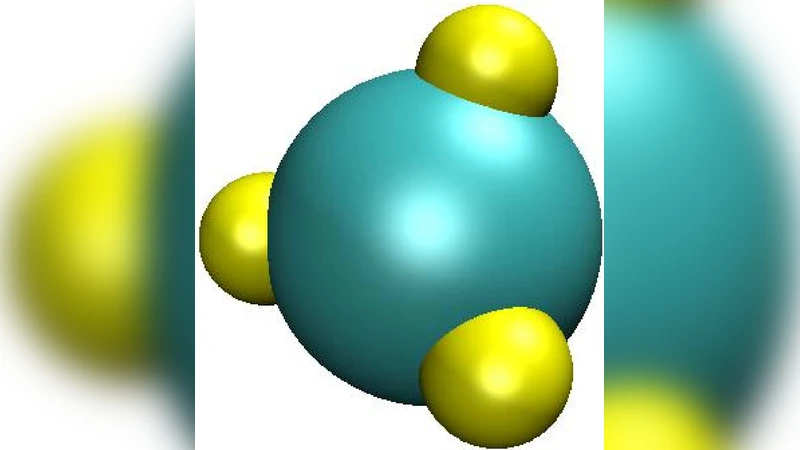
We apply a simple model system of patchy particles to study monodisperse self-assembly, using the Platonic solids as target structures. We find marked differences between the assembly behaviours of the different systems. Tetrahedra, octahedra and icosahedra assemble easily, while cubes are more challenging and dodecahedra do not assemble. We relate these differences to the kinetics and thermodynamics of assembly, with the formation of large disordered aggregates a particular important competitor to correct assembly. In particular, the free energy landscapes of those targets that are easy to assemble are funnel-like, whereas for the dodecahedral system the landscape is relatively flat with little driving force to facilitate escape from disordered aggregates.
💡 Research Summary
The paper investigates the self‑assembly of monodisperse clusters using a minimalist model of patchy particles, with the five Platonic solids (tetrahedron, cube, octahedron, icosahedron, and dodecahedron) serving as target structures. Each particle carries a small number of attractive patches that enforce specific bonding angles and directions, thereby biasing the system toward the geometry of the chosen solid. By performing extensive Monte‑Carlo and molecular‑dynamics simulations across a broad range of temperatures and particle concentrations, the authors map out the conditions under which each solid successfully forms, and they analyze the underlying thermodynamic and kinetic factors that govern the process.
The results reveal a striking hierarchy of assembly propensity. Tetrahedra, octahedra, and icosahedra assemble readily over relatively wide “assembly windows” of temperature and density. Their free‑energy landscapes are funnel‑shaped: an initial nucleation event rapidly lowers the system’s free energy, and subsequent growth proceeds downhill toward the target structure with little kinetic trapping. In contrast, cubes are considerably more difficult to form. The 90° bonding geometry imposes a higher nucleation barrier, and only a narrow region of low temperature and high concentration yields appreciable yields. Even then, large disordered aggregates compete strongly, reducing overall efficiency. Dodecahedra fail to assemble altogether. The 12‑face geometry requires very precise angular alignment (≈108°), which makes the nucleation barrier prohibitively high. Simulations show that the system almost always collapses into extensive amorphous clusters. Free‑energy calculations confirm that the dodecahedral landscape is essentially flat, offering little thermodynamic driving force to escape from disordered states.
The authors attribute these differences to two intertwined factors. Thermodynamically, the number of bonds per particle and the distribution of bond angles determine the enthalpic gain of the target structure; structures with fewer, more flexible bonds (tetrahedron, octahedron, icosahedron) gain enough energy to offset the entropic cost of ordering. Kinetically, the relative rates of correct nucleus formation versus uncontrolled aggregate growth dictate whether the system can reach the funnel bottom before becoming trapped in a metastable aggregate. For the dodecahedron, the flat landscape means that once a disordered aggregate forms, there is virtually no gradient to drive reorganization, so the system remains stuck.
The paper also provides practical guidance for experimental design. By charting the assembly windows, the authors show that modest adjustments of temperature or concentration can dramatically improve yields for the “easy” targets, while the “hard” targets would require either more sophisticated patch designs (e.g., multiple patch types or directional specificity) or external fields to bias the assembly pathway. Overall, the study demonstrates that successful self‑assembly of monodisperse clusters is not solely a matter of designing attractive patches; one must also consider the global free‑energy landscape and the competition from kinetic traps. These insights are directly applicable to the engineering of nanoscale materials, virus‑like particles, and programmable colloidal crystals where precise control over size and geometry is essential.
Comments & Academic Discussion
Loading comments...
Leave a Comment