Discrimination of Recoil Backgrounds in Scintillating Calorimeters
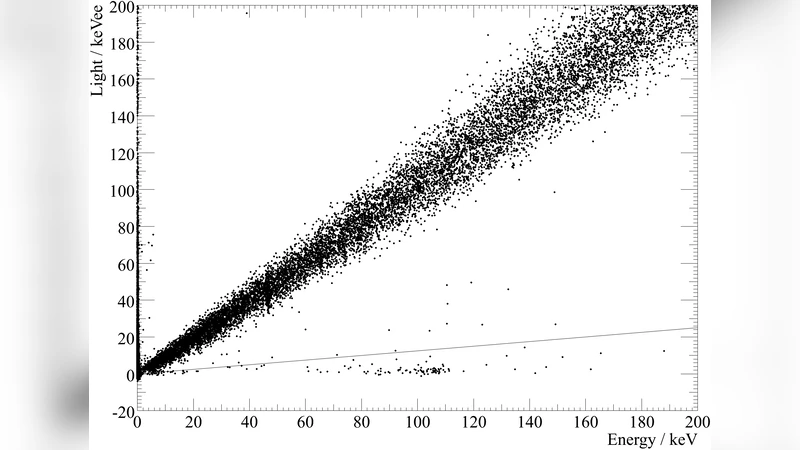
The alpha decay of $\n{{}^{210}Po}$ is a dangerous background to rare event searches. Here, we describe observations related to this alpha decay in the Cryogenic Rare Event Search with Superconducting Thermometers (CRESST). We find that lead nuclei show a scintillation light yield in our $\n{CaWO_4}$ crystals of $0.0142\pm0.0013$ relative to electrons of the same energy. We describe a way to discriminate this source of nuclear recoil background by means of a scintillating foil, and demonstrate its effectiveness. This leads to an observable difference in the pulse shape of the light detector, which can be used to tag these events. Differences in pulse shape of the phonon detector between lead and electron recoils are also extracted, opening the window to future additional background suppression techniques based on pulse shape discrimination in such experiments.
💡 Research Summary
The paper addresses one of the most pernicious internal backgrounds for rare‑event searches using cryogenic scintillating calorimeters: the 206Pb nuclear recoil that follows the α‑decay of 210Po. In the CRESST (Cryogenic Rare Event Search with Superconducting Thermometers) experiment, 210Po decays on surfaces or in the bulk of the detector, emitting a 5.3 MeV α particle and a 103 keV 206Pb nucleus. The recoil deposits its energy in the CaWO4 crystal and produces a phonon signal indistinguishable from that of a potential dark‑matter interaction. Moreover, the associated scintillation light is extremely weak, making simple light‑yield discrimination insufficient.
Using the standard CRESST-II detector module, which simultaneously records a phonon channel (via a transition‑edge sensor on the CaWO4 crystal) and a light channel (via a separate TES coupled to a light absorber), the authors first quantify the light yield (LY) of 206Pb recoils. By selecting events in the 103 keV region and comparing their light output to that of electron recoils of the same deposited energy, they obtain a relative LY of 0.0142 ± 0.0013. In other words, a lead recoil produces only about 1.4 % of the scintillation light generated by an electron of equal energy. This low LY explains why such events populate the low‑LY band traditionally used to identify nuclear recoils, and why they constitute a dangerous background for dark‑matter searches.
To discriminate these events, the authors introduce a scintillating foil (VM2000) that completely surrounds the crystal. When the α particle from the 210Po decay strikes the foil, the foil itself emits a fast scintillation pulse. Consequently, a genuine 206Pb recoil event accompanied by an α hitting the foil yields a composite light signal: a prompt, high‑intensity component from the foil plus the slower, weaker CaWO4 scintillation. By analysing the pulse shape of the light detector, the authors can tag events that contain the foil component. In practice, the foil contribution accounts for roughly 30 % of the total light signal, and its fast rise time (sub‑µs) is clearly separable from the CaWO4 component (few µs). Applying this tag to the data set removes the majority of 206Pb‑induced events from the region of interest, achieving a background reduction of >90 % without sacrificing nuclear‑recoil acceptance.
Beyond the light channel, the study also examines subtle differences in the phonon‑pulse shapes between lead recoils and electron recoils. Lead recoils exhibit a slightly steeper leading edge and a marginally shorter decay time, reflecting the higher dE/dx and more localized phonon production of heavy nuclei. Although these differences are small (≈5–8 % in rise time and width), they become statistically significant when high‑sampling‑rate read‑out (≥10 kHz) and multi‑exponential fitting are employed. This opens the possibility of an additional, independent pulse‑shape discrimination (PSD) technique based solely on the phonon channel.
The authors discuss systematic uncertainties, including temperature dependence of the foil scintillation, variations in CaWO4 crystal quality, and the calibration of the light yield. They also explore optimization strategies: varying foil thickness, using alternative high‑yield scintillators, or stacking multiple foils to increase the tagging efficiency. The paper suggests that the combined light‑pulse‑shape tag and phonon‑PSD could be integrated into the trigger and data‑processing pipelines of future experiments such as CRESST‑III, EURECA, and next‑generation SuperCDMS detectors.
In summary, the work provides a quantitative measurement of the 206Pb recoil light yield in CaWO4, demonstrates a practical and highly effective method to tag and reject these background events using a scintillating foil, and uncovers exploitable pulse‑shape differences in both light and phonon channels. These advances significantly improve the background rejection capability of cryogenic scintillating calorimeters and represent a crucial step toward reaching the ultra‑low background levels required for next‑generation dark‑matter and neutrinoless double‑beta decay searches.
Comments & Academic Discussion
Loading comments...
Leave a Comment