In-situ observation of a soap film catenoid - a simple educational physics experiment
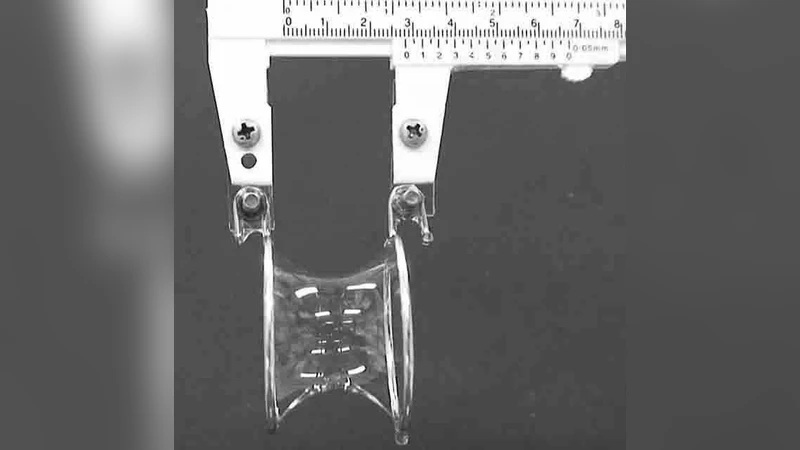
The solution to the Euler-Lagrange equation is an extremal functional.To understand that the functional is stationary at local extrema (maxima or minima), we propose a physics experiment that involves using soap film to form a catenoid. A catenoid is a surface that is formed between two coaxial circular rings and is classified mathematically as a minimal surface.Using soap film, we create catenoids between two rings and characterize the catenoid in-situ while varying distance between rings. The shape of the soap film is very interesting and can be explained using dynamic mechanics. By observing catenoid, physics students can observe local extrema phenomena. We stress that in-situ observation of soap film catenoids is an appropriate physics experiment that combines theory and experimentation.
💡 Research Summary
The paper presents a straightforward yet powerful laboratory activity that links the calculus of variations to a tangible physical system: a soap‑film catenoid formed between two coaxial circular rings. Starting from the principle that the equilibrium shape of a surface under uniform tension minimizes its area, the authors derive the Euler‑Lagrange equation for the functional (A
Comments & Academic Discussion
Loading comments...
Leave a Comment