Modelling conflicts with cluster dynamics on networks
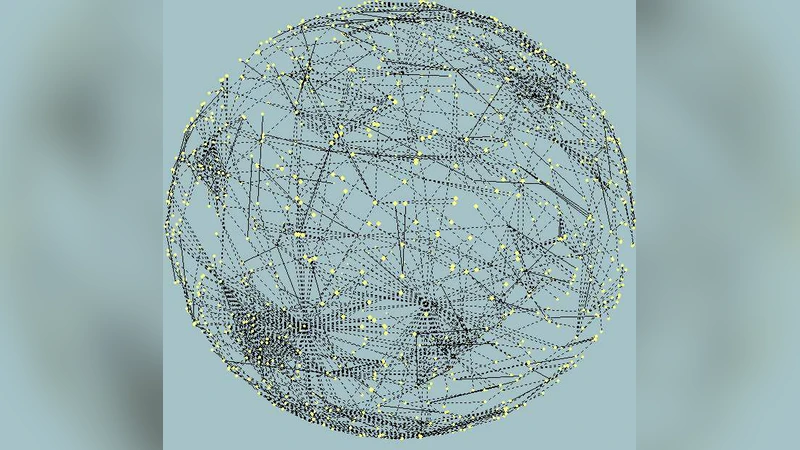
We introduce cluster dynamical models of conflicts in which only the largest cluster can be involved in an action. This mimics the situations in which an attack is planned by a central body, and the largest attack force is used. We study the model in its annealed random graph version, on a fixed network, and on a network evolving through the actions. The sizes of actions are distributed with a power-law tail, however, the exponent is non-universal and depends on the frequency of actions and sparseness of the available connections between units. Allowing the network reconstruction over time in a self-organized manner, e.g., by adding the links based on previous liaisons between units, we find that the power-law exponent depends on the evolution time of the network. Its lower limit is given by the universal value 5/2, derived analytically for the case of random fragmentation processes. In the temporal patterns behind the size of actions we find long-range correlations in the time series of number of clusters and non-trivial distribution of time that a unit waits between two actions. In the case of an evolving network the distribution develops a power-law tail, indicating that through the repeated actions, the system develops internal structure which is not just more effective in terms of the size of events, but also has a full hierarchy of units.
💡 Research Summary
The paper introduces a novel cluster‑dynamics framework for modeling conflicts in which only the largest existing cluster may be involved in an “action”. This rule captures the realistic situation where a central command plans an operation and deploys its biggest force. The authors study three variants of the model: (i) an annealed random‑graph setting where links are reshuffled at each time step, (ii) a fixed underlying network (a tree‑of‑trees structure) that constrains aggregation to existing edges, and (iii) an evolving network in which, after each action, the units that participated are fully connected, thereby increasing the average degree over time.
The microscopic dynamics are simple. At each discrete time step a random pair of units is linked with probability p (aggregation), or, with probability 1‑p, the current largest cluster is completely fragmented (all internal links are removed). In the annealed case the fragmentation of the maximal cluster produces a cluster‑size distribution P(s) that follows a power law P(s)∝s⁻τ for sizes above a threshold s₀. The exponent τ is not universal: it continuously decreases as p increases (e.g., τ≈6 for p=0.9, τ≈4 for p=0.95, τ≈3 for p=0.98) and asymptotically approaches the analytically known universal value τ=5/2 when p→1, i.e., when fragmentation becomes vanishingly rare. This reproduces the classic result of the Eguiluz‑Zimmermann (EZ) coagulation‑fragmentation model but adds a tunable degree of non‑universality because the fragmenting cluster is always the largest one rather than a randomly chosen one.
Temporal analysis of the number of clusters N_c(t) reveals long‑range correlations. The power spectrum S(ν) decays as ν⁻φ with φ≈1.6 for maximal‑cluster fragmentation, compared with φ≈1.9 for random fragmentation. Thus, the deterministic choice of the largest cluster introduces a memory effect into the dynamics. The waiting time Δt between successive fragmentation events is exponentially distributed at the system level (reflecting the external Poissonian fragmentation probability 1‑p). However, when the waiting time is measured for individual units that actually participated in an action, the distribution becomes non‑trivial and depends strongly on the underlying network topology, mirroring the heterogeneous inter‑event times observed in real conflict data.
When the aggregation process is constrained to a fixed network, the cluster‑size exponent τ is larger (τ≈6.3 for p=0.9, τ≈3.8 for p=0.95, τ≈3.1 for p=0.98) because the sparse connectivity limits the growth of large clusters. The power‑law tail is therefore steeper than in the annealed case. The temporal correlations are weaker, and the power‑spectral exponent φ is closer to 2, indicating a more short‑range, noise‑like behavior.
The most striking results arise in the evolving‑network scenario. After each fragmentation of the maximal cluster, all units that were part of that cluster are linked together, forming a clique. This self‑organized reconstruction raises the average degree as the simulation proceeds. Consequently, larger clusters become more likely, and the size distribution exponent τ decreases with the evolution time T. The authors demonstrate a clear linear relationship τ≈a·(1/T)+b, showing that for long evolution times τ converges to the universal lower bound 5/2. Simultaneously, the power‑spectral exponent φ drops (e.g., φ≈1.75 for p=0.9, φ≈1.36 for p=0.95), indicating stronger long‑range correlations in the evolving network compared with the fixed case. The waiting‑time distribution for individual units also develops a power‑law tail, suggesting that the repeated actions generate an internal hierarchical structure among the units.
Overall, the paper provides three key insights: (1) imposing a maximal‑cluster fragmentation rule yields a tunable, non‑universal power‑law exponent for event sizes, bridging the gap between the universal τ=5/2 of earlier models and the diverse exponents reported in empirical studies of wars and terrorist attacks; (2) the topology of the underlying network, and especially its evolution driven by the actions themselves, critically determines both the size distribution and the temporal correlation structure; (3) the feedback loop where actions reshape the network creates a self‑organizing hierarchy that reproduces the heavy‑tailed inter‑event times and 1/f‑type noise observed in real conflict data. These findings have implications for the quantitative modeling of insurgencies, terrorist networks, and any socio‑technical system where coordinated large‑scale actions are planned and executed by a central authority.
Comments & Academic Discussion
Loading comments...
Leave a Comment