The Extremely Luminous Supernova 2006gy at Late Phase: Detection of Optical Emission from Supernova
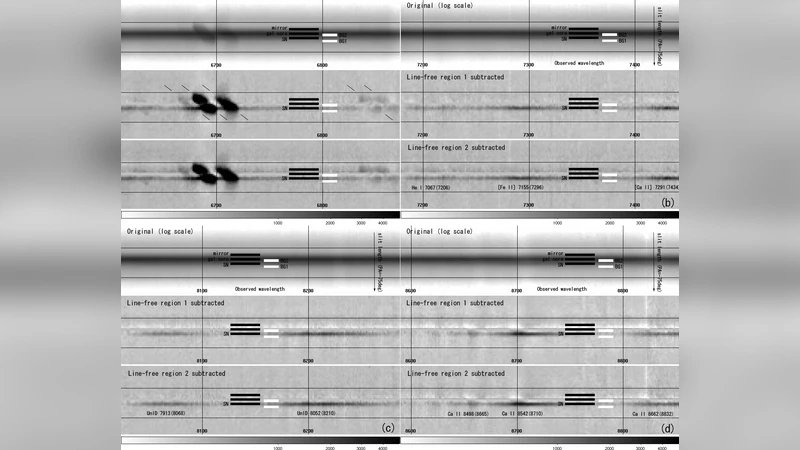
We performed optical spectroscopy and photometry of SN 2006gy at late time, ~400 days after the explosion, with the Subaru/FOCAS in a good seeing condition. We found that the SN faded by ~3 mag from ~200 to ~400 days after the explosion (i.e., by ~5 mag from peak to ~400 days) in R band. The overall light curve is marginally consistent with the 56Ni heating model, although the flattening around 200 days suggests the optical flux declined more steeply between ~200 and ~400 days. The late time spectrum was quite peculiar among all types of SNe. It showed many intermediate width (~2000 km/s FWHM) emission lines, e.g., [Fe II], [Ca II], and Ca II. The absence of the broad [O I] 6300, 6364 line and weakness of [Fe II] and [Ca II] lines compared with Ca II IR triplet would be explained by a moderately high electron density in the line emitting region. This high density assumption seems to be consistent with the large amount of ejecta and low expansion velocity of SN 2006gy. The H-alpha line luminosity was as small as ~1x10^39 erg/s, being comparable with those of normal Type II SNe at similar epochs. Our observation indicates that the strong CSM interaction had almost finished by ~400 days. If the late time optical flux is purely powered by radioactive decay, at least M_Ni ~ 3 M_sun should be produced at the SN explosion. In the late phase spectrum, there were several unusual emission lines at 7400–8800 AA and some of them might be due to Ti or Ni synthesized at the explosion. (abridged)
💡 Research Summary
This paper presents the first detailed optical spectroscopy and photometry of the extremely luminous supernova (SN) 2006gy at a late epoch, roughly 400 days after explosion, obtained with the Subaru 8.2‑m telescope equipped with the FOCAS instrument under excellent seeing conditions. The authors report that the supernova faded by about three magnitudes between ~200 days and ~400 days post‑explosion, corresponding to an overall decline of ~5 mag from peak brightness in the R‑band. The light curve shows a modest flattening around 200 days, but a noticeably steeper decline thereafter, suggesting that the dominant power source changed during this interval.
The authors compare the observed decline with the radioactive decay of ^56Ni → ^56Co → ^56Fe. While the overall trend is marginally compatible with a Ni‑powered model, the steepening after 200 days implies that an additional energy input—most plausibly circumstellar‑medium (CSM) interaction—was significant at earlier times but had largely ceased by ~400 days. By fitting the late‑time luminosity with a pure decay model, they infer that at least ~3 M⊙ of ^56Ni must have been synthesized, a value far exceeding the typical ~0.1–0.5 M⊙ produced in ordinary core‑collapse supernovae. This large Ni mass points to an unusually energetic explosion mechanism, possibly involving a pair‑instability event or a massive fallback/jet‑driven explosion.
Spectroscopically, the 400‑day spectrum is highly unusual. It exhibits a suite of intermediate‑width (FWHM ≈ 2000 km s⁻¹) emission lines, including forbidden
Comments & Academic Discussion
Loading comments...
Leave a Comment