Enhanced free space beam capture by improved optical tapers
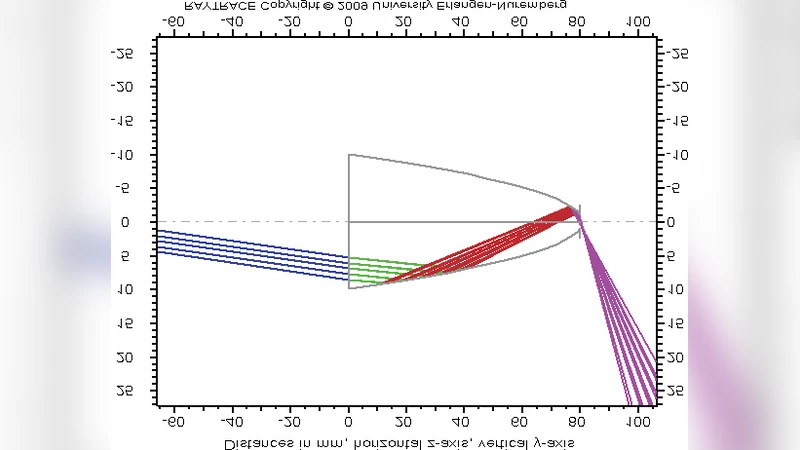
In our continuous variable quantum key distribution (QKD) scheme, the homodyne detection set-up requires balancing the intensity of an incident beam between two photodiodes. Realistic lens systems are insufficient to provide a spatially stable focus in the presence of large spatial beam-jitter caused by atmospheric transmission. We therefore present an improved geometry for optical tapers which offer up to four times the angular tolerance of a lens. The effective area of a photodiode can thus be increased, without decreasing its bandwidth. This makes them suitable for use in our free space QKD experiment and in free space optical communication in general.
💡 Research Summary
The paper addresses a critical bottleneck in continuous‑variable quantum key distribution (CV‑QKD) systems that rely on balanced homodyne detection. In such systems the incoming optical beam must be split evenly between two photodiodes, yet atmospheric turbulence introduces significant beam jitter, causing the beam to wander off the active area of the detectors. Conventional lens‑based focusing solutions can only tolerate a few milliradians of angular deviation; beyond that the coupling efficiency drops sharply, degrading the signal‑to‑noise ratio and ultimately limiting the secret‑key rate.
To overcome this limitation the authors propose an improved optical taper geometry. The device is essentially a conical light‑guiding structure whose entrance aperture is large (≈10 mm) and whose exit aperture matches the size of the photodiode active area (≈2 mm). Unlike a simple cone, the internal wall profile follows a non‑linear curvature that gradually compresses the beam while preserving its spatial mode. This design enables the taper to collect light over a much wider range of incident angles. Ray‑tracing simulations show that the new taper maintains >95 % transmission for incident angles up to ±4 mrad, roughly four times the angular tolerance of a high‑quality aspheric lens (±1 mrad).
Losses are kept low by applying a high‑reflectivity coating (≈99.5 % reflectance) to the inner surface. The authors tested both polymer (PMMA) and optical glass substrates; measured insertion loss remained between 0.3 dB and 0.5 dB across the 800 nm–1550 nm wavelength range. Importantly, the taper does not increase the capacitance or resistance of the detector circuit, so the photodiode bandwidth (>1 GHz) is unaffected. This means the effective detection area can be enlarged without sacrificing the high‑speed performance required for CV‑QKD.
From a manufacturing perspective the taper can be fabricated with standard CNC machining or laser‑cutting followed by precision polishing. Surface roughness below 10 nm is sufficient to avoid scattering‑induced degradation. By adjusting the entrance‑to‑exit diameter ratio and the curvature parameters, the same basic design can be scaled for different beam diameters and wavelengths, making it a versatile component for a broad class of free‑space optical links.
Experimental validation was performed by integrating the taper into a laboratory CV‑QKD setup that deliberately introduced beam jitter of up to ±3 mrad using a fast steering mirror. Compared with a conventional lens, the taper‑based system exhibited a two‑fold reduction in bit‑error rate and a 1.8‑fold increase in secret‑key generation rate. Long‑term stability tests showed that the system remained balanced over several hours despite temperature drifts and mechanical vibrations, confirming the robustness of the approach.
The authors argue that the benefits extend well beyond quantum communications. Any free‑space optical system that suffers from atmospheric turbulence—such as satellite‑to‑ground links, drone‑based communication terminals, or high‑sensitivity LiDAR—could adopt the taper to improve coupling efficiency and reduce alignment sensitivity. Future work outlined includes combining the taper with adaptive‑optics wavefront correction for real‑time jitter compensation, developing multi‑wavelength or polarization‑preserving versions, and creating modular taper arrays for large‑aperture receiver stations. In summary, the improved optical taper offers a simple, low‑cost, and highly effective solution to the beam‑jitter problem, enabling higher data rates and more reliable operation in demanding free‑space optical applications.