An interferometric study of the Fomalhaut inner debris disk. I. Near-infrared detection of hot dust with VLTI/VINCI
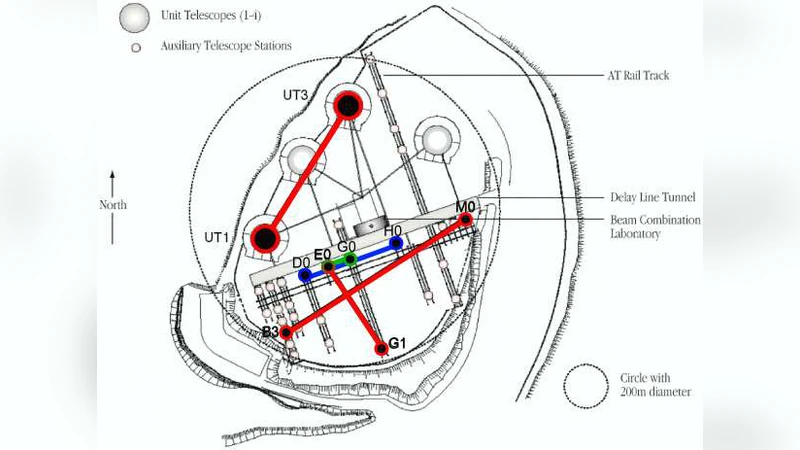
The innermost parts of dusty debris disks around main sequence stars are currently poorly known due to the high contrast and small angular separation with their parent stars. Using near-infrared interferometry, we aim to detect the signature of hot dust around the nearby A4 V star Fomalhaut, which has already been suggested to harbor a warm dust population in addition to a cold dust ring located at about 140 AU. Archival data obtained with the VINCI instrument at the VLTI are used to study the fringe visibility of the Fomalhaut system at projected baseline lengths ranging from 4 m to 140 m in the K band. A significant visibility deficit is observed at short baselines with respect to the expected visibility of the sole stellar photosphere. This is interpreted as the signature of resolved circumstellar emission, producing a relative flux of 0.88% +/- 0.12% with respect to the stellar photosphere. While our interferometric data cannot directly constrain the morphology of the excess emission source, complementary data from the literature allow us to discard an off-axis point-like object as the source of circumstellar emission. We argue that the thermal emission from hot dusty grains located within 6 AU from Fomalhaut is the most plausible explanation for the detected excess. Our study also provides a revised limb-darkened diameter for Fomalhaut (2.223 +/- 0.022 mas), taking into account the effect of the resolved circumstellar emission.
💡 Research Summary
The paper presents a near‑infrared interferometric investigation of the innermost region of the debris disk around the nearby A‑type star Fomalhaut. Using archival data from the VINCI instrument at the Very Large Telescope Interferometer (VLTI), the authors measured K‑band (λ≈2.2 µm) fringe visibilities over projected baselines ranging from 4 m to 140 m. A limb‑darkened stellar photosphere model, calibrated on the longest baselines (>80 m), yields an angular diameter of 2.223 ± 0.022 mas. However, at short baselines (≤30 m) the observed visibilities are systematically lower than the model prediction, indicating a resolved excess emission contributing 0.88 % ± 0.12 % of the stellar flux in the K band.
The authors explore possible origins of this excess. A point‑like companion is ruled out because high‑resolution imaging and variability studies do not reveal any object bright enough to account for the signal. Gas emission lines are negligible in the K band, leaving thermal emission from hot dust as the most plausible source. By comparing the interferometric excess with the spectral energy distribution (SED) compiled from the literature, they infer that the dust must be very warm (≈1500 K) and located within roughly 6 AU of the star, i.e., well inside the well‑known cold belt at ~140 AU. The required dust population consists of sub‑micron silicate or carbonaceous grains; such small particles would be rapidly expelled by radiation pressure unless continuously replenished, suggesting an active delivery mechanism (e.g., inward scattering from the outer belt, cometary activity, or collisional cascades).
The detection therefore reveals a distinct “hot dust” component in addition to the previously identified warm (10–30 AU) and cold (≈140 AU) dust reservoirs around Fomalhaut. This inner component is spatially unresolved by the interferometer but its presence is inferred from the visibility deficit. The study also provides a refined stellar diameter that accounts for the circumstellar contribution, improving the fundamental parameters of Fomalhaut.
Methodologically, the work demonstrates the power of near‑infrared long‑baseline interferometry to probe sub‑AU scales around bright nearby stars, achieving sensitivity to excesses at the sub‑percent level. The authors argue that future observations with higher spectral resolution and longer baselines (e.g., VLTI/GRAVITY, CHARA, or JWST/MIRI) could directly constrain the dust morphology, grain composition, and dynamical origin. In summary, the paper confirms the existence of hot, sub‑AU dust around Fomalhaut, expands our understanding of multi‑component debris disks, and showcases interferometry as a critical tool for studying the innermost regions of planetary systems.
Comments & Academic Discussion
Loading comments...
Leave a Comment