Life and Times of Georgy Voronoi
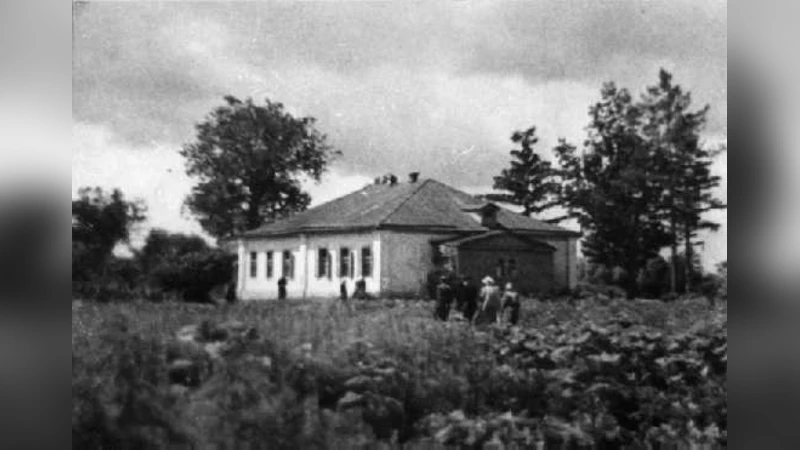
Georgy Theodosiyovych Voronoi (1868-1908) is famous for his seminal contributions to number theory,perhaps mostly those involving quadratic forms and Voronoi tessellations. He was born and grew up in the town of Zhuravka in the Ukraine, at the time part of the Russian Empire. Having studied at St. Petersburg University under the supervision of Andrey Markov, in 1894 he became a professor of pure mathematics at the University of Warsaw. In his career he published six large memoirs and six short papers, each of which were so profound and significant that they left a deep trace in modern number theory. Together with Minkowski, he can be considered as the founder of the Geometry of Numbers. In this contribution, a brief sketch will be given of his life, work and legacy.
💡 Research Summary
Georgy Theodosiyovych Voronoi (1868‑1908) was a mathematician whose brief but extraordinarily productive career left a lasting imprint on number theory, geometry, and their many applications. Born in the small Ukrainian town of Zhuravka, then part of the Russian Empire, Voronoi displayed an early aptitude for mathematics that earned him a place at St. Petersburg University. There he studied under Andrey Markov, whose influence introduced him to rigorous analytical methods and probabilistic thinking.
In 1894 Voronoi accepted a professorship in pure mathematics at the University of Warsaw. During his tenure he produced six major memoirs and six shorter papers, each addressing deep structural questions in the theory of quadratic forms and lattice geometry. His first landmark memoir (1896) presented a complete reduction theory for multivariate quadratic forms, extending the classical one‑dimensional reduction of binary forms. This work laid the groundwork for the later “geometry of numbers” developed by Hermann Minkowski and positioned Voronoi as a co‑founder of that discipline.
Perhaps his most celebrated contribution is the algorithm now known as the Voronoi algorithm for multidimensional continued fractions. By generalising the Euclidean algorithm to higher‑dimensional lattices, Voronoi provided a systematic way to approximate algebraic numbers in several variables. The algorithm’s convergence properties and its link to the reduction of quadratic forms have become essential tools in modern algebraic number theory and lattice‑based cryptography.
In parallel, Voronoi introduced the concept of space partitioning that bears his name: Voronoi tessellations. He proved that for any discrete set of points in Euclidean space, the region consisting of all locations closer to a given point than to any other forms a convex polytope. This geometric insight not only solved longstanding problems about the densest lattice packings and the minimal distance between lattice points, but also opened a new field of study where number theory meets geometry.
Voronoi’s correspondence with Minkowski refined the fundamental “Minkowski‑Voronoi theorem,” which relates the volume of a convex body to the existence of non‑zero lattice points inside it. Their collaboration cemented the principle that geometric arguments can resolve purely arithmetic questions—a paradigm that continues to guide contemporary research.
Tragically, Voronoi’s life was cut short by a sudden bout of pneumonia at the age of 40. Nevertheless, his ideas rapidly disseminated across Europe. British mathematician G. H. Hardy, German algebraist Helmut Hasse, and French analyst André Weil all drew on Voronoi’s methods in their own work. In the twentieth century, Voronoi tessellations became indispensable in fields as diverse as crystallography, computational geometry, geographic information systems, and wireless network design, while his reduction theory remains a cornerstone of modern algebraic and analytic number theory.
In summary, Georgy Voronoi’s legacy rests on two pillars: a deep theoretical framework for quadratic forms and multidimensional continued fractions, and a versatile geometric construction that partitions space into nearest‑neighbour cells. Together with Minkowski, he forged the geometry of numbers, a discipline that continues to illuminate the interplay between discrete arithmetic structures and continuous geometric spaces. His influence endures in both pure mathematics and a broad spectrum of applied sciences.