The Scientific Life Of John Bahcall
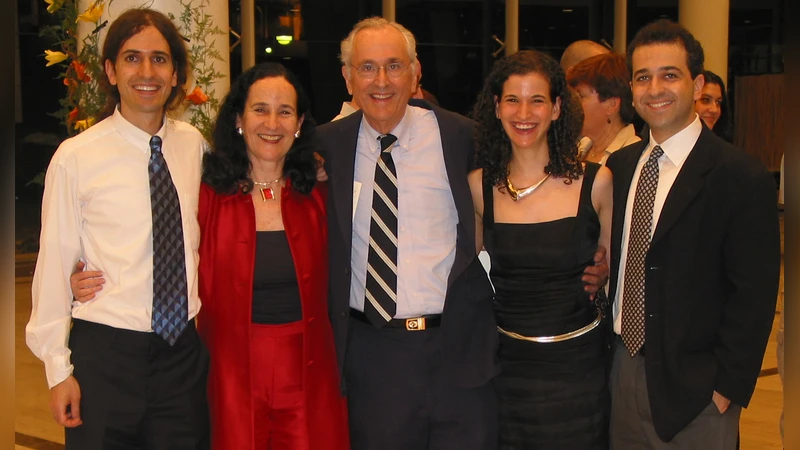
This article follows the scientific life of John Norris Bahcall, including his tenacious pursuit of the solar neutrino problem, his contributions to our understanding of galaxies, quasars, and their emissions, and his leadership of and advocacy for astronomy and astrophysics.
💡 Research Summary
John Norris Bahcall (1934‑2005) stands as one of the most influential figures in modern astrophysics, and his career can be divided into three interlocking pillars: the solar‑neutrino problem, the quantitative modeling of galaxies and quasars, and his leadership in scientific policy and education. After completing his Ph.D. at UC Berkeley, Bahcall joined Princeton in the early 1960s, where he began work on the structure and luminosity distribution of the Milky Way. Together with collaborators he devised the Bahcall‑Soneira model, a two‑component description of the Galactic disk and bulge that successfully reproduced star counts and surface‑brightness profiles across a wide range of wavelengths. This model became a benchmark for later Galactic‑evolution simulations and for interpreting deep‑sky surveys.
Bahcall’s most celebrated contribution, however, concerns the solar neutrino problem. In the 1960s, the pioneering Ray Davis chlorine experiment and later the Homestake experiment measured a neutrino flux far below the value predicted by nuclear physics. Recognizing that the discrepancy could be rooted either in particle physics or in an incomplete solar model, Bahcall set out to construct a rigorously calibrated Standard Solar Model (SSM). He incorporated the latest nuclear reaction rates for the pp‑chain and CNO cycle, detailed opacity tables, helioseismic constraints, and element‑abundance profiles into a self‑consistent stellar evolution code. The SSM yielded a precise prediction for the electron‑neutrino flux at Earth, which, when compared with the experimental results, highlighted a persistent deficit—later identified as evidence for neutrino flavor oscillations. Bahcall’s role was not merely theoretical; he maintained an active dialogue with experimentalists, advocated for improved detector sensitivity, and helped shape the design of subsequent experiments such as GALLEX, SAGE, Super‑Kamiokande, and SNO. The eventual confirmation of neutrino oscillations in the early 2000s vindicated Bahcall’s model and cemented his reputation as a bridge between astrophysics and particle physics.
In the realm of extragalactic astronomy, Bahcall contributed seminal ideas about quasars and active galactic nuclei (AGN). In the 1970s he proposed a framework—often referred to as the Bahcall‑Wolfe or Bahcall‑Worpitzky model—wherein supermassive black holes accreting matter at near‑Eddington rates generate relativistic jets and intense radiation fields. By coupling synchrotron emission with inverse‑Compton scattering, his model reproduced the broad, non‑thermal spectra and rapid variability observed in radio‑loud quasars. This work laid the groundwork for later, more sophisticated magnetohydrodynamic simulations of black‑hole accretion disks and jet formation, influencing a generation of researchers studying AGN feedback in galaxy evolution.
Beyond research, Bahcall was a tireless advocate for the scientific community. He served on the NASA Solar Neutrino Observatory advisory board, chaired committees of the American Physical Society (APS) and the American Astronomical Society (AAS), and championed funding for large‑scale neutrino detectors. Recognizing the importance of nurturing young talent, he helped establish the John N. Bahcall Fellowship, which supports early‑career astronomers, and he promoted international collaboration, especially with institutions in Asia and Africa. His popular‑science writings and public lectures made complex topics—such as the inner workings of the Sun and the nature of dark matter—accessible to a broad audience, reinforcing public support for fundamental research.
In sum, John Bahcall’s legacy is multifaceted: his meticulous construction of the Standard Solar Model resolved a decades‑long puzzle and opened a new window onto particle physics; his galaxy‑structure and quasar models provided quantitative tools that remain in use; and his leadership helped shape the infrastructure, funding, and culture of modern astrophysics. The impact of his work continues to be felt in contemporary neutrino experiments, galactic‑evolution simulations, and black‑hole astrophysics, while his commitment to mentorship and outreach endures as an exemplar for future generations of scientists.
Comments & Academic Discussion
Loading comments...
Leave a Comment