Endogenous circannual rhythm in LH secretion: insight from signal analysis coupled with mathematical modelling
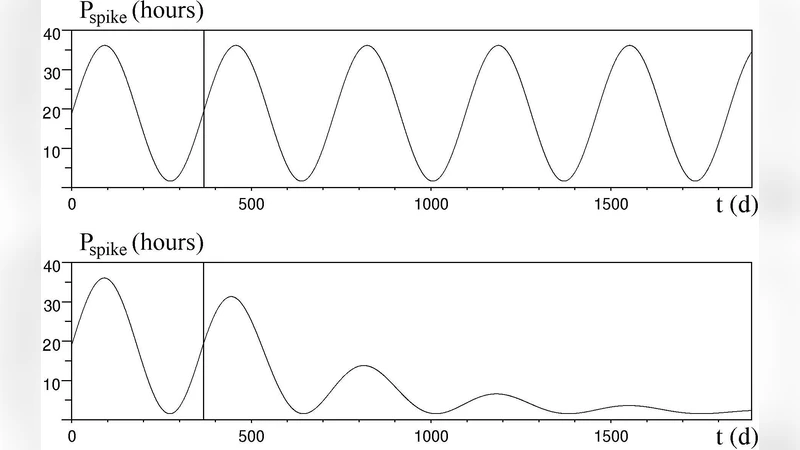
In sheep as in many vertebrates, the seasonal pattern of reproduction is timed by the annual photoperiodic cycle, characterized by seasonal changes in the daylength. The photoperiodic information is translated into a circadian profile of melatonin secretion. After multiple neuronal relays (within the hypothalamus), melatonin impacts GnRH (gonadotrophin releasing hormone) secretion that in turn controls ovarian cyclicity. The pattern of GnRH secretion is mirrored into that of LH (luteinizing hormone) secretion, whose plasmatic level can be easily measured. We addressed the question of whether there exists an endogenous circannual rhythm in a tropical sheep population that exhibits clear seasonal ovarian activity when ewes are subjected to temperate latitudes. We based our analysis on LH time series collected in the course of 3 years from ewes subjected to a constant photoperiodic regime. Due to intra- and inter- animal variability and unequal sampling times, the existence of an endogenous rhythm is not straightforward. We have used time-frequency signal processing methods to extract hidden rhythms from the data. To further investigate the LF (low frequency) and HF (high frequency) components of the signals, we have designed a mathematical model of LH plasmatic level accounting for the effect of experimental sampling times. The model enables us to confirm the existence of an endogenous circannual rhythm, to investigate the action mechanism of photoperiod on the pulsatile pattern of LH secretion (control of the interpulse interval) and to conclude that the HF component is mainly due to the experimental sampling protocol.
💡 Research Summary
The study investigates whether a tropical sheep population retains an endogenous circannual rhythm in luteinizing hormone (LH) secretion when kept under a constant photoperiod at temperate latitudes. Over three years, plasma LH concentrations were measured from ewes that experienced no seasonal changes in day length. Because the sampling schedule was irregular and both intra‑ and inter‑animal variability were high, conventional time‑series analysis could not readily reveal hidden periodicities. The authors therefore applied advanced time‑frequency signal processing, specifically wavelet‑based spectral decomposition, to isolate low‑frequency (LF) and high‑frequency (HF) components of the LH signal.
The wavelet analysis uncovered a robust LF peak corresponding to an approximately 12‑month cycle that persisted throughout the three‑year observation period, despite the absence of external photoperiodic cues. This finding suggests the presence of an internal, self‑sustained circannual oscillator governing LH release. In contrast, the HF component displayed a regular 2‑ to 4‑week periodicity that matched the experimental blood‑sampling interval, indicating that this high‑frequency fluctuation was an artefact of the measurement protocol rather than a physiological rhythm.
To further dissect these observations, the researchers constructed a mathematical model of LH secretion. The model treats LH release as a series of discrete pulses, each separated by an interpulse interval (IPI). Photoperiodic input was modeled as a modulatory signal that lengthens or shortens the IPI, thereby influencing the timing of pulses. By fitting the model to the empirical data using least‑squares optimization, the authors demonstrated that the LF circannual rhythm could be reproduced even when the photoperiodic input was removed, confirming its endogenous nature. Moreover, when the sampling schedule was explicitly incorporated into the model, the simulated HF component closely matched the observed high‑frequency fluctuations, validating the hypothesis that these fluctuations arise from the sampling design.
The combined analytical approach yields several key insights. First, tropical sheep possess an intrinsic annual LH rhythm that operates independently of external light cues, highlighting a conserved internal timing mechanism across vertebrates. Second, photoperiodic information primarily fine‑tunes this internal oscillator by adjusting the IPI, thereby modulating the phase and amplitude of the LH cycle without generating the fundamental rhythm itself. Third, experimental design—particularly the regularity of sampling—can introduce spurious high‑frequency signals, underscoring the necessity of accounting for such artefacts in endocrine time‑series studies. Finally, the integration of time‑frequency signal processing with mechanistic modeling proves a powerful strategy for extracting biologically meaningful rhythms from noisy, unevenly sampled data.
These findings advance our understanding of seasonal reproductive regulation, suggesting that endogenous circannual clocks can persist even when environmental cues are muted. The methodological framework presented here can be applied to other hormonal systems and species, offering a robust tool for disentangling genuine physiological rhythms from methodological noise.
Comments & Academic Discussion
Loading comments...
Leave a Comment