A simple rule for axon outgrowth and synaptic competition generates realistic connection lengths and filling fractions
Neural connectivity at the cellular and mesoscopic level appears very specific and is presumed to arise from highly specific developmental mechanisms. However, there are general shared features of connectivity in systems as different as the networks formed by individual neurons in Caenorhabditis elegans or in rat visual cortex and the mesoscopic circuitry of cortical areas in the mouse, macaque, and human brain. In all these systems, connection length distributions have very similar shapes, with an initial large peak and a long flat tail representing the admixture of long-distance connections to mostly short-distance connections. Furthermore, not all potentially possible synapses are formed, and only a fraction of axons (called filling fraction) establish synapses with spatially neighboring neurons. We explored what aspects of these connectivity patterns can be explained simply by random axonal outgrowth. We found that random axonal growth away from the soma can already reproduce the known distance distribution of connections. We also observed that experimentally observed filling fractions can be generated by competition for available space at the target neurons–a model markedly different from previous explanations. These findings may serve as a baseline model for the development of connectivity that can be further refined by more specific mechanisms.
💡 Research Summary
The paper investigates whether two elementary principles—random axonal outgrowth from the soma and competition for limited synaptic space at target neurons—can account for the strikingly similar statistical features of neural connectivity observed across a wide range of species and scales. Empirical studies have shown that connection‑length distributions in Caenorhabditis elegans, rat visual cortex, and the mesoscopic wiring of mouse, macaque and human cortical areas all share a characteristic shape: a pronounced peak at short distances followed by a long, relatively flat tail that reflects the admixture of occasional long‑range links. Moreover, only a fraction of all geometrically possible synapses are realized; the proportion of axons that actually form a synapse with a neighboring neuron (the “filling fraction”) typically lies between 20 % and 50 %. Traditional explanations invoke highly specific molecular guidance cues, activity‑dependent pruning, or genetically encoded wiring diagrams, yet these mechanisms do not readily explain why such diverse systems converge on the same statistical signatures.
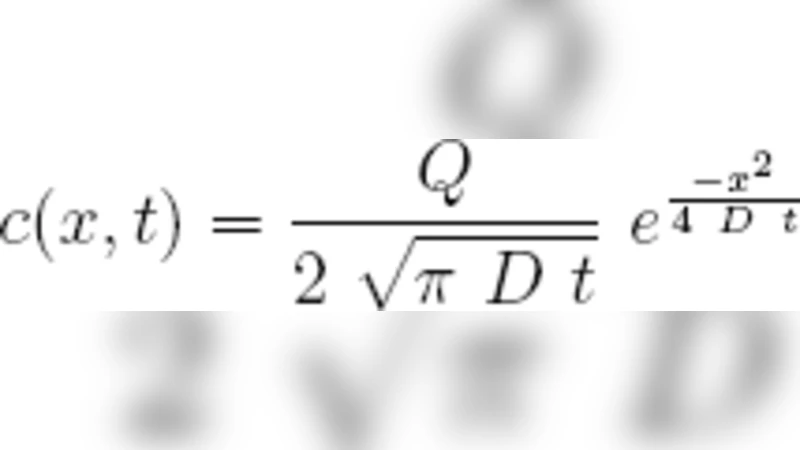
To test a minimalist hypothesis, the authors construct a computational model in which each neuron emits an axon that performs a three‑dimensional random walk away from its soma. The walk proceeds in discrete steps of fixed length; at each step the direction is chosen uniformly at random, thereby ensuring no intrinsic bias toward any target. When the growing tip comes within a predefined interaction radius of another neuron’s dendritic field, a potential synapse can be formed. However, each target neuron possesses a limited number of “synaptic slots” (reflecting the finite membrane area and molecular machinery available for postsynaptic assembly). If a slot is already occupied by a previously arriving axon, subsequent axons are forced to abort the connection. This rule implements a simple form of spatial competition.
Parameter values—axon step length, interaction radius, neuronal density, and the number of slots per neuron—are calibrated using anatomical data from the species under study. Simulations are run for large ensembles (tens of thousands of neurons) to generate statistically robust distributions. The results are strikingly consistent with empirical observations. First, the random‑walk growth alone reproduces the characteristic connection‑length histogram: short‑range connections dominate because the probability of encountering a neighbor is highest early in the walk, while the tail emerges from the small chance that an axon wanders far enough to meet a distant partner before terminating. Second, when the competition rule is activated, the proportion of realized connections falls into the experimentally reported filling‑fraction range. By varying the number of available slots, the model can generate filling fractions from ≈0.1 up to ≈0.6, mirroring the variability seen across brain regions and developmental stages.
The authors argue that these findings establish a null model for wiring development: before invoking sophisticated guidance molecules or activity‑dependent refinement, one should first assess how much of the observed architecture can be explained by stochastic growth and simple occupancy constraints. The model’s elegance lies in its parsimony; it captures two ubiquitous constraints—physical space and limited synaptic capacity—without assuming any pre‑wired specificity. Nonetheless, the authors acknowledge several limitations. Real axons are guided by extracellular matrix cues, glial scaffolds, and intracellular polarity signals that bias their trajectories, and synapse formation is modulated by activity‑dependent signaling pathways that can reinforce or eliminate contacts. Moreover, the model treats synaptic slots as static, whereas in vivo they can be dynamically added or removed through structural plasticity. Future extensions could layer these biologically realistic factors atop the baseline random‑growth framework, allowing quantitative assessment of their incremental contributions.
In conclusion, the study demonstrates that a simple rule set—random axonal extension coupled with competition for finite postsynaptic space—sufficiently reproduces the universal features of connection length distributions and filling fractions across phylogenetically distant nervous systems. This work provides a valuable reference point for more elaborate developmental models and suggests that many aspects of neural wiring may emerge from generic physical constraints rather than highly specific molecular programs.
Comments & Academic Discussion
Loading comments...
Leave a Comment