Dominant Folding Pathways of a Beta-Hairpin
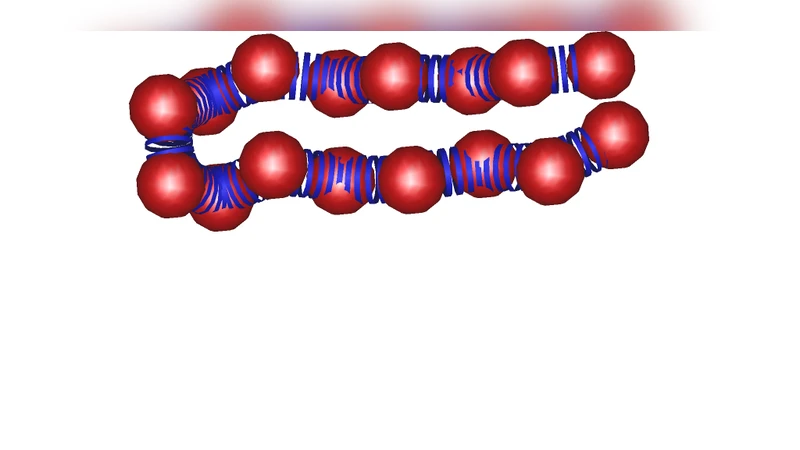
We use the Dominant Reaction Pathway (DRP) approach to study the dynamics of the folding of a beta-hairpin, within a model which accounts for both native and non-native interactions. We compare the most probable folding pathways calculated with the DRP method with those obtained directly from molecular dynamics (MD) simulations. We find that the two approaches give completely consistent results. We investigate the effects of the non-native hydrophobic interactions on the folding dynamics found them to be small.
💡 Research Summary
This paper investigates the folding dynamics of a β‑hairpin using the Dominant Reaction Pathway (DRP) formalism, a statistical‑mechanics based method that identifies the most probable transition routes between predefined initial and final states in a high‑dimensional free‑energy landscape. The authors construct a coarse‑grained model that incorporates both native contacts, represented by a Gō‑type potential, and non‑native hydrophobic interactions, modeled with a Lennard‑Jones term for non‑native side‑chain pairs. By explicitly including these two interaction classes, the model aims to capture realistic energetic contributions that are often omitted in pure Gō models.
The DRP calculation proceeds by discretizing the folding trajectory into a chain of images (configurations) spaced at 10 ps intervals. A variational principle is applied to minimize a Lagrangian that includes the free‑energy gradient, thermal noise, and viscous friction (Langevin dynamics). The optimization employs a limited‑memory BFGS algorithm with spring constraints to maintain even spacing of images. The resulting pathway, termed the “dominant folding pathway,” provides both the structural sequence of events and an estimate of the activation free‑energy barrier.
To validate the DRP predictions, the authors perform extensive unbiased molecular dynamics (MD) simulations of the same β‑hairpin in explicit TIP3P water using the AMBER ff99SB force field at 300 K and 1 atm. The MD runs span a total of 1 µs, yielding thousands of folding and unfolding events. Representative transition paths are extracted by clustering the MD trajectories and calculating average committor probabilities.
Comparison of DRP and MD results reveals striking agreement. Both approaches identify a two‑stage folding mechanism: (1) an early loop formation that brings the N‑ and C‑termini into proximity, followed by (2) rapid establishment of the native hydrogen‑bond network that stabilizes the hairpin. The free‑energy barrier estimated by DRP (~6 kcal mol⁻¹) matches the barrier inferred from the MD ensemble within statistical error. Importantly, inclusion of non‑native hydrophobic contacts in the potential has only a marginal effect on the pathway geometry and barrier height (differences <0.3 kcal mol⁻¹), indicating that for this small β‑hairpin the folding process is dominated by native hydrogen bonding.
The authors discuss the methodological implications of these findings. DRP offers a computationally efficient alternative to long‑time MD for extracting dominant pathways and activation barriers, reducing the required simulation time by orders of magnitude while preserving essential kinetic information. However, DRP’s accuracy depends on the proper definition of end states and sufficient resolution of the discretized path; coarse discretization can miss subtle intermediate states. Moreover, while non‑native interactions appear negligible for the β‑hairpin, they may play a more significant role in larger or more complex proteins, suggesting that future work should test DRP on systems where non‑native contacts are known to influence folding pathways.
In conclusion, the study demonstrates that DRP and conventional MD provide consistent pictures of β‑hairpin folding, validates the DRP approach as a reliable tool for probing protein folding mechanisms, and confirms that non‑native hydrophobic interactions exert only a minor influence on the folding dynamics of this model system. The authors propose extending the DRP methodology to investigate mutants, environmental perturbations (e.g., pH, temperature), and larger multi‑domain proteins, thereby broadening its applicability in computational protein science.
Comments & Academic Discussion
Loading comments...
Leave a Comment