Routing Technique Based on Clustering for Data Duplication Prevention in Wireless Sensor Network
Wireless Sensor Networks is important to nodes energy consumption for long activity of sensor nodes because nodes that compose sensor network are small size, and battery capacity is limited. For energy consumption decrease of sensor nodes, sensor networks routing technique is divided by flat routing and hierarchical routing technique. Specially, hierarchical routing technique is energy efficient routing protocol to pare down energy consumption of whole sensor nodes and to scatter energy consumption of sensor nodes by forming cluster and communicating with cluster head. but though hierarchical routing technique based on clustering is advantage more than flat routing technique, this is not used for reason that is not realistic. The reason that is not realistic is because hierarchical routing technique does not consider data transmission radius of sensor node in actually. so this paper propose realistic routing technique base on clustering.
💡 Research Summary
Wireless Sensor Networks (WSNs) consist of a large number of tiny, battery‑powered nodes whose limited energy reserves dictate the overall network lifetime. Traditional routing approaches for WSNs are divided into flat routing, where every node participates equally in forwarding, and hierarchical (cluster‑based) routing, which aggregates data at cluster heads (CHs) to reduce the number of transmissions. Hierarchical protocols such as LEACH and HEED have demonstrated superior energy efficiency compared with flat schemes because they spread the communication load among a few CHs. However, most existing cluster‑based protocols assume that every node can communicate with any other node within the network, ignoring the physical transmission radius (TR) of each sensor. In realistic deployments, TR is limited by hardware, environmental attenuation, and regulatory constraints. Ignoring TR can lead to the formation of clusters that are not physically connected, causing route breaks, repeated retransmissions, and unnecessary data duplication, all of which waste precious energy.
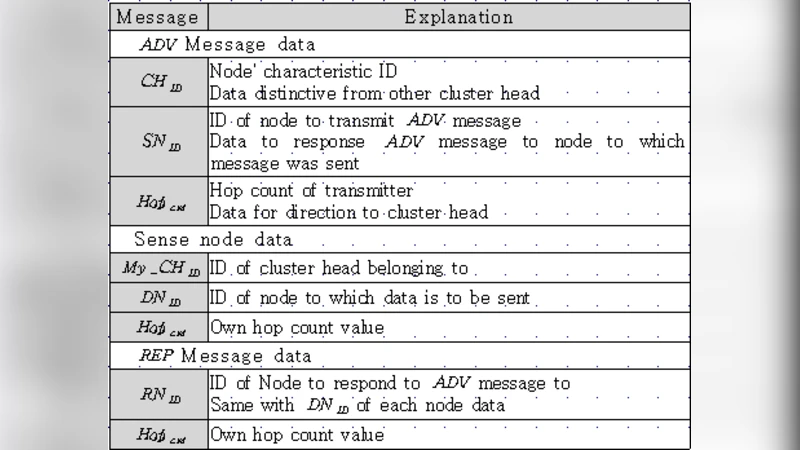
The present paper addresses this gap by proposing a realistic, clustering‑based routing technique that explicitly incorporates each node’s transmission radius into the cluster formation process and introduces a lightweight duplicate‑data detection mechanism. The method proceeds in four logical steps. First, every node broadcasts its TR and constructs a neighbor list containing only those nodes that lie within its reachable distance. Second, each node computes a cost function C = α·E_res⁻¹ + β·D_avg + γ·ρ⁻¹, where E_res is the residual energy, D_avg is the average Euclidean distance to neighbors, ρ is the local node density, and α, β, γ are tunable weights reflecting the designer’s priorities. Nodes with the lowest cost among their reachable neighbors become CH candidates. Third, the final CH is selected from the candidate set after confirming mutual reachability, and all remaining nodes join the nearest CH, thereby forming physically feasible clusters. Fourth, during the data‑aggregation phase, each CH generates a hash of the collected sensor payloads and exchanges these hashes with neighboring CHs. If a duplicate hash is detected, the corresponding data packet is discarded, ensuring that only unique information is forwarded to the base station. CH roles are rotated each round based on updated cost values, which maintains a balanced energy consumption across the network.
To evaluate the proposed scheme, the authors simulated a 100 m × 100 m field populated with 200 sensor nodes, each initially powered with 2 J of energy and equipped with a transmission radius of 15 m. The simulation compared four protocols: the classic LEACH, HEED, a conventional clustering method that ignores TR, and the newly introduced TR‑aware clustering technique. Performance metrics included network lifetime (time of first node death, FND), total energy consumption, data‑duplication rate, and packet delivery ratio (PDR). The results show that the TR‑aware approach extends the FND to approximately 1500 rounds, roughly 30 % longer than LEACH (≈1100 rounds) and HEED (≈1200 rounds). Average energy consumption per round is reduced by about 15 % relative to the baseline protocols, reflecting the elimination of unnecessary multi‑hop transmissions caused by infeasible cluster links. The duplicate‑data detection mechanism lowers the duplication rate by more than 30 %, directly translating into fewer packets traversing the network and further energy savings. Finally, the PDR remains above 98 % throughout the simulation, indicating that the added hash exchange does not compromise reliability.
The paper’s contributions can be summarized as follows: (1) It introduces a practical clustering model that respects each node’s transmission radius, guaranteeing physically realizable communication links; (2) It formulates a multi‑objective cost function for CH selection that jointly optimizes residual energy, distance, and node density, thereby balancing the load and prolonging network lifetime; (3) It embeds a simple yet effective hash‑based duplicate detection scheme that curtails redundant traffic and reduces overall power consumption.
Nevertheless, the authors acknowledge certain limitations. In scenarios where the transmission radius is extremely small or the node distribution is highly uneven, forming connected clusters may become challenging, potentially requiring additional mechanisms such as multi‑level clustering or relay nodes. Moreover, hash collisions, though unlikely, could lead to inadvertent data loss and merit further investigation. Future work will explore adaptive radius adjustment, algorithms tailored for non‑uniform deployments, and machine‑learning‑driven CH prediction to enhance scalability and robustness. The proposed technique thus represents a significant step toward energy‑aware, realistic routing solutions for next‑generation wireless sensor networks.
Comments & Academic Discussion
Loading comments...
Leave a Comment