Probing the Core-Collapse Supernova Mechanism with Gravitational Waves
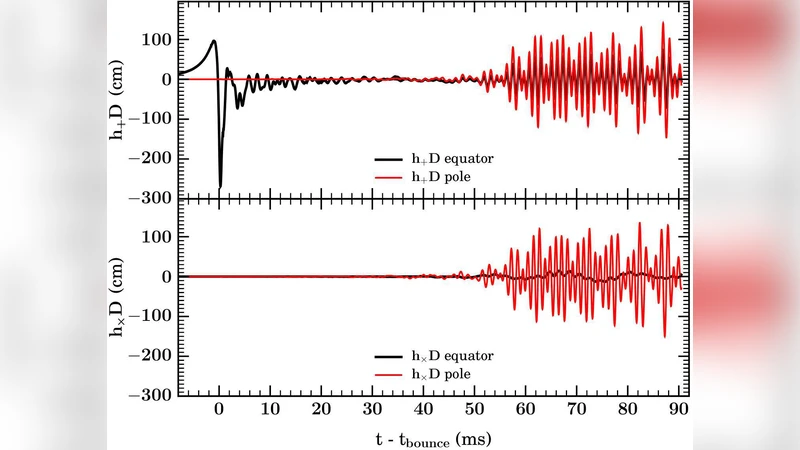
The mechanism of core-collapse supernova explosions must draw on the energy provided by gravitational collapse and transfer the necessary fraction to the kinetic and internal energy of the ejecta. Despite many decades of concerted theoretical effort, the detailed mechanism of core-collapse supernova explosions is still unknown, but indications are strong that multi-D processes lie at its heart. This opens up the possibility of probing the supernova mechanism with gravitational waves, carrying direct dynamical information from the supernova engine deep inside a dying massive star. I present a concise overview of the physics and primary multi-D dynamics in neutrino-driven, magnetorotational, and acoustically-driven core-collapse supernova explosion scenarios. Discussing and contrasting estimates for the gravitational-wave emission characteristics of these mechanisms, I argue that their gravitational-wave signatures are clearly distinct and that the observation (or non-observation) of gravitational waves from a nearby core-collapse event could put strong constraints on the supernova mechanism.
💡 Research Summary
The paper provides a concise yet comprehensive overview of how gravitational‑wave (GW) observations can be used to probe the still‑mysterious mechanism behind core‑collapse supernovae (CCSNe). After a brief introduction that emphasizes the long‑standing problem of converting the enormous gravitational‑binding energy released during stellar collapse (≈10⁵³ erg) into the kinetic and internal energy of the ejecta, the author outlines three leading multi‑dimensional (multi‑D) explosion scenarios: neutrino‑driven, magnetorotational, and acoustically‑driven mechanisms. For each scenario the paper describes the underlying physics, the characteristic non‑spherical fluid motions, and how those motions generate a distinct GW signature.
In the neutrino‑driven case, vigorous convection and the standing‑accretion‑shock instability (SASI) produce stochastic, low‑frequency (∼100–1000 Hz) GW emission with modest strain amplitudes (h ≈ 10⁻²³–10⁻²² at 10 kpc) lasting several hundred milliseconds. The magnetorotational mechanism, which requires a rapidly rotating core and magnetic fields of order 10¹⁴ G, creates a highly anisotropic jet‑like flow and a strong quadrupole deformation of the proto‑neutron star. This yields higher‑frequency (∼500–1500 Hz), higher‑amplitude (h ≈ 10⁻²¹) bursts that are short (tens of ms) but energetically more efficient, potentially detectable out to 20–30 kpc with current Advanced LIGO/Virgo/KAGRA sensitivities. The acoustic mechanism relies on strong pressure waves that bounce within the core, exciting quasi‑periodic oscillations at frequencies above 1 kHz. Its GW signal is relatively regular, with amplitudes comparable to or slightly lower than the magnetorotational case, and persists for a few hundred milliseconds to a second.
The author quantitatively compares the GW energy budgets (≈10⁻⁹–10⁻⁸ M⊙c²) and the corresponding detection horizons for each model, emphasizing that the distinct spectral shapes, durations, and amplitudes act as “fingerprints” of the underlying explosion physics. The paper also discusses the limitations of existing 2‑D simulations and stresses the necessity of fully three‑dimensional, neutrino‑radiation‑magnetohydrodynamic calculations to reduce systematic uncertainties. Moreover, it highlights the synergy of multi‑messenger astronomy: simultaneous detection of neutrinos, electromagnetic transients, and GWs would dramatically tighten constraints on the viable mechanism.
In the concluding section, the paper outlines future directions: improving the fidelity of 3‑D simulations (including detailed neutrino transport, magnetic reconnection, and realistic equations of state), developing next‑generation GW detectors with enhanced high‑frequency sensitivity (e.g., Einstein Telescope, Cosmic Explorer, and space‑based missions), and establishing rapid‑response networks for coordinated multi‑messenger observations. The central thesis is that a nearby CCSN (within the Milky Way or its satellite galaxies) will either produce a detectable GW signal whose morphology can be matched to one of the three scenarios, or its non‑detection will rule out the more GW‑loud mechanisms, thereby providing a powerful, model‑independent test of the supernova engine. This makes gravitational‑wave astronomy a decisive tool for finally unraveling the core‑collapse supernova mechanism.
Comments & Academic Discussion
Loading comments...
Leave a Comment