Nonlinear dynamics of spin and charge in spin-Calogero model
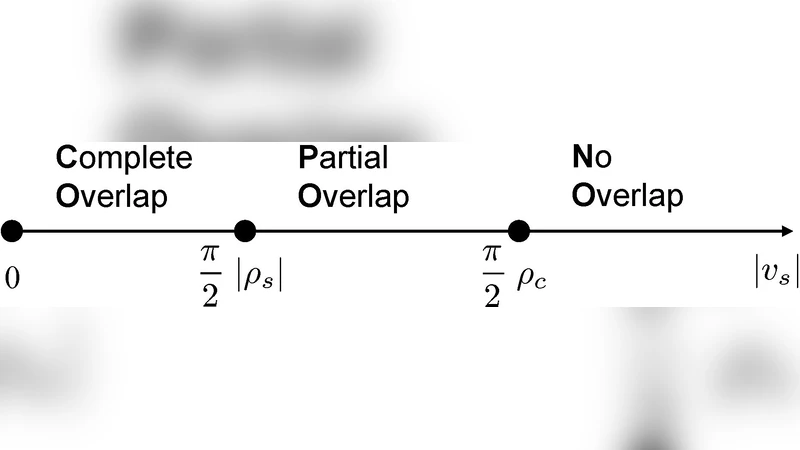
The fully nonlinear dynamics of spin and charge in spin-Calogero model is studied. The latter is an integrable one-dimensional model of quantum spin-1/2 particles interacting through inverse-square interaction and exchange. Classical hydrodynamic equations of motion are written for this model in the regime where gradient corrections to the exact hydrodynamic formulation of the theory may be neglected. In this approximation variables separate in terms of dressed Fermi momenta of the model. Hydrodynamic equations reduce to a set of decoupled Riemann-Hopf (or inviscid Burgers’) equations for the dressed Fermi momenta. We study the dynamics of some non-equilibrium spin-charge configurations for times smaller than the time-scale of the gradient catastrophe. We find an interesting interplay between spin and charge degrees of freedom. In the limit of large coupling constant the hydrodynamics reduces to the spin hydrodynamics of the Haldane-Shastry model.
💡 Research Summary
The paper presents a thorough investigation of the fully nonlinear dynamics of spin and charge in the spin‑Calogero model, an integrable one‑dimensional system of spin‑½ particles interacting via an inverse‑square potential together with an exchange term. Starting from the exact quantum hydrodynamic formulation, the authors pass to a classical continuum description and then adopt a “gradient‑less” approximation in which second‑order spatial derivatives (the so‑called gradient corrections) are neglected. This approximation is justified for time scales shorter than the onset of a gradient catastrophe, i.e., before shock‑like singularities develop in the fluid variables.
In this regime the physical fields—charge density ρ_c(x,t) and spin density ρ_s(x,t)—are expressed in terms of four dressed Fermi momenta, k_{±}^{c}(x,t) and k_{±}^{s}(x,t). The dressing incorporates the effect of the long‑range inverse‑square interaction and the exchange coupling λ. Remarkably, after this change of variables the complicated nonlinear hydrodynamic equations decouple into four independent Riemann‑Hopf (inviscid Burgers) equations: ∂_t k + k ∂_x k = 0. Each dressed momentum therefore propagates along its own characteristic line with speed equal to its instantaneous value. The decoupling is exact within the gradient‑less approximation, but the physical observables (charge and spin densities) are nonlinear combinations of the four momenta, so the spin and charge sectors remain coupled through the initial conditions.
The authors explore several non‑equilibrium initial configurations. First, they consider localized Gaussian packets in both charge and spin sectors, and second, step‑like profiles that mimic domain walls. Numerical integration of the Riemann‑Hopf equations shows that, as long as the evolution stays before the gradient catastrophe, each packet simply translates with its characteristic speed. However, because the charge and spin characteristics generally have different velocities (v_c ≠ v_s), the two packets separate—a manifestation of spin‑charge separation—but also intersect at later times. At the intersection points the nonlinear mapping back to ρ_c and ρ_s produces sharp modulations: the charge density is amplified or depleted by the passing spin wave and vice versa. This interplay is a genuine nonlinear effect absent in the linear Luttinger‑liquid picture, where spin and charge propagate independently without mutual distortion.
A central part of the work examines the strong‑coupling limit λ → ∞. In this limit the dressed momenta for charge and spin become nearly identical, and the dynamics reduces to that of the Haldane‑Shastry model, a pure spin chain with inverse‑square exchange. The charge sector freezes into a static background, while the spin sector obeys the same Riemann‑Hopf equation, reproducing known results from Bethe‑Ansatz analyses of the Haldane‑Shastry chain. The authors verify that the gradient‑less hydrodynamics smoothly interpolates between the generic spin‑Calogero regime and the Haldane‑Shastry spin hydrodynamics, confirming the internal consistency of the approach.
Finally, the paper discusses possible experimental realizations. Ultracold atomic gases confined to quasi‑one‑dimensional traps, with synthetic spin‑½ degrees of freedom and tunable long‑range interactions (e.g., via Rydberg dressing or dipolar gases), could emulate the spin‑Calogero Hamiltonian. Time‑resolved imaging techniques would allow direct observation of the pre‑catastrophe evolution of spin and charge density waves, providing a platform to test the predicted nonlinear spin‑charge interplay and the approach to the Haldane‑Shastry limit.
In summary, the study demonstrates that, within a controlled approximation, the spin‑Calogero model admits an elegant hydrodynamic description in terms of decoupled Burgers‑type equations for dressed Fermi momenta. This framework reveals rich nonlinear phenomena—spin‑charge separation, mutual wave modulation, and a smooth crossover to pure spin dynamics at strong coupling—offering fresh insights into integrable many‑body systems and suggesting concrete routes for experimental verification.