How Creative Should Creators Be To Optimize the Evolution of Ideas? A Computational Model
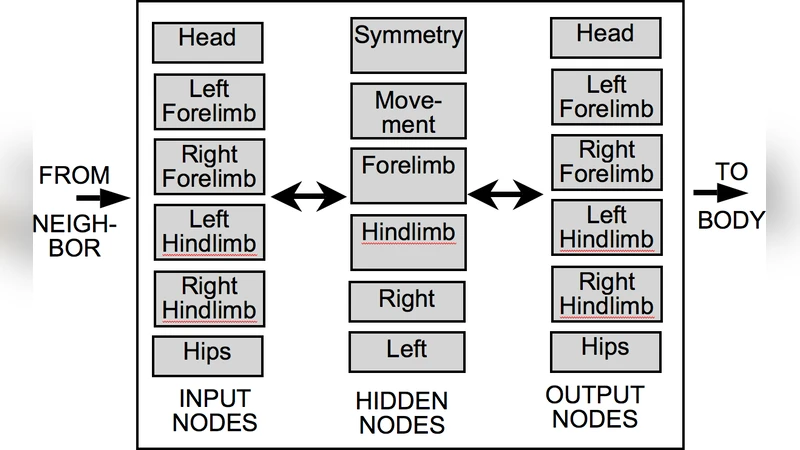
There are both benefits and drawbacks to creativity. In a social group it is not necessary for all members to be creative to benefit from creativity; some merely imitate or enjoy the fruits of others’ creative efforts. What proportion should be creative? This paper contains a very preliminary investigation of this question carried out using a computer model of cultural evolution referred to as EVOC (for EVOlution of Culture). EVOC is composed of neural network based agents that evolve fitter ideas for actions by (1) inventing new ideas through modification of existing ones, and (2) imitating neighbors’ ideas. The ideal proportion with respect to fitness of ideas occurs when thirty to forty percent of the individuals is creative. When creators are inventing 50% of iterations or less, mean fitness of actions in the society is a positive function of the ratio of creators to imitators; otherwise mean fitness of actions starts to drop when the ratio of creators to imitators exceeds approximately 30%. For all levels or creativity, the diversity of ideas in a population is positively correlated with the ratio of creative agents.
💡 Research Summary
The paper investigates how the proportion of creative individuals within a social group influences the evolution of ideas, using a computational model of cultural evolution called EVOC (EVOlution of Culture). EVOC consists of agents implemented as simple neural networks that can either (1) invent new ideas by modifying existing ones or (2) imitate the ideas of their neighbors. The study systematically varies two key parameters: the percentage of agents designated as “creators” (those capable of invention) and the frequency with which creators actually engage in invention during each iteration. Creators are varied from 0 % to 100 % of the population in 10 % increments, while the invention rate (the probability that a creator will attempt to invent rather than imitate in a given cycle) is set at 0 %, 25 %, 50 %, 75 %, and 100 %. For each combination, thirty independent runs of 2,000 iterations are performed, and two primary outcome measures are recorded: (a) mean fitness of the ideas present in the population (fitness is defined by a scalar objective function that rewards efficient, low‑energy actions) and (b) idea diversity, measured as the number of distinct ideas present at a given time.
The results reveal a clear trade‑off between exploration (invention) and exploitation (imitation). When creators invent on 50 % of the iterations or less, mean fitness rises monotonically with the proportion of creators up to a peak that occurs when roughly 30–40 % of the agents are creative. In this regime, adding more creators simply injects useful variation that can be quickly disseminated by the larger pool of imitators, thereby raising overall fitness. However, when the invention rate exceeds 50 %, the fitness curve becomes inverted: beyond a creator proportion of about 30 %, mean fitness begins to decline. High rates of invention generate excessive novelty, which frequently overwrites well‑adapted solutions and hampers the diffusion of high‑fitness ideas through imitation.
Idea diversity behaves differently. Across all invention rates, diversity is positively correlated with the proportion of creators; the more creators there are, the larger the pool of distinct ideas. Higher invention frequencies amplify this effect, producing a broader spread of solutions even when average fitness is lower. This pattern reflects the classic exploration‑exploitation dilemma: maximizing fitness favors a moderate level of novelty, whereas maximizing diversity favors a larger share of innovators.
Additional simulations with non‑fully‑connected network topologies (e.g., lattice structures) show that local clusters can maintain higher creator densities than the global average, leading to pockets of rapid innovation but slightly reduced overall fitness. This suggests that spatial or modular organization of social groups can modulate the optimal creator‑to‑imitator ratio.
The authors interpret these findings as quantitative support for the hypothesis that societies do not need universal creativity to reap its benefits. An optimal balance—approximately one third of the population being creative, combined with a moderate invention frequency (≤ 50 % of cycles)—maximizes the average quality of ideas while still preserving a healthy level of novelty. From a practical standpoint, the results imply that organizations and policy makers should aim to maintain a modest but significant cadre of innovators and regulate the intensity of their inventive activity, rather than encouraging unchecked creativity across the entire workforce.
Limitations of the study include the simplicity of the neural‑network agents, the static fitness landscape, and the assumption of homogeneous interaction networks. Future work is proposed to incorporate multi‑objective fitness functions, dynamic network rewiring, and empirical validation with human participants, thereby extending the model’s applicability to real‑world cultural and organizational settings.
Comments & Academic Discussion
Loading comments...
Leave a Comment