A third red supergiant rich cluster in the Scutum-Crux Arm
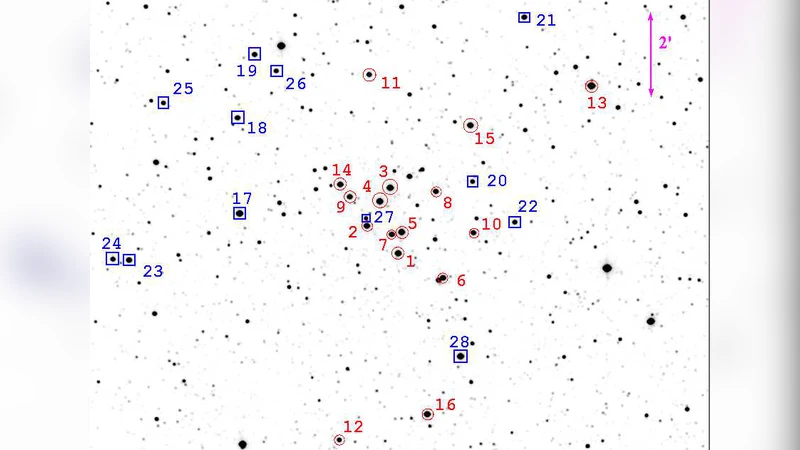
We aim to characterise the properties of a third massive, red supergiant dominated galactic cluster. To accomplish this we utilised a combination of near/mid-IR photometry and spectroscopy to identify and classify the properties of cluster members, and statistical arguments to determine the mass of the cluster. We found a total of 16 strong candidates for cluster membership, for which formal classification of a subset yields spectral types from K3-M4 Ia and luminosities between log(L/L_sun)~4.5-4.8 for an adopted distance of 6+/-1 kpc. For an age in the range of 16-20 Myr, the implied mass is 2-4x10^4 M_sun, making it one of the most massive young clusters in the Galaxy. This discovery supports the hypothesis that a significant burst of star formation occurred at the base of Scutum-Crux arm between 10-20 Myr ago, yielding a stellar complex comprising at least ~10^5M_sun of stars (noting that since the cluster identification criteria rely on the presence of RSGs, we suspect that the true stellar yield will be significantly higher). We highlight the apparent absence of X-ray binaries within the star formation complex and finally, given the physical association of at least two pulsars with this region, discuss the implications of this finding for stellar evolution and the production and properties of neutron stars.
💡 Research Summary
The authors present the discovery and comprehensive characterization of a third massive, red‑supergiant‑dominated (RSG) stellar cluster located at the base of the Scutum‑Crux spiral arm. Using a combination of wide‑field near‑ and mid‑infrared photometric surveys (2MASS, GLIMPSE, VVV) they first identified a region of unusually high stellar surface density. Follow‑up high‑resolution near‑infrared spectroscopy (VLT/ISAAC) of the brightest candidates revealed sixteen objects with spectral types ranging from K3 Ia to M4 Ia. The spectra display the hallmark deep CO (2‑0) bandheads and strong TiO absorption, allowing reliable classification as luminous red supergiants.
Assuming a distance of 6 ± 1 kpc—derived from a combination of spectrophotometric parallaxes, extinction estimates, and the Galactic rotation curve—the authors calculate bolometric luminosities of log (L/L☉)≈4.5–4.8 for the RSGs. Placement of these stars on modern PARSEC and MIST isochrones yields an age of 16–20 Myr. This age is slightly younger than that of the previously known Scutum‑Crux RSG clusters (RSGC1 and RSGC2) but still consistent with a burst of star formation that appears to have spanned roughly 10–20 Myr across the arm’s inner edge.
To estimate the total stellar mass of the new cluster, the authors adopt a Salpeter initial mass function and statistically extrapolate from the observed RSG population. The resulting mass is 2–4 × 10⁴ M☉, placing the system among the most massive young clusters known in the Milky Way. They explicitly discuss the “RSG bias” inherent in such searches—clusters lacking RSGs would be missed—so the true stellar yield of the star‑forming complex could approach or exceed 10⁵ M☉.
A notable result is the apparent absence of X‑ray binaries or other high‑energy sources within the cluster’s confines, suggesting that the massive stars have not yet evolved into the compact‑object phase that powers such systems. In contrast, two pulsars have been identified at compatible distances and sky positions, implying that at least two supernovae have already occurred in the broader star‑forming region. This juxtaposition of RSGs (pre‑supernova) and pulsars (post‑supernova remnants) provides a rare snapshot of different evolutionary stages coexisting within the same spiral‑arm segment. It also offers empirical constraints on the mass range (≈18–25 M☉) that leads to neutron‑star formation, the initial spin periods, and magnetic field strengths of the resulting compact objects.
Overall, the paper demonstrates the power of infrared surveys combined with targeted spectroscopy to uncover heavily obscured massive clusters, refines our picture of recent star‑formation activity in the Scutum‑Crux arm, and links stellar demographics to high‑energy phenomena. The findings support a scenario in which a substantial burst of star formation 10–20 Myr ago produced a complex of at least 10⁵ M☉ of stars, of which the newly identified RSG cluster is a prominent, but not exhaustive, component. The work also highlights the need for deeper X‑ray and radio observations to fully map the compact‑object population associated with this recent star‑forming episode.