Relativistic reflection X-ray spectra of accretion disks
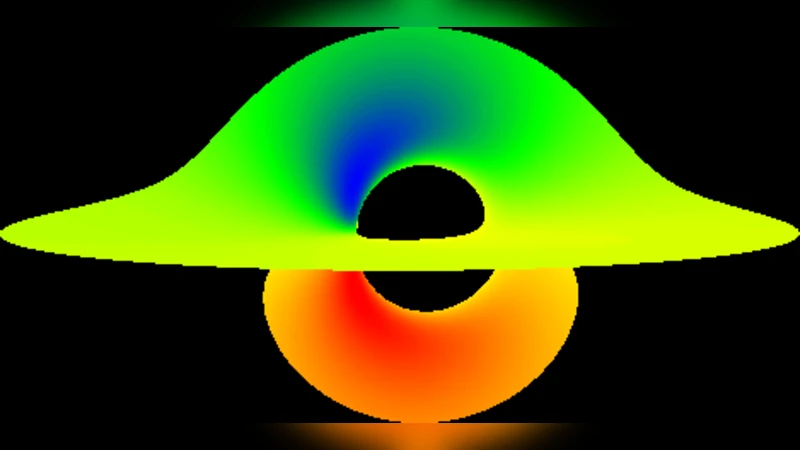
We have calculated the relativistic reflection component of the X-ray spectra of accretion disks in active galactic nuclei (AGN). Our calculations have shown that the spectra can be significantly modified by the motion of the accretion flow and the gravity and rotation of the central black hole. The absorption edges in the spectra suffer severe energy shifts and smearing, and the degree of distortion depends on the system parameters, in particular, the inner radius of the accretion disk and the disk viewing inclination angles. The effects are significant. Fluorescent X-ray emission lines from the inner accretion disk could be powerful diagnostic of space-time distortion and dynamical relativistic effects near the event horizons of accreting black holes. However, improper treatment of the reflection component in fitting the X-ray continuum could give rise to spurious line-like features. These features mimic the true fluorescent emission lines and may mask their relativistic signatures. Fully relativistic models for reflection continua together with the emission lines are needed in order to extract black-hole parameters from the AGN X-ray spectra.
💡 Research Summary
The paper presents a comprehensive relativistic treatment of the X‑ray reflection component produced by the inner accretion disks of active galactic nuclei (AGN). Using a fully general‑relativistic ray‑tracing code, the authors calculate how photons emitted from a geometrically thin, optically thick disk are altered by the strong gravity, spin‑induced frame dragging, and orbital motion of the central supermassive black hole. The model incorporates the full set of relativistic effects – gravitational redshift, Doppler boosting, light bending, and relativistic aberration – and integrates over the entire disk surface for a range of physical parameters: inner radius (R_in), outer radius (R_out), emissivity index (q), ionisation state, black‑hole spin (a), and observer inclination (i).
Key findings are: (1) Absorption edges (e.g., Fe K‑edge, O K‑edge) are dramatically shifted to lower energies and broadened when the disk extends close to the innermost stable circular orbit (ISCO). The shift scales with spin because higher spin moves the ISCO inward, exposing the reflecting material to stronger gravitational potentials. (2) The degree of edge smearing is highly inclination‑dependent. Low‑inclination (face‑on) views are dominated by Doppler blueshift, producing relatively narrow, slightly shifted features, whereas high‑inclination (edge‑on) views exhibit strong red‑shifted tails and overall continuum softening due to photons from the far side being bent into the line of sight. (3) Disk ionisation moderates the depth of the edges but does not erase the relativistic distortion; even a highly ionised surface still shows edge displacement when the gravitational field is strong.
A crucial practical implication is that fitting AGN spectra with non‑relativistic reflection models (e.g., PEXRAV, PEXMON) can generate artificial line‑like residuals. The smeared edges can be misinterpreted as narrow fluorescent lines such as Fe Kα, leading to spurious detections and biased estimates of black‑hole spin and inclination. The authors demonstrate, through simulated spectra, that these “pseudo‑lines” can mimic the profile of genuine relativistic lines, potentially masking the true relativistic signatures.
Consequently, the paper argues for the simultaneous use of fully relativistic reflection continua and relativistic line models (e.g., RELXILL, KYREFLECT) in spectral fitting. By treating the reflection and emission components with a common transfer function derived from the Kerr metric, one can disentangle the continuum distortion from genuine line emission and retrieve reliable black‑hole parameters. This approach is especially important for upcoming high‑resolution X‑ray missions such as XRISM and Athena, where the improved spectral fidelity will make the subtle relativistic effects observable.
In summary, the work quantifies how the motion of the accretion flow and the space‑time curvature around a rotating black hole reshape the X‑ray reflection spectrum. It highlights the risk of mis‑identifying relativistic signatures when using simplified models and provides a clear roadmap for incorporating full relativistic physics into AGN spectral analysis, thereby enabling more accurate measurements of black‑hole mass, spin, and disk geometry.
Comments & Academic Discussion
Loading comments...
Leave a Comment