Evolution of X-ray cavities
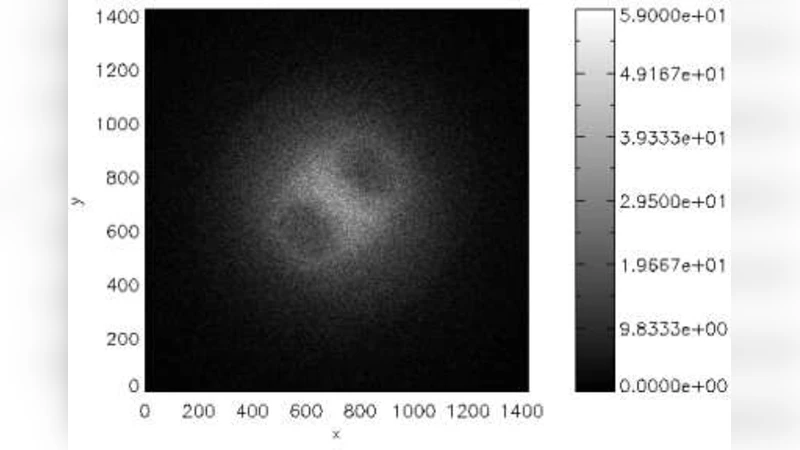
A wide range of recent observations have shown that AGN-driven cavities may provide the energy source that balances the cooling observed in the centres of cool-core galaxy clusters. One tool for better understanding the physics of these cavities is their observed morphological evolution, which is dependent on such poorly-understood properties as the turbulent density field and the impact of magnetic fields. Here we combine numerical simulations that include subgrid turbulence and software that produces synthetic X-ray observations to examine the evolution of X-ray cavities in the absence of magnetic fields. Our results reveal an anisotropic size evolution of that is dramatically different from simplified, analytical predictions. These differences highlight some of the key issues that must be accurately quantified when studying AGN-driven cavities, and help to explain why the inferred pV energy in these regions appears to be correlated with their distance from the cluster center. Interpreting X- ray observations will require detailed modeling of effects including mass-entrainment, distortion by drag forces, and pro jection. Current limitations do not allow a discrimination between purely hydrodynamic and magnetically-dominated models for X-ray cavities.
💡 Research Summary
The paper investigates the morphological evolution of X‑ray cavities (or “bubbles”) inflated by active galactic nuclei (AGN) in the cool‑core regions of galaxy clusters, focusing on the purely hydrodynamic regime without magnetic fields. The authors combine high‑resolution three‑dimensional hydrodynamic simulations that incorporate a sub‑grid turbulence model with a synthetic X‑ray observation pipeline. The turbulence model captures unresolved mixing and mass‑entrainment processes that are expected to occur as the low‑density, high‑pressure AGN plasma interacts with the surrounding intracluster medium (ICM).
In the simulations, an initially over‑pressured jet inflates a cavity that rises buoyantly through the ICM. Because of the sub‑grid turbulence, ambient gas is continuously entrained into the cavity, altering its internal density, temperature, and pressure structure. The key result is that the cavity does not expand isotropically as simple analytic models (which assume spherical or mildly elliptical growth governed solely by pressure equilibrium) would predict. Instead, the cavity elongates preferentially along the jet axis while its radial expansion is comparatively modest. This anisotropic growth is driven by a combination of drag forces exerted by the surrounding ICM and the directional nature of turbulent entrainment, which together produce a faster stretching in the axial direction.
To connect the simulations with observations, the authors generate synthetic X‑ray images for a range of viewing angles. They demonstrate that projection effects can dramatically bias the inferred cavity volume and, consequently, the calculated pV energy (the product of cavity volume and surrounding pressure). When the jet axis is aligned close to the line of sight, the cavity appears larger and brighter, leading to an over‑estimate of its pV energy; when the axis is perpendicular to the line of sight, the cavity looks smaller and the pV energy is underestimated. This geometric bias naturally explains the empirical correlation observed between cavity pV energy and distance from the cluster centre: cavities that have risen farther tend to be viewed at more favorable angles and have also undergone more axial stretching, both of which inflate the apparent pV value.
The study also quantifies how mass‑entrainment and drag‑induced distortion affect the internal thermodynamic state of the cavity. Turbulent mixing creates significant temperature and pressure inhomogeneities, which manifest as asymmetric surface‑brightness features in the synthetic X‑ray maps. Consequently, the simple “volume × ambient pressure” prescription for estimating cavity energetics can be off by factors of a few, depending on the degree of entrainment and the viewing geometry.
A major limitation acknowledged by the authors is the omission of magnetic fields. Magnetically dominated cavities are expected to be more rigid, suppressing both anisotropic expansion and mass entrainment. Because the current hydrodynamic models already reproduce many observed trends, the authors conclude that existing X‑ray data alone cannot discriminate between purely hydrodynamic and magnetically dominated scenarios. They advocate for future work that couples high‑resolution magnetohydrodynamic (MHD) simulations with multi‑wavelength observations (radio, optical, and X‑ray) to break this degeneracy.
In summary, the paper provides a comprehensive, physics‑rich picture of AGN‑driven cavity evolution that goes beyond the traditional analytic approximations. By highlighting the roles of sub‑grid turbulence, mass entrainment, drag forces, and projection effects, it offers a plausible explanation for the observed pV‑distance correlation and underscores the necessity of sophisticated modeling for accurate interpretation of X‑ray cavity observations.
Comments & Academic Discussion
Loading comments...
Leave a Comment