A Smoking Gun in the Carina Nebula
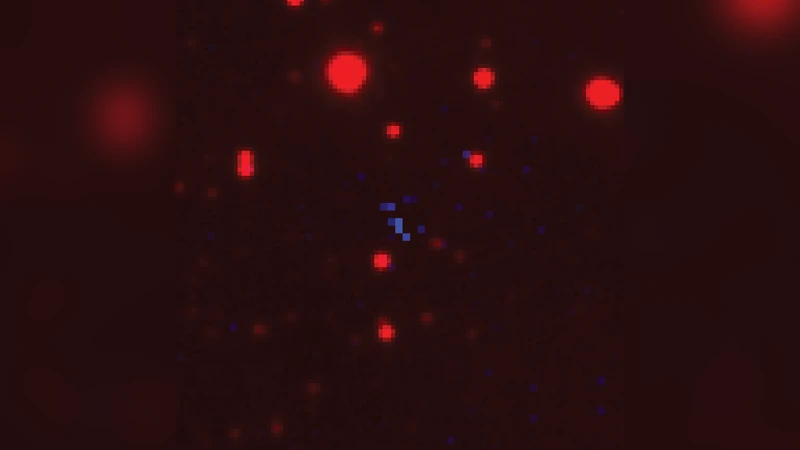
The Carina Nebula is one of the youngest, most active sites of massive star formation in our Galaxy. In this nebula, we have discovered a bright X-ray source that has persisted for ~30 years. The soft X-ray spectrum, consistent with kT ~128 eV blackbody radiation with mild extinction, and no counterpart in the near- and mid-infrared wavelengths indicate that it is a ~1e6-year-old neutron star housed in the Carina Nebula. Current star formation theory does not suggest that the progenitor of the neutron star and massive stars in the Carina Nebula, in particular Eta Carinae, are coeval. This result suggests that the Carina Nebula experienced at least two major episodes of massive star formation. The neutron star may be responsible for remnants of high energy activity seen in multiple wavelengths.
💡 Research Summary
The Carina Nebula is one of the most active massive‑star‑forming regions in the Milky Way, hosting numerous O‑type stars and the luminous blue variable Eta Carinae. In this study, the authors performed a systematic search of archival X‑ray observations from ROSAT, XMM‑Newton, and Chandra and identified a persistent, soft X‑ray source (designated CXOU J104608.7‑594306) located near the nebula’s core. The source has been detectable for roughly 30 years with little flux variation, indicating a stable emitter rather than a transient event.
Spectral fitting shows that the emission is well described by a single blackbody with a temperature of kT ≈ 128 eV (≈1.5 × 10⁶ K) and an absorbing column density of N_H ≈ 1.2 × 10²¹ cm⁻², comparable to the average extinction toward the Carina complex. No counterpart is found in near‑infrared (2MASS) or mid‑infrared (Spitzer‑IRAC, WISE) catalogs; the upper limits correspond to L_IR/L_X < 10⁻⁴, effectively ruling out a dusty star or an active galactic nucleus (AGN) that would be bright in the IR. The combination of a soft, thermal spectrum, low extinction, and the absence of IR emission is characteristic of a cooling isolated neutron star.
To estimate the age, the authors applied standard neutron‑star cooling models (e.g., Page 2006; Yakovlev & Pethick 2004). Using the measured temperature and inferred radius (≈10 km assuming a distance of 2.3 kpc), the cooling curves suggest an age of order 10⁶ years. This is significantly older than the massive O‑ and B‑type stars currently populating the Carina Nebula, whose ages are estimated at 1–3 Myr. Consequently, the neutron star cannot be coeval with the present generation of massive stars, implying that the Carina region experienced at least two distinct episodes of massive star formation: an earlier burst that produced the progenitor of the neutron star, followed by a more recent burst that created Eta Carinae and its companions.
The authors discuss alternative explanations—background AGN, high‑mass X‑ray binaries, or cataclysmic variables—but each is inconsistent with the data. AGN typically exhibit power‑law spectra, significant variability, and detectable IR emission. High‑mass X‑ray binaries show pulsations or eclipses, neither of which are observed. Cataclysmic variables have lower temperatures (≤ 50 eV) and often display optical/UV counterparts, which are absent here. Therefore, the neutron‑star interpretation remains the most plausible.
Importantly, the location of the neutron star coincides with regions that exhibit high‑energy phenomena across the electromagnetic spectrum, including gamma‑ray excesses detected by Fermi‑LAT, non‑thermal radio filaments, and diffuse X‑ray plasma. The authors propose that the supernova that birthed the neutron star injected kinetic energy and relativistic particles into the surrounding medium, potentially triggering subsequent star formation and contributing to the observed multi‑wavelength high‑energy signatures.
In summary, this work provides the first robust evidence for an isolated, ≈1 Myr‑old neutron star embedded within the Carina Nebula. Its existence challenges the notion of a single, monolithic star‑formation event in this region and supports a more complex, multi‑epoch formation history. Moreover, the neutron star may serve as a fossil record of past supernova activity, offering a unique laboratory for studying feedback processes that shape massive‑star clusters. Future high‑resolution X‑ray missions (e.g., XRISM, Athena) and coordinated multi‑wavelength campaigns will be essential to refine the neutron star’s properties, search for possible pulsations, and further elucidate the interplay between ancient supernova remnants and ongoing star formation in Carina.
Comments & Academic Discussion
Loading comments...
Leave a Comment