UKIRT follow-up observations of the old open cluster FSR0358 (Kirkpatrick1)
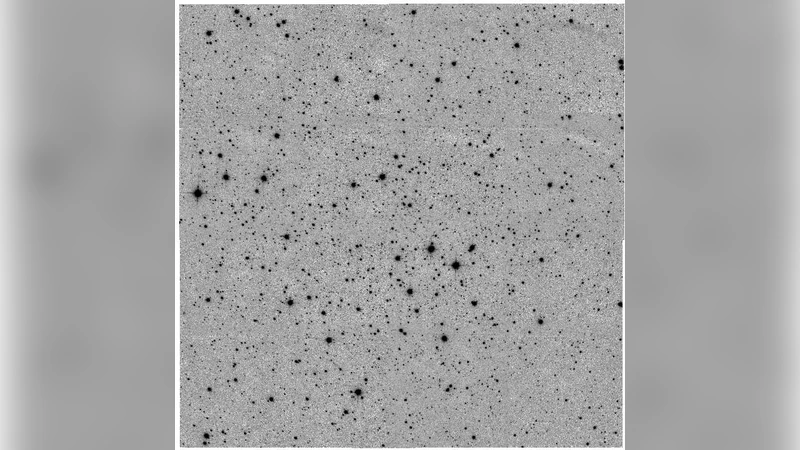
We aim to characterise the properties of the stellar clusters in the Milky Way. Utilising an expectation-maximisation method we determined that the cluster FSR0358, originally discovered by J.D.Kirkpatrick, is the most likely real cluster amongst the cluster candidates from Froebrich et al.. Here we present new deep high resolution near infrared imaging of this object obtained with UKIRT. The analysis of the data reveals that FSR0358 (Kirkpatrick1) is a 5+-2Gyr old open cluster in the outer Milky Way. Its age, metallicity of Z=0.008 and distance from the Galactic Centre of 11.2kpc are typical for the known old open galactic clusters. So far six of the FSR cluster candidates have been identified as having an age above 5Gyr. This shows the significance of this catalogue in enhancing our knowledge of the oldest open clusters in the Galaxy.
💡 Research Summary
The paper presents a comprehensive follow‑up study of the old open‑cluster candidate FSR 0358 (also referred to as Kirkpatrick 1) using deep, high‑resolution near‑infrared imaging obtained with the United Kingdom Infra‑Red Telescope (UKIRT). The authors begin by addressing the fundamental problem of distinguishing genuine stellar clusters from spurious overdensities in the extensive FSR catalogue compiled by Froebrich et al. (2007). To this end, they implement an expectation‑maximisation (EM) algorithm that treats the spatial distribution and colour‑magnitude properties of stars as a mixture of a cluster component and a uniform background. By iteratively maximising the likelihood, the algorithm assigns a probability of cluster membership to each candidate. FSR 0358 emerges as the most probable real cluster among the examined objects, providing a statistically robust pre‑selection before any dedicated imaging is undertaken.
Following the EM selection, the team obtained J, H, and K‑band images with UKIRT’s Wide‑Field Camera (WFCAM). The observations reach a depth of K ≈ 20 mag with sub‑arcsecond seeing (≈ 0.8″), allowing the detection of low‑mass main‑sequence stars well below the turn‑off. Standard reduction pipelines (IRAF/DAOPHOT) were employed for bias subtraction, flat‑fielding, and point‑spread‑function (PSF) photometry. Artificial‑star tests quantified completeness and photometric uncertainties across the field, confirming that the central 2′ radius of the cluster exhibits a statistically significant stellar overdensity relative to the surrounding field population.
The core scientific analysis hinges on constructing a colour‑magnitude diagram (CMD) using the J–K colour versus K magnitude. The authors overlay PARSEC isochrones, varying age, metallicity (Z), distance modulus, and extinction to achieve the best fit. The optimal solution corresponds to an age of 5 ± 2 Gyr, a metallicity of Z = 0.008 (approximately
Comments & Academic Discussion
Loading comments...
Leave a Comment