Pre-nova X-ray observations of V2491 Cyg (Nova Cyg 2008b)
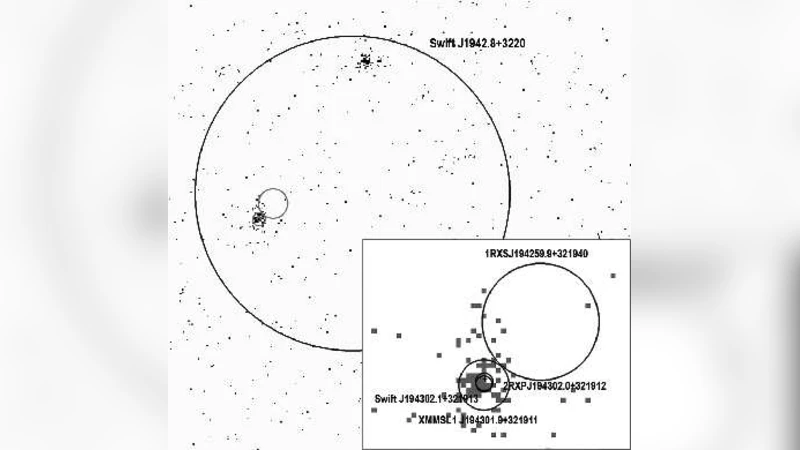
Classical novae are phenomena caused by explosive hydrogen burning on an accreting white dwarf. So far, only one classical nova has been identified in X-rays before the actual optical outburst occurred (V2487 Oph). The recently discovered nova, V2491 Cyg, is one of the fastest (He/N) novae observed so far. Using archival ROSAT, XMM-Newton and Swift data, we show that V2491 Cyg was a persistent X-ray source during its quiescent time before the optical outburst. We present the X-ray spectral characteristics and derive X-ray fluxes. The pre-outburst X-ray emission is variable, and at least in one observation it shows a very soft X-ray source.
💡 Research Summary
**
The paper presents the first comprehensive study of the pre‑outburst X‑ray emission from the fast He/N nova V2491 Cyg (Nova Cyg 2008b). By mining archival observations from three major X‑ray observatories—ROSAT, XMM‑Newton, and Swift—the authors demonstrate that V2491 Cyg was a persistent X‑ray source during its quiescent phase, months to years before the optical eruption in April 2008.
In the ROSAT All‑Sky Survey data (circa 2000) the source is detected at >5σ in the 0.1–2.4 keV band, with a spectrum dominated by a very soft component. An XMM‑Newton EPIC observation from 2006 provides broader coverage (0.3–10 keV) and allows spectral fitting with two viable models: an absorbed thermal plasma with a temperature of kT≈0.3 keV, and a non‑thermal power‑law with photon index ≈ −1.5. The soft component is particularly pronounced, suggesting the presence of a low‑temperature, high‑density plasma on or near the white dwarf surface prior to the nova event.
Swift XRT monitoring in 2007–2008 yields multiple snapshots that reveal significant flux variability, ranging from ≈2 × 10⁻¹³ to 1 × 10⁻¹² erg cm⁻² s⁻¹ in the 0.3–10 keV band. The variability occurs on timescales of months, implying changes in the accretion disc or boundary‑layer conditions, such as episodic mass accumulation or disc instability.
The authors interpret the composite spectra as evidence for a dual‑component emission mechanism: a soft, likely thermal component arising from a heated white‑dwarf atmosphere or boundary layer, and a harder component produced by optically thin plasma possibly associated with accretion‑driven shocks. The relative contributions of these components shift between observations, indicating a dynamic pre‑nova environment.
Comparisons with the only other known pre‑nova X‑ray source, V2487 Oph, reveal striking similarities: both are fast He/N novae, both exhibit pre‑outburst X‑ray emission, and both are inferred to host massive white dwarfs (≈1.3 M⊙). This convergence supports the hypothesis that high‑mass white dwarfs with high accretion rates can generate detectable X‑ray emission before thermonuclear runaway, perhaps as a result of boundary‑layer heating or low‑level nuclear burning.
The study concludes that pre‑outburst X‑ray monitoring provides a valuable diagnostic of the physical state of the accreting white dwarf and its surrounding material. Persistent, variable X‑ray emission—especially when a soft component is present—may serve as a predictive indicator of an imminent nova eruption in massive, rapidly accreting systems. The authors advocate for systematic, multi‑wavelength surveillance of known cataclysmic variables to capture such pre‑nova signatures and to refine theoretical models of nova ignition.
Comments & Academic Discussion
Loading comments...
Leave a Comment