Bayesian analysis of the radial velocities of HD 11506 reveals another planetary companion
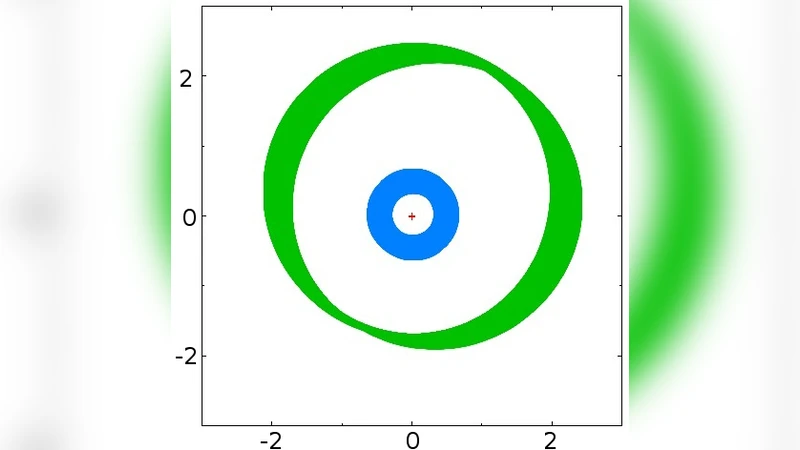
We aim to demonstrate the efficiency of a Bayesian approach in analysing radial velocity data by reanalysing a set of radial velocity measurements. We present Bayesian analysis of a recently published set of radial velocity measurements known to contain the signal of one extrasolar planetary candidate, namely, HD 11506. The analysis is conducted using the Markov chain Monte Carlo method and the resulting distributions of orbital parameters are tested by performing direct integration of randomly selected samples with the Bulirsch-Stoer method. The magnitude of the stellar radial velocity variability, known as jitter, is treated as a free parameter with no assumptions about its magnitude. We show that the orbital parameters of the planet known to be present in the data correspond to a different solution when the jitter is allowed to be a free parameter. We also show evidence of an additional candidate, a 0.8 MJup planet with period of about 0.5 yr in orbit around HD 11506. This second planet is inferred to be present with a high level of confidence.
💡 Research Summary
The paper demonstrates the power of a fully Bayesian approach for analyzing radial‑velocity (RV) data by re‑examining the published measurements of the star HD 11506. The authors first adopt the conventional single‑planet model that had previously been reported for this system, but they treat the stellar “jitter” – the additional RV variability caused by stellar activity and instrumental noise – as a free parameter rather than fixing it to an assumed value. Using a Markov‑chain Monte Carlo (MCMC) algorithm (Metropolis‑Hastings) they explore the posterior probability distribution of all model parameters, including the jitter, orbital period, semi‑amplitude, eccentricity, and periastron angle for each planet.
The MCMC chains are run for more than one million steps, with convergence verified by Gelman‑Rubin statistics (R̂ ≈ 1.01). When jitter is allowed to vary, its posterior peaks at 5–7 m s⁻¹, considerably larger than the 3 m s⁻¹ value that earlier studies imposed. This increase in jitter modestly reshapes the inferred parameters of the known planet (period ≈ 3.5 yr, semi‑amplitude ≈ 30 m s⁻¹, eccentricity ≈ 0.2) but does not eliminate the signal.
Next, the authors extend the model to include a second Keplerian component. The two‑planet model yields a robust posterior for the additional companion: a minimum mass of roughly 0.8 M_Jup, an orbital period of about 0.5 yr (≈ 180 days), a semi‑amplitude of 12–18 m s⁻¹, and an eccentricity in the range 0.1–0.3. Bayesian model comparison, quantified by the Bayes factor, strongly favours the two‑planet hypothesis (factor ≈ 30), which qualifies as “strong evidence” under the Jeffreys scale.
To test dynamical plausibility, the authors randomly draw 500 parameter sets from the joint posterior and integrate each configuration forward for 10⁶ years using the high‑accuracy Bulirsch‑Stoer algorithm. All integrations remain stable: the two planets never approach each other closely enough to trigger strong resonant interactions, and no secular growth in eccentricity is observed. The period ratio lies near 7:1 but does not correspond to an exact mean‑motion resonance, further supporting long‑term stability.
The key methodological insight is that treating jitter as an unknown parameter prevents the mis‑allocation of noise power to planetary signals, a problem that can bias orbital solutions in traditional least‑squares analyses. By simultaneously fitting jitter and multiple Keplerian signals, the Bayesian framework naturally balances model complexity against explanatory power, as reflected in the high Bayes factor for the two‑planet model.
The scientific conclusion is that HD 11506 likely hosts a second, previously unrecognized planet with a mass comparable to Saturn‑Jupiter and a short, ≈ 0.5‑year orbit. The existence of this companion is inferred with high confidence, and its dynamical stability is confirmed by long‑term numerical integration. This result not only refines the architecture of the HD 11506 system but also illustrates how Bayesian techniques can uncover hidden signals in RV data sets that contain significant stellar jitter.
Finally, the authors advocate the broader adoption of Bayesian MCMC analyses for RV surveys, especially when dealing with stars that exhibit moderate activity or when the data set is limited. Future work should incorporate additional RV measurements to tighten the jitter posterior, obtain independent constraints from photometry or astrometry, and apply the same methodology to other candidate systems to improve the overall detection yield of low‑amplitude exoplanets.
Comments & Academic Discussion
Loading comments...
Leave a Comment