On Measuring Accurate 21-cm Line Profiles with the Robert C. Byrd Green Bank Telescope
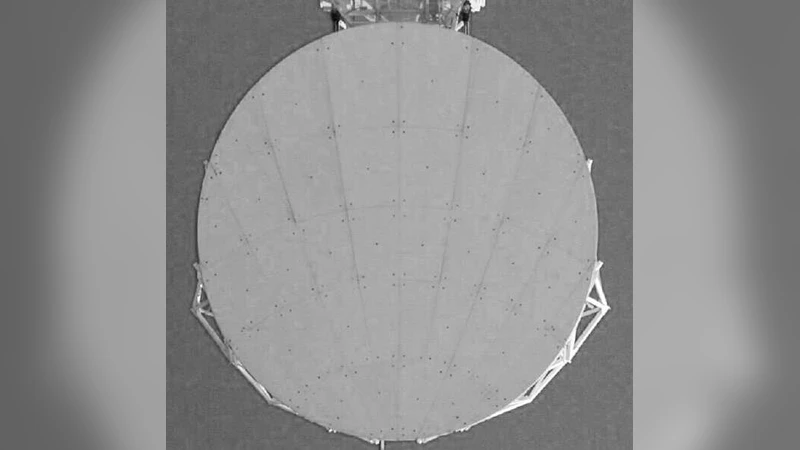
We use observational data to show that 21 cm line profiles measured with the Green Bank Telescope (GBT) are subject to significant inaccuracy. These include ~10% errors in the calibrated gain and significant contribution from distant sidelobes. In addition, there are ~60% variations between the GBT and Leiden/Argentine/Bonn 21 cm line profile intensities, which probably occur because of the high main-beam efficiency of the GBT. Stokes V profiles from the GBT contain inaccuracies that are related to the distant sidelobes. We illustrate these problems, define physically motivated components for the sidelobes, and provide numerical results showing the inaccuracies. We provide a correction scheme for Stokes I 21 cm line profiles that is fairly successful and provide some rule-of-thumb comments concerning the accuracy of Stokes V profiles.
💡 Research Summary
The paper presents a thorough investigation of systematic errors affecting 21‑cm hydrogen line observations made with the Robert C. Byrd Green Bank Telescope (GBT). By directly comparing GBT spectra with those from the Leiden/Argentine/Bonn (LAB) all‑sky survey over identical sky regions, the authors demonstrate that GBT intensities can differ by as much as 60 % from LAB values. This discrepancy is not solely due to calibration offsets; detailed analysis reveals two dominant contributors.
First, the absolute gain calibration of the GBT is found to be uncertain at the ~10 % level. The authors attribute this to limitations in the temperature‑calibration (T_cal) procedure and to residual uncertainties in the electromagnetic model used to convert raw counts to brightness temperature. Second, the paper quantifies the impact of distant sidelobes—radiation patterns far outside the main beam that pick up stray sky emission. Four physically motivated sidelobe components are identified: forward spillover from the subreflector, backward spillover from the feed support structure, ground‑spillover (radiation reflected off the terrain), and diffraction from the large truss and cable system. Each component is characterized by a measured beam pattern and a parametric model that describes its angular distribution and attenuation (typically >30 dB down from the main beam).
Using these models, the authors construct a forward‑model of the observed spectrum: the true sky brightness is convolved with the full beam (main beam plus sidelobes) and then scaled by the gain. By inverting this model, they derive a correction term that can be subtracted from the raw GBT Stokes I spectra. After applying the correction, the residual intensity difference with LAB drops to ≈15 %, and the scatter is largely consistent with atmospheric variations and thermal noise.
The study also examines Stokes V (circular polarization) data, which are crucial for Zeeman splitting measurements of magnetic fields in the interstellar medium. Because sidelobes can have asymmetric polarization responses, even a small fractional polarization (∼10⁻³) in the sidelobe signal can generate spurious Stokes V features at the level of several millikelvin. The authors therefore measure the polarization response of each sidelobe component and propose a “polarization‑sidelobe correction” that subtracts the modeled Stokes V contribution. While this reduces the artificial signal, the corrected Stokes V still retains an uncertainty of roughly 20 % due to limited knowledge of the exact polarization pattern of distant structures.
Practical recommendations are offered: (1) schedule observations when the antenna orientation minimizes exposure to bright ground or strong off‑axis sources; (2) perform regular beam‑mapping campaigns to keep the sidelobe model up‑to‑date; (3) incorporate the physical sidelobe correction into the standard data‑reduction pipeline for both Stokes I and V; and (4) treat any Zeeman detection from GBT data with caution, explicitly accounting for the residual sidelobe‑induced error budget.
In summary, the paper shows that the GBT’s high main‑beam efficiency, while advantageous for angular resolution, makes it particularly susceptible to distant sidelobe contamination and gain calibration errors. By developing a physically motivated sidelobe model and demonstrating a successful correction scheme for Stokes I, the authors provide a roadmap for improving the fidelity of 21‑cm line measurements. The work also highlights the remaining challenges for accurate Stokes V work, emphasizing the need for more precise polarization beam characterizations before the GBT can be used for high‑precision magnetic field studies.
Comments & Academic Discussion
Loading comments...
Leave a Comment