The impact of baryons on dark matter haloes
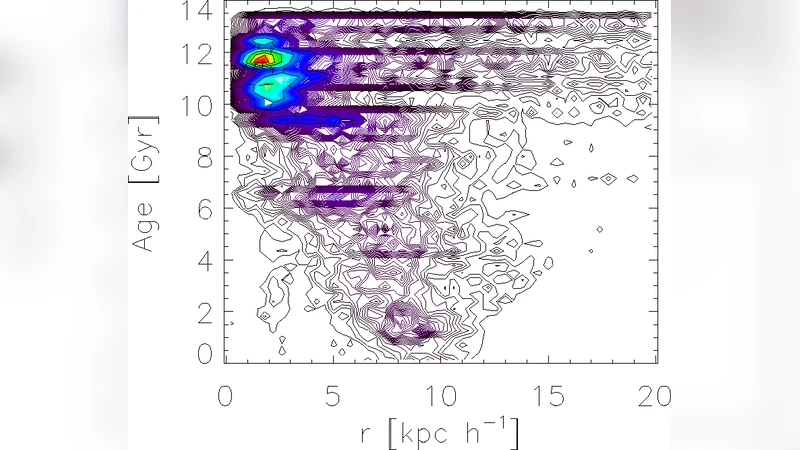
We analyse the dark matter (DM) distribution in a approx 10^12 M_sun halo extracted from a simulation consistent with the concordance cosmology, where the physics regulating the transformation of gas into stars was allowed to change producing galaxies with different morphologies. Although the DM profiles get more concentrated as baryons are collected at the centre of the haloes compared to a pure dynamical run, the total baryonic mass alone is not enough to fully predict the reaction of the DM profile. We also note that baryons affect the DM distribution even outside the central regions. Those systems where the transformation of gas into stars is regulated by Supernova (SN) feedback, so that significant disc structures are able to form, are found to have more concentrated dark matter profiles than a galaxy which has efficiently transformed most of its baryons into stars at early times. The accretion of satellites is found to be associated with an expansion of the dark matter profiles, triggered by angular momentum transfer from the incoming satellites. As the impact of SN feedback increases, the satellites get less massive and are even strongly disrupted before getting close to the main structure causing less angular momentum transfer. Our findings suggest that the response of the DM halo is driven by the history of assembly of baryons into a galaxy along their merger tree.
💡 Research Summary
The paper investigates how baryonic physics shapes the dark‑matter (DM) halo of a Milky Way‑mass galaxy (≈10¹² M☉) using a suite of cosmological hydrodynamic simulations that share the same initial conditions but differ in the treatment of gas cooling, star formation, and supernova (SN) feedback. A pure‑gravity N‑body run serves as a baseline, while four additional runs explore a range of feedback efficiencies that produce distinct galaxy morphologies—from early‑burst, spheroidal systems to late‑forming, rotation‑supported discs.
All simulations show that the presence of baryons leads to a more concentrated DM profile compared with the dark‑only case, confirming the classic notion of adiabatic contraction. However, the magnitude of this contraction cannot be predicted solely by the total baryonic mass that ends up in the central region. The timing of baryon assembly and the strength of SN‑driven outflows play decisive roles. Strong feedback keeps gas from collapsing too early, allowing a substantial disc to develop. In these disc‑dominated runs, despite a lower central baryonic mass, the DM halo contracts more strongly than in the early‑burst, spheroidal case where most gas is turned into stars at high redshift. The authors attribute this to the angular‑momentum support of the disc, which deepens the potential well in a way that pulls DM particles inward more efficiently.
A second, equally important mechanism is the accretion of satellite galaxies. When massive satellites survive long enough to sink toward the host centre, they transfer orbital angular momentum to the host halo, causing the inner DM distribution to expand (a “heating” effect). The simulations reveal that stronger SN feedback reduces the mass of incoming satellites and often disrupts them before they reach the inner halo, thereby limiting angular‑momentum transfer and mitigating the expansion. Conversely, in runs with weak feedback, satellites remain massive, survive longer, and induce a noticeable DM “puff‑up” in the central few kiloparsecs.
The authors conclude that the DM halo response is governed not simply by the amount of baryons but by the full assembly history of those baryons—including when they turn into stars, how much energy is injected by feedback, and how satellites are accreted and disrupted. This nuanced picture challenges the traditional adiabatic‑contraction paradigm, which assumes a monotonic, instantaneous response to baryon condensation. Instead, the halo’s final density profile reflects a competition between contraction driven by centrally concentrated, rotationally supported baryons and expansion driven by dynamical heating from satellite infall.
Implications are far‑reaching. Observationally, the link between galaxy morphology (disc vs. spheroid), satellite population, and inner DM density could be used to infer the underlying feedback history. The study also suggests that semi‑analytic models and abundance‑matching techniques need to incorporate a more sophisticated treatment of baryon‑DM coupling, especially when predicting rotation curves, lensing signals, or the expected dark‑matter annihilation flux in the inner halo. Overall, the work provides a compelling demonstration that the dark side of galaxies is shaped as much by the messy, time‑dependent physics of baryons as by the underlying cosmological framework.
Comments & Academic Discussion
Loading comments...
Leave a Comment