The Circumstellar Disk Mass Distribution in the Orion Trapezium Cluster
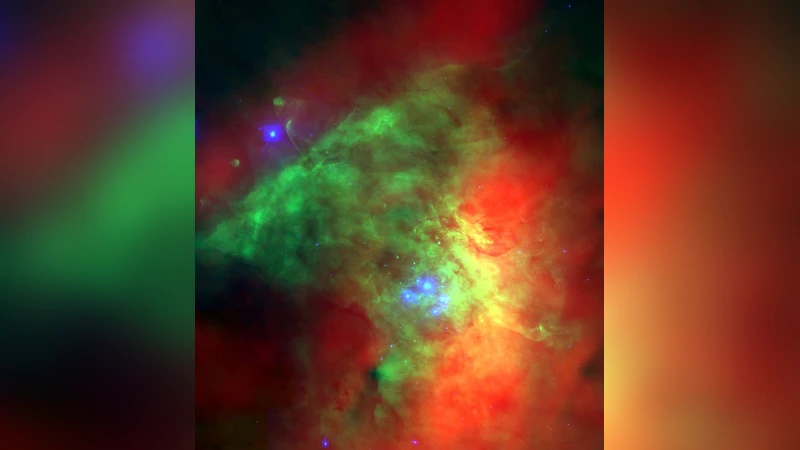
We present the results of a submillimeter interferometric survey of circumstellar disks in the Trapezium Cluster of Orion. We observed the 880 micron continuum emission from 55 disks using the Submillimeter Array, and detected 28 disks above 3sigma significance with fluxes between 6-70 mJy and rms noise between 0.7-5.3 mJy. Dust masses and upper limits are derived from the submillimeter excess above free-free emission extrapolated from longer wavelength observations. Above our completeness limit of 0.0084 solar masses, the disk mass distribution is similar to that of Class II disks in Taurus-Auriga and rho Ophiuchus but is truncated at 0.04 solar masses. We show that the disk mass and radius distributions are consistent with the formation of the Trapezium Cluster disks ~1 Myr ago and subsequent photoevaporation by the ultraviolet radiation field from Theta-1 Ori C. The fraction of disks which contain a minimum mass solar nebula within 60 AU radius is estimated to be 11-13% in both Taurus and the Trapezium Cluster, which suggests the potential for forming Solar Systems is not compromised in this massive star forming region.
💡 Research Summary
This paper presents a systematic sub‑millimeter interferometric survey of circumstellar disks in the Orion Trapezium Cluster, aiming to quantify how a massive‑star‑dominated environment influences disk evolution and the potential for Solar‑System‑like planet formation. Using the Submillimeter Array (SMA) at 880 µm, the authors observed 55 previously identified Class II disks and achieved rms sensitivities ranging from 0.7 to 5.3 mJy. Twenty‑eight disks were detected at ≥3σ, with flux densities spanning 6–70 mJy. To isolate the dust emission, the authors extrapolated the free‑free contribution from longer‑wavelength (λ > 1 cm) measurements assuming a spectral index of ≈0.6, then subtracted this component from the measured 880 µm fluxes.
Dust masses were derived using the standard optically thin formula M_dust = F_ν d² / (κ_ν B_ν(T)), adopting a distance of 400 pc, a dust opacity κ_ν = 0.034 cm² g⁻¹, and a characteristic temperature T = 20 K—values consistent with previous studies of Taurus and ρ Ophiuchus. The resulting completeness limit is 0.0084 M⊙ (≈8.8 M_Jup), corresponding to a 90 % detection probability across the sample.
When the mass distribution is plotted, it mirrors the log‑normal shape seen in low‑mass star‑forming regions for masses above the completeness threshold, but it exhibits a sharp truncation at ≈0.04 M⊙. This cutoff is absent in Taurus and ρ Oph and is interpreted as the signature of rapid external photoevaporation driven by the intense ultraviolet (UV) radiation field of the O‑type star Θ¹ Ori C. The authors estimate that Θ¹ Ori C provides an extreme‑UV (EUV) and far‑UV (FUV) flux of 10⁴–10⁵ G₀, capable of stripping material from the outer disk (>60 AU) at rates of order 10⁻⁸ M⊙ yr⁻¹. Simple photoevaporation models predict that within ≈1 Myr—consistent with the estimated age of the Trapezium cluster—most of the outer disk mass would be lost, leaving only the inner, denser regions.
The study further examines the relationship between disk radius and mass. By combining the SMA data with high‑resolution near‑infrared imaging, the authors find that only disks with radii ≤60 AU retain masses comparable to the Minimum Mass Solar Nebula (MMSN, ≈0.01 M⊙). Consequently, the fraction of disks capable of forming Solar‑System analogues (i.e., containing at least an MMSN within 60 AU) is 11–13 % in the Trapezium cluster, essentially identical to the fraction measured in the Taurus and ρ Oph samples.
These results lead to three principal conclusions. First, the observed mass truncation strongly supports a scenario in which external UV photoevaporation, rather than internal viscous evolution, dominates disk dispersal in the Trapezium cluster. Second, the survival of MMSN‑scale material is confined to the inner ≈60 AU, implying that any planetary systems forming in this environment must arise from compact, high‑density disks. Third, despite the harsh radiation environment, the prevalence of potentially planet‑forming disks is comparable to that in more quiescent regions, suggesting that the overall efficiency of Solar‑System‑like planet formation is not dramatically suppressed in massive star‑forming clusters. This work therefore refines our understanding of how high‑mass stellar feedback shapes the early stages of planet formation and underscores the resilience of planet‑forming disks even in the most extreme Galactic nurseries.
Comments & Academic Discussion
Loading comments...
Leave a Comment