Global MHD simulations of stratified and turbulent protoplanetary discs. II. Dust settling
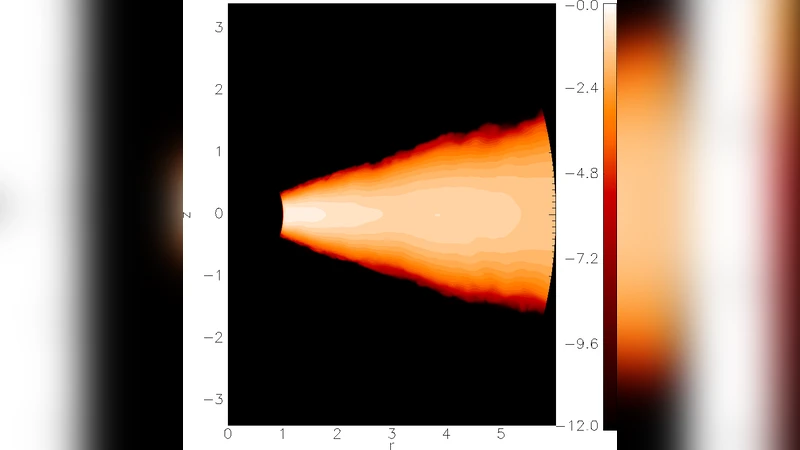
The aim of this paper is to study the vertical profile of small dust particles in protoplanetary discs in which angular momentum transport is due to MHD turbulence driven by the magnetorotational instability. We consider particle sizes that range from approximately 1 micron up to a few millimeters.We use a grid–based MHD code to perform global two-fluid simulations of turbulent protoplanetary discs which contain dust grains of various sizes. In quasi–steady state, the gravitational settling of dust particles is balanced by turbulent diffusion. Simple and standard models of this process fail to describe accurately the vertical profile of the dust density. The disagreement is larger for small dust particles (of a few microns in size), especially in the disc upper layers ($Z>3H$, where $H$ is the scale-height). Here there can be orders of magnitude in the disagreement between the simple model predictions and the simulation results. This is because MHD turbulence is not homogeneous in accretion discs, since velocity fluctuations increase significantly in the disc upper layer where a strongly magnetized corona develops. We provide an alternative model that gives a better fit to the simulations. In this model, dust particles are diffused away from the midplane by MHD turbulence, but the diffusion coefficient varies vertically and is everywhere proportional to the square of the local turbulent vertical velocity fluctuations. The spatial distribution of dust particles can be used to trace the properties of MHD turbulence in protoplanetary discs, such as the amplitude of the velocity fluctuations. In the future, detailed and direct comparison between numerical simulations and observations should prove a useful tool for constraining the properties of turbulence in protoplanetary discs.
💡 Research Summary
The paper investigates how magnetorotational instability (MRI)–driven magnetohydrodynamic (MHD) turbulence shapes the vertical distribution of small dust grains in protoplanetary discs (PPDs). Using a global, stratified, two‑fluid (gas + dust) simulation framework based on a grid‑based MHD code, the authors model a disc extending from 1 to 10 AU in radius and ±8 gas scale heights (H) in the vertical direction. Five distinct grain sizes are considered, ranging from 1 µm to a few millimetres, each treated as a pressure‑less fluid coupled to the gas through a drag term characterized by a stopping time τ_s. The simulations are run for >100 orbital periods, allowing the system to reach a quasi‑steady state where gravitational settling of particles is balanced by turbulent diffusion.
In this equilibrium, the traditional analytic picture—where a constant turbulent diffusion coefficient D = α c_s H (α being the Shakura‑Sunyaev parameter, c_s the sound speed) yields a Gaussian dust density profile—fails dramatically for the smallest grains, especially above three scale heights (Z > 3H). The discrepancy can reach two orders of magnitude because MRI turbulence is highly inhomogeneous: the vertical velocity fluctuations ⟨v_z′²⟩¹ᐟ² increase sharply in the magnetically dominated corona, raising the local diffusion efficiency far above the mid‑plane value.
To capture this behaviour, the authors propose a new diffusion model in which the diffusion coefficient varies with height according to D(z) = ⟨v_z′²⟩ τ_s. The vertical velocity variance ⟨v_z′²⟩ is measured directly from the simulations, and τ_s is known for each grain size. When this spatially varying D is inserted into the steady‑state diffusion‑settling equation, the resulting dust density profiles match the simulated ones to within ≲0.1 dex across the entire vertical domain, even for micron‑sized particles. The model thus links the observable dust stratification directly to the underlying turbulent velocity field.
The paper discusses several observational implications. Because the dust scale height controls the spectral index of millimetre continuum emission and the brightness distribution in scattered‑light images, fitting observed vertical dust profiles with the new model can provide an empirical estimate of ⟨v_z′²⟩(Z), i.e., the vertical profile of turbulent velocity fluctuations. This offers a novel diagnostic for probing MRI‑driven turbulence in real discs using facilities such as ALMA and JWST.
Limitations are acknowledged. The simulations neglect grain–grain collisions, coagulation, fragmentation, and charging effects, and they assume ideal MHD with no explicit resistivity. Moreover, the global grid resolution, while sufficient to capture large‑scale MRI modes, may under‑resolve the smallest turbulent eddies that could affect diffusion at the sub‑H scale. The study also treats each grain size in isolation rather than evolving a continuous size distribution, a simplification that will need to be relaxed in future work.
In summary, the authors demonstrate that (1) MRI‑driven turbulence is strongly stratified, producing a high‑velocity corona that dramatically enhances dust diffusion in the disc’s upper layers; (2) the conventional constant‑α diffusion model cannot reproduce the vertical dust structure for small grains; (3) a diffusion coefficient proportional to the local squared vertical velocity fluctuations provides an accurate, physically motivated description; and (4) dust vertical profiles can be used as a remote probe of the turbulent velocity field in protoplanetary discs. The work paves the way for more sophisticated models that incorporate grain growth physics and for direct comparisons with high‑resolution observations to constrain the nature of turbulence in planet‑forming environments.
Comments & Academic Discussion
Loading comments...
Leave a Comment