Statistical evaluation of the flux cross-calibration of the XMM-Newton EPIC cameras
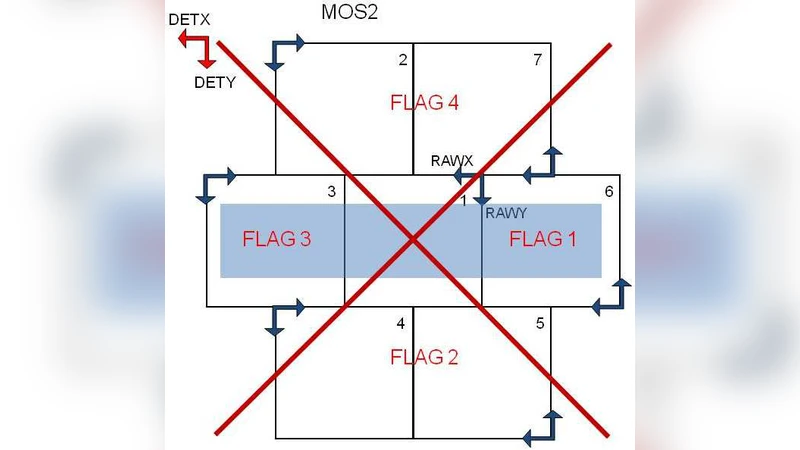
The second XMM-Newton serendipitous source catalogue, 2XMM, provides the ideal data base for performing a statistical evaluation of the flux cross-calibration of the XMM-Newton European Photon Imaging Cameras (EPIC). We aim to evaluate the status of the relative flux calibration of the EPIC cameras on board XMM-Newton (MOS1, MOS2, and pn) and investigate the dependence of the calibration on energy, position in the field of view of the X-ray detectors, and lifetime of the mission. We compiled the distribution of flux percentage differences for large samples of ‘good quality’ objects detected with at least two of the EPIC cameras. The mean offset of the fluxes and dispersion of the distributions was then found by Gaussian fitting. Count rate to flux conversion was performed with a fixed spectral model. The impact on the results of varying this model was investigated. Excellent agreement was found between the two EPIC MOS cameras to better than 4% from 0.2 keV to 12.0 keV. MOS cameras register 7-9% higher flux than pn below 4.5 keV and 10-13% flux excess above 4.5 keV. No evolution of the flux ratios is seen with time, except at energies below 0.5 keV, where we found a strong decrease in the MOS to pn flux ratio with time. This effect is known to be due to a gradually degrading MOS redistribution function. The flux ratios show some dependence on distance from the optical axis in the sense that the MOS to pn flux excess increases with off-axis angle. Furthermore, in the 4.5-12.0 keV band there is a strong dependence of the MOS to pn excess flux on the azimuthal-angle. These results strongly suggest that the calibration of the Reflection Grating Array (RGA) blocking factors is incorrect at high energies. Finally, we recommend ways to improve the calculation of fluxes in future versions of XMM-Newton source catalogues.
💡 Research Summary
The paper presents a comprehensive statistical assessment of the relative flux calibration among the three European Photon Imaging Cameras (EPIC) aboard XMM‑Newton—MOS1, MOS2, and pn—using the second XMM‑Newton serendipitous source catalogue (2XMM). By selecting a large sample of “good quality” X‑ray sources detected by at least two of the EPIC instruments, the authors compute the percentage differences in measured fluxes for each pair of cameras across several predefined energy bands ranging from 0.2 keV to 12 keV. The distribution of these differences is characterised by fitting a Gaussian function, from which the mean offset (systematic bias) and the standard deviation (dispersion) are extracted.
Fluxes are derived from count rates using a fixed spectral model (power‑law photon index Γ = 1.7, Galactic absorption NH = 3 × 10²⁰ cm⁻²). The authors test the robustness of their results against variations in the assumed spectral shape and find that the derived offsets change only marginally, confirming that the conclusions are not strongly model‑dependent.
Key findings are as follows:
-
MOS‑MOS Consistency – The two MOS cameras agree to within 4 % over the entire 0.2–12 keV range, indicating that the MOS calibration is internally consistent.
-
MOS‑pn Systematic Differences – MOS detectors report systematically higher fluxes than pn. Below 4.5 keV the MOS‑pn excess is 7–9 %, while above 4.5 keV it rises to 10–13 %. This suggests either an over‑estimation of MOS effective area or an under‑estimation of pn effective area at higher energies.
-
Temporal Stability – Over the mission lifetime (2000–2015) the MOS‑pn flux ratios remain essentially constant, except at the lowest energies (<0.5 keV). In this band the MOS‑pn ratio declines with time, a trend attributed to the gradual degradation of the MOS redistribution function, which leads to an increasing loss of low‑energy events.
-
Off‑Axis Dependence – The MOS‑pn flux excess grows with increasing off‑axis angle. This spatial dependence points to subtle differences in the vignetting corrections or detector geometry that are not fully captured in the current calibration files.
-
Azimuthal Dependence at High Energies – In the 4.5–12 keV band a pronounced azimuthal (angle around the optical axis) dependence of the MOS‑pn excess is observed. The authors interpret this as evidence that the blocking factors of the Reflection Grating Array (RGA) are incorrectly modelled at high energies; the current calibration assumes a uniform blocking factor, whereas the true transmission varies with both energy and azimuthal angle.
The paper discusses the scientific implications of these calibration offsets. Systematic flux errors of the magnitude reported can bias luminosity functions, affect the derived physical parameters of extended sources such as galaxy clusters, and introduce inconsistencies when combining XMM‑Newton data with observations from other missions (e.g., Chandra, NuSTAR).
To mitigate these issues, the authors propose several concrete improvements for future catalogue releases and calibration updates:
-
Re‑evaluate RGA Blocking Factors – Implement energy‑ and azimuth‑dependent transmission models for the RGA, especially above 4.5 keV, to correct the observed directional bias.
-
Time‑Dependent MOS Redistribution – Incorporate a time‑evolving redistribution matrix for MOS detectors that accounts for the documented degradation at low energies, thereby stabilising the MOS‑pn ratio below 0.5 keV.
-
Position‑Dependent Vignetting Corrections – Refine the vignetting calibration to better capture off‑axis variations, possibly by using in‑flight calibration sources or stacking observations of bright, point‑like sources at various detector positions.
-
Source‑Specific Spectral Assumptions – Instead of a single fixed spectral model, adopt a hardness‑ratio based or Bayesian spectral inference for each source when converting count rates to fluxes, reducing model‑induced biases.
-
Weighted Multi‑Camera Flux Combination – When constructing catalogue fluxes, combine MOS1, MOS2, and pn measurements using weights derived from the measured inter‑camera dispersions, rather than a simple arithmetic mean.
In summary, the study delivers a rigorous, statistically robust quantification of the EPIC cross‑calibration status, identifies specific energy‑, time‑, and spatial‑dependent discrepancies, and outlines a clear roadmap for calibration refinements. Implementing these recommendations will enhance the reliability of XMM‑Newton flux measurements, thereby strengthening the scientific return of both current and archival data sets.
Comments & Academic Discussion
Loading comments...
Leave a Comment