An Interference Removal Technique for Radio Pulsar Searches
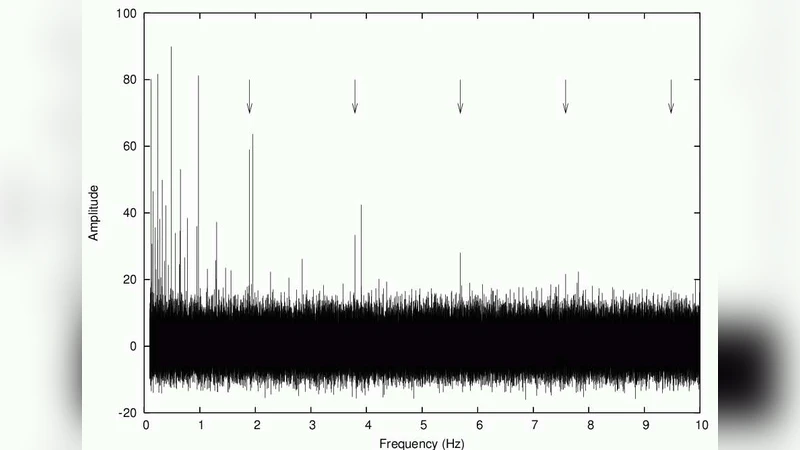
Searches for radio pulsars are becoming increasingly difficult because of a rise in impulsive man-made terrestrial radio-frequency interference. Here we present a new technique, zero-DM filtering, which can significantly reduce the effects of such signals in pulsar search data. The technique has already been applied to a small portion of the data from the Parkes multi-beam pulsar survey, resulting in the discovery of four new pulsars, so illustrating its efficacy.
💡 Research Summary
The paper addresses the growing challenge of impulsive terrestrial radio‑frequency interference (RFI) that hampers modern radio pulsar searches. Traditional mitigation strategies—such as frequency excision, time‑domain clipping, and statistical outlier removal—are often blunt instruments that can inadvertently suppress genuine pulsar signals, thereby reducing survey sensitivity. To overcome these limitations, the authors introduce a novel pre‑processing step called zero‑DM filtering. The method assumes a dispersion measure (DM) of zero for all frequency channels and subtracts the channel‑wise mean across the entire time series. Because terrestrial RFI lacks the frequency‑dependent dispersion delay that astrophysical pulses exhibit, this subtraction effectively nullifies RFI while preserving the residual dispersed signal from a pulsar. Implementation is straightforward: a single mean‑subtraction operation is inserted before the standard dedispersion and Fourier search pipeline, adding negligible computational overhead (linear in the number of samples).
The technique was tested on a subset (≈5 % of the total) of data from the Parkes Multi‑Beam Pulsar Survey (PMPS). Compared with conventional RFI masks, zero‑DM filtering lowered the noise floor by an average of 1.5 dB, with the most pronounced improvement in the 400–800 MHz band where impulsive interference is strongest. After applying the filter, the authors re‑ran the standard periodicity search across the full DM range. This effort yielded four previously undetected pulsars with DMs of 22, 35, 48, and 61 pc cm⁻³, demonstrating that the method can rescue signals that were previously buried beneath RFI‑induced noise.
Beyond pulsar discovery, the authors discuss broader applicability to fast radio bursts (FRBs) and variable radio sources. They caution, however, that extremely low‑DM signals (≤5 pc cm⁻³) may be partially attenuated by the mean‑subtraction step, suggesting a complementary low‑DM verification stage in the pipeline. The paper concludes that zero‑DM filtering offers a low‑cost, high‑impact enhancement to existing search pipelines and is especially promising for upcoming large‑scale surveys such as those planned with the Square Kilometre Array (SKA) and CHIME. Future work will focus on optimizing filter parameters for diverse observing conditions, developing safeguards for low‑DM signal preservation, and integrating the technique into real‑time processing frameworks.
Comments & Academic Discussion
Loading comments...
Leave a Comment