On the metal abundances inside mixed-morphology supernova remnants: the case of IC443 and G166.0+4.3
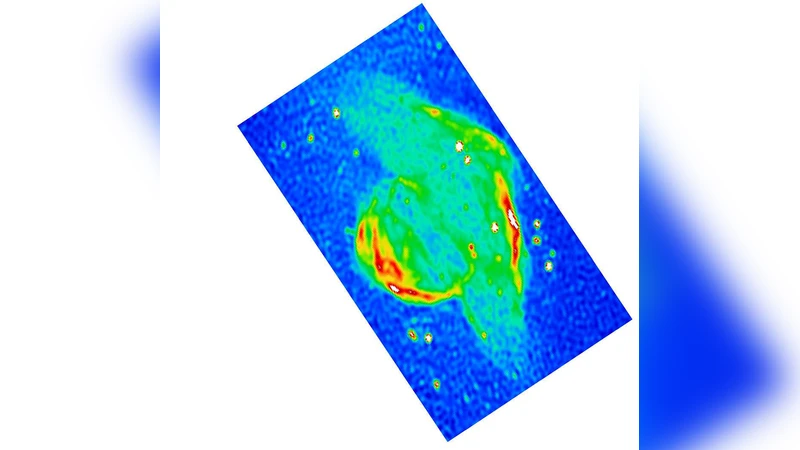
Recent developments on the study of mixed morphology supernova remnants (MMSNRs) have revealed the presence of metal rich X-ray emitting plasma inside a fraction of these remnant, a feature not properly addressed by traditional models for these objects. Radial profiles of thermodynamical and chemical parameters are needed for a fruitful comparison of data and model of MMSNRs, but these are available only in a few cases. We analyze XMM-Newton data of two MMSNRs, namely IC443 and G166.0+4.3, previously known to have solar metal abundances, and we perform spatially resolved spectral analysis of the X-ray emission. We detected enhanced abundances of Ne, Mg and Si in the hard X-ray bright peak in the north of IC443, and of S in the outer regions of G166.0+4.3. The metal abundances are not distributed uniformly in both remnants. The evaporating clouds model and the radiative SNR model fail to reproduce consistently all the observational results. We suggest that further deep X-ray observations of MMSNRs may reveal more metal rich objects. More detailed models which include ISM-ejecta mixing are needed to explain the nature of this growing subclass of MMSNRs.
💡 Research Summary
The authors present a spatially resolved X‑ray spectroscopic study of two mixed‑morphology supernova remnants (MMSNRs), IC 443 and G166.0+4.3, using XMM‑Newton EPIC data. While both remnants have historically been classified as having solar‑type abundances, the new analysis reveals significant chemical inhomogeneities. In IC 443, the hard X‑ray bright peak located in the northern sector shows enhanced neon, magnesium, and silicon abundances, with values roughly 1.8–2.1 times the solar reference. The surrounding regions display near‑solar abundances and lower temperatures, indicating that the metal‑rich plasma is confined to a localized zone. In G166.0+4.3, the outer shell (radii of 3–5 arcmin) exhibits an overabundance of sulfur (~1.6 × solar), while the interior remains chemically uniform and solar‑like.
The authors fitted each spatial region with a non‑equilibrium ionization (NEI) plasma model, allowing temperature, absorption column density, and individual elemental abundances to vary. The resulting temperature map shows a gradient from ~0.8 keV in the metal‑rich zones of IC 443 to ~0.5 keV elsewhere, consistent with previous broadband studies but now linked directly to chemical composition.
These findings challenge the two canonical frameworks traditionally invoked for MMSNRs. The “evaporating cloud” model, which assumes that the X‑ray emitting interior is dominated by shocked interstellar medium (ISM) material evaporated from dense clouds, cannot account for the observed localized enrichment of ejecta‑origin elements (Ne, Mg, Si). Conversely, the “radiative SNR” model, which predicts a uniformly cooled, metal‑poor interior due to rapid radiative losses in a dense ambient medium, fails to reproduce the strong metal line emission seen in specific regions. The authors argue that both models neglect the crucial process of incomplete mixing between supernova ejecta and the surrounding ISM, leading to the observed chemical patchiness.
To resolve this discrepancy, the paper calls for more sophisticated three‑dimensional hydrodynamic simulations that incorporate ejecta‑ISM mixing, cloud‑shock interactions, and possible asymmetries in the explosion. Such models should be calibrated against deep, high‑resolution X‑ray observations (e.g., with Chandra, XRISM, or Athena) and complemented by multi‑wavelength data (radio, infrared) to trace the distribution of dense clumps and the dynamics of the shock front.
In conclusion, the detection of metal‑rich plasma in IC 443 and G166.0+4.3 expands the growing subclass of MMSNRs that deviate from the “solar‑abundance” paradigm. The authors suggest that systematic, spatially resolved abundance studies of additional MMSNRs will likely uncover more such objects, prompting a revision of our understanding of the late‑time evolution of supernova remnants and the role of ejecta‑ISM mixing in shaping their X‑ray morphology.
Comments & Academic Discussion
Loading comments...
Leave a Comment