2XMMi J225036.9+573154 - a new eclipsing AM Her binary discovered using XMM-Newton
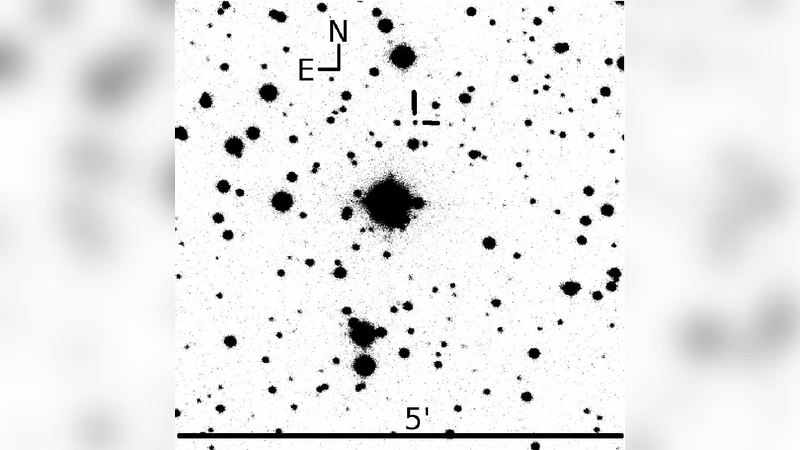
We report the discovery of an eclipsing polar, 2XMMi J225036.9+573154, using XMM-Newton. It was discovered by searching the light curves in the 2XMMi catalogue for objects showing X-ray variability. Its X-ray light curve shows a total eclipse of the white dwarf by the secondary star every 174 mins. An extended pre-eclipse absorption dip is observed in soft X-rays at phi=0.8-0.9, with evidence for a further dip in the soft X-ray light curve at phi~0.4. Further, X-rays are seen from all orbital phases (apart from the eclipse) which makes it unusual amongst eclipsing polars. We have identified the optical counterpart, which is faint (r=21), and shows a deep eclipse (>3.5 mag in white light). Its X-ray spectrum does not show a distinct soft X-ray component which is seen in many, but not all, polars. Its optical spectrum shows Halpha in emission for a fraction of the orbital period.
💡 Research Summary
The authors report the discovery of a new eclipsing polar, designated 2XMMi J225036.9+573154, identified through a systematic search for X‑ray variability in the 2XMMi catalogue. By analysing the light curves of all catalogue sources, they flagged objects that displayed abrupt flux drops indicative of eclipses. One such source exhibited a regular, total eclipse every 174 minutes (≈2.9 h), leading to its classification as an eclipsing magnetic cataclysmic variable (polar).
X‑ray timing analysis shows a sharp, total eclipse lasting about five minutes, during which the count rate falls below the detection threshold. Outside the eclipse, the source is continuously visible, a property that distinguishes it from most eclipsing polars, which are often X‑ray faint or undetectable outside eclipse. A pronounced pre‑eclipse absorption dip appears in the soft band (0.2–2 keV) at orbital phases φ ≈ 0.8–0.9. This dip is interpreted as the line‑of‑sight crossing a dense accretion stream that feeds the magnetic pole, absorbing soft photons before the white dwarf is occulted. A secondary, shallower dip at φ ≈ 0.4 suggests either a second accretion curtain or an asymmetric magnetic funnel.
Spectral fitting of the 0.2–10 keV EPIC data with standard polar models (multi‑temperature plasma plus partial covering absorption) reveals a hard‑X‑ray dominated spectrum. No distinct soft black‑body component (typical temperatures 10–30 eV) is detected, indicating that the re‑processed soft emission from the white‑dwarf surface is either intrinsically weak or heavily absorbed. The hard component is consistent with a post‑shock bremsstrahlung plasma, as expected for a high‑magnetic‑field accretion column.
Optical follow‑up identified a faint counterpart (r ≈ 21) at the X‑ray position. Time‑resolved photometry shows a deep optical eclipse (>3.5 mag in white light) coincident with the X‑ray eclipse, confirming the high inclination of the binary. Spectroscopy reveals Hα emission present only during a limited orbital phase interval (≈φ 0.2–0.6), implying that the accretion stream becomes visible and ionised only when it is projected against the bright side of the secondary. The lack of continuous Hα emission further supports a geometry where the stream is largely self‑eclipsed for most of the orbit.
The combination of a hard‑X‑ray spectrum, persistent X‑ray emission outside eclipse, and the presence of both a pre‑eclipse dip and a secondary dip makes this system atypical among eclipsing polars. The authors suggest that the accretion flow may be partially threaded onto field lines that remain visible throughout the orbit, or that a non‑magnetic (or weakly magnetic) component contributes to the observed X‑ray flux.
The paper demonstrates the power of archival X‑ray surveys for uncovering rare magnetic cataclysmic variables. The authors advocate for future high‑resolution X‑ray spectroscopy (e.g., with XRISM or Athena) and coordinated multi‑wavelength campaigns to map the three‑dimensional structure of the accretion curtains, measure the magnetic field strength via cyclotron features, and refine the system parameters (mass ratio, inclination, magnetic axis offset). Such studies will deepen our understanding of how magnetic fields regulate mass transfer and energy release in compact binaries.
Comments & Academic Discussion
Loading comments...
Leave a Comment