Planet formation bursts at the borders of the dead zone in 2D numerical simulations of circumstellar disks
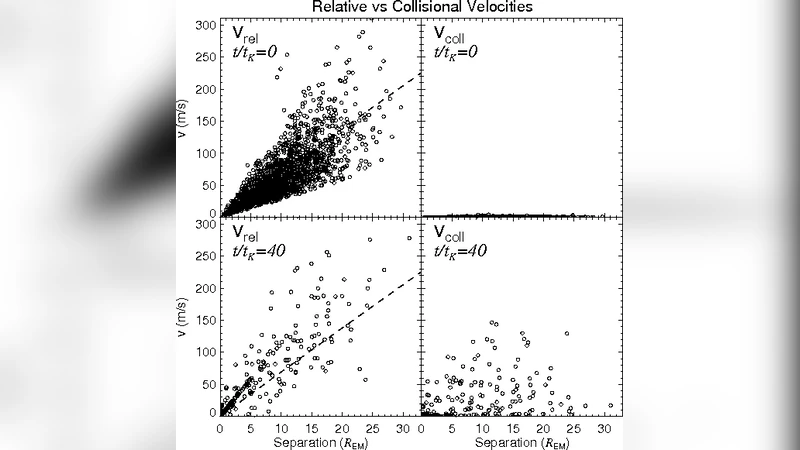
As accretion in protoplanetary disks is enabled by turbulent viscosity, the border between active and inactive (dead) zones constitutes a location where there is an abrupt change in the accretion flow. The gas accumulation that ensues triggers the Rossby wave instability, that in turn saturates into anticyclonic vortices. It was suggested that the trapping of solids within them leads to a burst of planet formation on very short timescales. We perform two-dimensional global simulations of the dynamics of gas and solids in a non-magnetized thin protoplanetary disk with the Pencil Code. We use multiple particle species of radius 1, 10, 30, and 100 cm, solving for the particles’ gravitational interaction by a particle-mesh method. The dead zone is modeled as a region of low viscosity. Adiabatic and locally isothermal equations of state are used. We find that the Rossby wave instability is triggered under a variety of conditions, thus making vortex formation a robust process. Inside the vortices, fast accumulation of solids occurs and the particles collapse into objects of planetary mass in timescales as short as five orbits. Because the drag force is size-dependent, aerodynamical sorting ensues within the vortical motion, and the first bound structures formed are composed primarily of similarly-sized particles. In addition to erosion due to ram pressure, we identify gas tides from the massive vortices as a disrupting agent of formed protoplanetary embryos. We also estimate the collisional velocity history of the particles that compose the most massive embryo by the end of the simulation, finding that the vast majority of them never experienced a collision with another particle at speeds faster than 1 m/s.
💡 Research Summary
The paper investigates how the interface between an active region and a low‑viscosity “dead zone” in a protoplanetary disk can trigger rapid planet formation. Using the Pencil Code, the authors perform global two‑dimensional simulations of a non‑magnetized, thin disk that includes both gas dynamics and a spectrum of solid particles (radii of 1, 10, 30, and 100 cm). The dead zone is modeled as a region with a sharply reduced viscous α‑parameter, creating a bottleneck for the accretion flow. Gas piles up at the dead‑zone edge, steepening the radial pressure gradient and exciting the Rossby Wave Instability (RWI). The RWI quickly saturates into long‑lived anticyclonic vortices, which act as pressure traps for solid particles.
Inside these vortices the particles experience strong aerodynamic drag that depends on size, causing them to concentrate and to sort by size. The simulations show that within as few as five orbital periods the local solid‑to‑gas ratio rises dramatically, and the self‑gravity of the particles (computed with a particle‑mesh method) leads to the collapse of bound clumps with masses comparable to that of a planet. This “burst” of planet formation occurs on a timescale orders of magnitude shorter than the classical core‑accretion scenario, which typically requires millions of years.
The authors explore both locally isothermal and adiabatic equations of state. While the overall vortex formation is robust under both thermodynamic assumptions, the isothermal case tends to produce vortices that persist longer because pressure variations are weaker. The study also identifies two destructive mechanisms that can limit embryo growth. First, the massive vortices generate strong gas tides that can shear apart nascent protoplanetary embryos. Second, ram‑pressure erosion at the vortex edges can strip material from the clumps.
A detailed analysis of collision velocities shows that the vast majority of particles that end up in the most massive embryo never experience mutual collisions faster than 1 m s⁻¹, a regime favorable for sticking rather than fragmentation. High‑speed impacts are confined mainly to particles outside the vortex cores. Consequently, the embryos are built from particles of nearly uniform size, reflecting the size‑dependent drag sorting within the vortex flow.
Overall, the work demonstrates that the dead‑zone boundary is a natural site for the rapid assembly of planetary‑mass bodies via RWI‑driven vortex formation. The process is robust across a range of disk parameters and thermodynamic treatments, but the survival of the resulting embryos depends on a delicate balance between the concentrating effect of the vortex and its disruptive tidal and erosive forces. The findings provide a plausible pathway for the formation of massive solid cores on very short timescales, potentially explaining observed exoplanet populations that appear to have formed early in disk lifetimes.
Comments & Academic Discussion
Loading comments...
Leave a Comment