A forming, dust enshrouded disk at z=0.43: the first example of a late type disk rebuilt after a major merger?
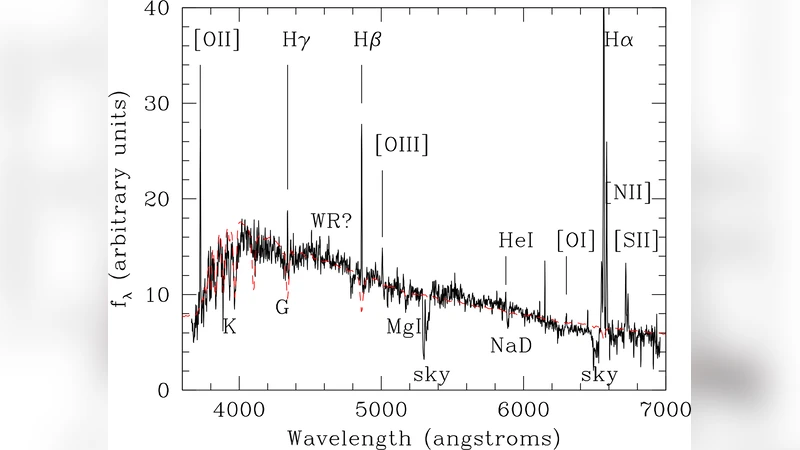
Abreg: By combining HST/UDF imagery with kinematics from VLT/GIRAFFE we derive a physical model of distant galaxy J033245.11-274724.0 in a way similar to what can be done in the nearby Universe. Here we study the properties of a distant compact LIRGs galaxy. Given the photometric and spectro photometric accuracies, we can decompose the galaxy in sub components and correct them for reddening. The galaxy is dominated by a dust enshrouded disk revealed by UDF imagery. The disk radius is half that of the Milky Way and the galaxy have a SFR=20Mo/yr. Morphology and kinematics show that gas and stars together spiral inwards rapidly to feed the disk and the central regions. A combined system of a bar and two non rotating spiral arms regulates the material accretion, induces large sigma, with sigma larger than 100 km/s and redistributes the angular momentum (AM). The detailed physical properties resemble to the expectations from modeling a merger of two equal mass, gaseous rich galaxies, 0.5 Gyr after the merger. In its later evolution, this galaxy could become a late type galaxy which falls on the T-F relation, with an AM mostly induced by the orbital AM of the merger.
💡 Research Summary
The authors combine ultra‑deep Hubble Space Telescope imaging from the UDF with integral‑field spectroscopy obtained with VLT/GIRAFFE to construct a detailed physical model of the distant luminous infrared galaxy J033245.11‑274724.0 at redshift z = 0.43. By exploiting the multi‑band photometry and high‑resolution morphology, they decompose the system into four main components: a compact, heavily dust‑obscured nucleus, a bar, a small exponential disk, and two non‑rotating spiral arms. Careful spectral energy‑distribution fitting allows them to correct each component for internal extinction, yielding reliable stellar masses, star‑formation rates, and metallicities.
The disk, revealed only after the deep UDF exposure, has a radius of roughly 5 kpc—about half that of the Milky Way—and hosts a vigorous star‑formation rate of ≈20 M⊙ yr⁻¹. Kinematic maps derived from the GIRAFFE data show a complex velocity field: the bar and the two arms act as conduits that drive gas and stars inward, producing a strong inflow toward the central regions. Velocity dispersion (σ) exceeds 100 km s⁻¹ across much of the disk, indicating a highly turbulent medium far from the calm rotation typical of local thin disks.
To interpret these observations, the authors compare them with hydrodynamical simulations of major mergers between two equal‑mass, gas‑rich progenitors. The simulated system 0.5 Gyr after coalescence reproduces the observed morphology (prominent bar, non‑rotating arms, compact dusty disk), the elevated σ, and the rapid inward transport of material. The bar, in particular, is identified as the mechanism that redistributes orbital angular momentum from the merger into the newly forming disk, while the arms regulate the accretion flow and maintain high turbulence.
The paper argues that J033245.11‑274724.0 represents a rare, early‑stage example of a disk that is being rebuilt after a major merger. Its current stellar mass (∼10¹⁰ M⊙) and star‑formation activity suggest that, over the next 2–3 Gyr, the system will settle onto the Tully‑Fisher relation as a late‑type (Sc–Sd) spiral, with most of its angular momentum inherited from the original orbital motion of the merging galaxies. This scenario challenges the traditional view that major mergers inevitably destroy disks, showing instead that, provided the progenitors are sufficiently gas‑rich, a new disk can emerge rapidly, retaining a memory of the merger’s angular momentum budget.
Overall, the study demonstrates the power of combining ultra‑deep imaging with integral‑field spectroscopy to dissect high‑redshift galaxies at a level previously achievable only for nearby objects. It provides compelling observational evidence for the “disk‑rebuilding” pathway, highlights the role of bars and non‑rotating arms in angular‑momentum redistribution, and sets a benchmark for future investigations of post‑merger disk formation in the early universe.
Comments & Academic Discussion
Loading comments...
Leave a Comment